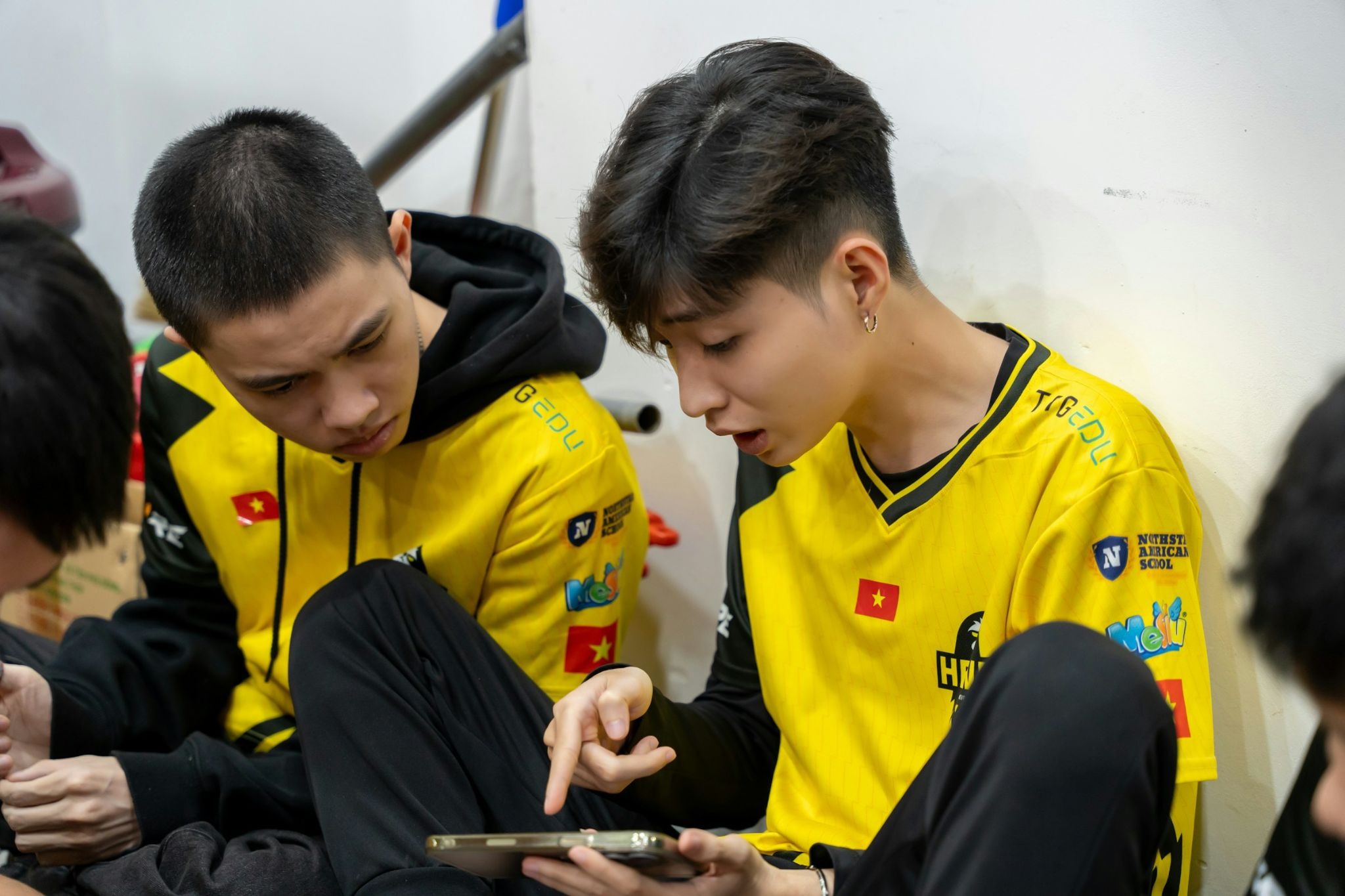
Malaysia alone counts 18.8 million gamers and $720.6 million in video game revenue in 2025, sitting inside a far larger language footprint: Malay is spoken by more than 290 million people across Malaysia, Brunei, Singapore, and parts of Indonesia. Yet most audio pipelines still treat all of it as a single line item labelled “Malay.”
For audio producers and voice-over directors, that shortcut surfaces late and quietly. A build ships with one Malay voice track cast in standard Malay, every line reviewed and confirmed correct. Yet players in Kelantan, Sarawak, and Brunei hear something accurate that still sounds like it is addressing them from somewhere else. No bug report captures it, because technically nothing is broken.
Dialect is the fastest signal a Malay-speaking player has for judging whether a game was built for them or simply translated to them. That makes it an audio localization strategy decision, not a line-level linguistic one.
Why Dialect Is a Direct Line to Player Immersion
![Player immersion starts with voice, making dialect and voice-over important localization choices.]](https://speequalgames.com/wp-content/uploads/2026/09/image-23-1024x681.jpeg)
Malay regional dialects in gaming rarely get their own track, yet the distance between them is wider than most casting briefs assume. Kelantanese Malay is often unintelligible to speakers from other parts of Malaysia, shaped by shortened words and a rhythmic cadence. Sarawak Malay integrates Dayak and Iban influences and uses distinct sentence structures. Bruneian Malay carries different expressions and its own norms around tone and politeness, tending toward indirectness.
A player does not process that as linguistics; they process it as placement. Standard Malay on a character written as a Kelantanese fisherman does not land as neutral; it lands as a stranger doing an impression.
Voice carries the verdict faster than text. Games with full voice-over localization typically see 40% to 60% higher player engagement in localized markets than subtitle-only versions, even though audio can absorb 30% to 50% of total localization budget. The voice-over versus subtitle immersion in games trade-off is therefore not only a budget line, but it also sets how much of the player’s read on authenticity a studio controls, the same calculation behind sound design and voice-over choices across Southeast Asia. Malay game localization that stops at accurate text leaves that channel unmanaged.
Dialect does not carry that weight alone. What it signals depends on the regional culture behind it.
How Regional Culture Shapes the Way Players Perceive a Dialect
Cultural adaptation in video games is usually framed as a visual task covering symbols, costumes, and festivals. Audio carries the same weight with far less scrutiny, and the clearest evidence comes from outside gaming. In 2021, a well-known beauty brand ran a Malaysian campaign in grammatically correct standard Malay, and sales lagged in East Malaysia. Sarawak audiences found the language overly formal and emotionally distant. Nothing was mistranslated; the register simply belonged to someone else.
1StopAsia states the principle directly: effective communication in Malay is less about translating the message than translating the meaning behind it. Inside a voice booth, that meaning includes who the speaker sounds like they grew up around.
Those associations are specific, and players act on them fast. A Bruneian delivery built on indirectness can make a blunt command read as abrasive rather than urgent. A Kelantanese cadence on a comic sidekick reads as warmth in Kota Bharu but as a punchline everywhere else. Voice-over work that matches dialect detail to a character’s origin signals to players that the writers truly know where that character is from, the same recognition Malaysian localization work builds on to keep games culturally relevant.
Once the perception layer is clear, the question shifts to what a production process capturing it looks like.
What Good Malay Dialect Localization Actually Looks Like
![Authentic Malay voices reflect regional vocabulary and cadence without sounding exaggerated.]](https://speequalgames.com/wp-content/uploads/2026/09/image-22-1024x683.jpeg)
It starts with the audience rather than the script. EQHO’s guidance on Malay localization is blunt about why: given the region’s wide array of accents and dialects, voice talent must be selected in direct alignment with the target audience, and the chosen register has to suit both the subject matter and the listener. That belongs in the casting brief, long before a session is booked.
Casting is where dialect selection stops being an abstraction. A character with a specific regional background should be cast to a Malay voice actor from that region, or one who carries its vocabulary and cadence without slipping into caricature. SpeeQual Games’ own audio work warns that faking an accent to make a character appear funny or naive can easily reinforce negative stereotypes. Keeping game audio native to the region a character comes from is the difference between performance and approximation.
Script work comes before the booth. VEQTA’s 2026 voice-over and dubbing best practices argue that the most effective studios treat cultural adaptation as a writing problem first, not a recording problem. Native writers adjust idioms, humour, and social cues so they land without distorting character intent. That editorial pass is then paired with strict technical checks on noise floor, loudness, and region-specific ratings. A game audio localization strategy that treats Malay as a single locale skips both halves of that process.
Running that end to end is rarely something an internal audio team is staffed for.
Why This Is Where a Localization Partner Makes the Difference
Audio is where localization defects survive longest. SpeeQual Games has documented builds that quietly revert to the default audio when regional files fail to load, characters delivering wrong lines after audio swaps, and subtitles conveying a different meaning from the spoken voice-over. None of those surface in a translation spreadsheet, because none are translation errors.
That is why audio LQA, the pass that checks localized builds in context, must be played, not just listened to. Testers need to play through the game in real time, which is the only way timing, trigger, and delivery problems surface. A native tester from the target region is the only reliable check on dialect: a line can be linguistically spotless and still feel completely wrong for the character speaking it.
The right game localization partner brings both halves: voice talent that genuinely represents each target audience, and testing that validates whether the dialect and cultural nuance arrived intact. SpeeQual Games pairs native-speaking game voice talent with lore-driven performance direction across 150+ titles, backed by teams based in Indonesia and Malaysia.
Timing matters as much as capability. VEQTA’s guidance is to speak with an audio localization specialist and map out options before locking the script, so performance and compliance constraints are handled from the outset. Studios that engage at the planning stage get dialect decisions written into the script instead of retrofitted into a schedule with no room left. That gap is the practical test for any video game localization services in Southeast Asia.
Conclusion: Moving From Translation to Belonging in Malay Audio Localization
A Malay-speaking player can tell within a few lines whether a game belongs to them, and dialect, with the regional culture riding on it, is one of the most direct signals they have. It is also the easiest to lose, because nothing about a single standard Malay track looks wrong on a QA report.
Immersion in Malay comes from three things holding together: an accurate read of regional culture, casting that matches it, and a validation pass confirming it landed. They are separable on a plan and inseparable in practice.
SpeeQual Games brings 24+ years of localization expertise to that work, from dialect research and casting through to LQA with native testers, so a Malay build feels made for its players instead of translated at them. If your next release ships into Malaysia, Brunei, or Indonesia, our localization team is the place to start, and our marketing team can carry that regional voice into how the game is positioned at launch. Talk to us about building dialect decisions into your audio pipeline before the script locks.
![Indonesia's top mobile games highlight trends for publishers to monitor in 2026.]](https://speequalgames.com/wp-content/uploads/2026/08/image-17.jpeg)
![Nintendo’s official Indonesia launch signals a new chapter for console gaming.]](https://speequalgames.com/wp-content/uploads/2026/08/image-11.jpeg)