As the gaming industry grows in scope, ambition, and technical sophistication, the collaboration of sound design and voice-over is no longer optional; it is a critical component of a game’s success.
Imagine playing a narrative-based game with no audio: no sword effects, background music, or protagonist dialogue. It would be completely barren. Without sound, even the most stunning visuals would feel hollow. Audio is what breathes life into virtual worlds.
Beyond simple background noise, audio has a significant impact on player experience, engagement, and emotion. Sound design and voice-over combine to capture the essence of a game, from the soft rustle of leaves to the ominous voice of an antagonist.
More than just a visual accompaniment, well-executed sound design creates mood, directs player actions, and heightens emotional impact. Voice actors’ performances have the power to give characters life and strengthen the story’s authenticity.
While excellent and well-synchronized voice-over can improve character arcs, story beats, and player interaction, poor or flat voice acting can make even the most graphically spectacular game feel lifeless.
Strategic sound design and voice-over may transform a game from simple entertainment into an intensely immersive experience, whether the goal is to enhance spatial awareness in action sequences, create tension in horror moments, or portray emotional character monologues.
In this article, we’ll explore how Southeast Asia’s rapidly growing gaming scene is embracing sound design and voice acting to elevate immersion and storytelling.
The Hidden Magic of Game Sound Design
A video game’s sound design is an intangible yet incredibly noticeable layer that can make it come to life. Sound design in game development is the process of developing and incorporating different audio components, such as voice acting, music, ambient sounds, and sound effects (SFX).
Collectively, these various audio elements improve the player’s experience and engagement. Far from being mere background decoration, sound design becomes an essential storytelling element.
It guides gameplay, supports the story, and invites players to explore the game’s complex world-building. In this section, we’ll examine the history of sound design and its significant contributions to the modern game industry.
Sound Design Milestone in Gaming History
Simple beeps and buzzes were the earliest forms of video game audio, long before character voice-overs like those found in modern games. Computer Space and Pong, two games from the early arcade and home console eras of the 1970s, used simple sound synthesis to depict game elements such as laser shots and bouncing balls.
The transition to CD-ROMs, more memory, and improved sound hardware in the 1980s and early 1990s made it possible for video games to use ambient sounds, dubbed voices, more intricate recorded sound effects, and much richer sound layering. These advancements marked the beginning of sound as a central pillar in interactive storytelling.
This era was shaped in part by pioneering games like Dragon’s Lair, an arcade game that combined full-motion video with recorded dialogue.
The Role of Game Sound Design
In the modern gaming industry, sound design is crucial to game creation in a number of ways that enhance the entire player experience:
1. Immersion & World-Building
Visuals alone cannot convey the grandeur of a world. All of the sound effects and background music, from the rustle of leaves to the buzz of machinery, aid in players’ immersion and help players sense the atmosphere of the game world.
Sound design can enhance the player’s immersion in the game world by producing a compelling audio setting. For example, the haunting ambient sound of Silent Hill instantly sets the tone long before players encounter any enemy.
2. Emotional Engagement & Narrative Support
Sound contributes to the atmosphere, builds tension, and supports the narrative. In narrative-based games, sound design blends music and narrative elements to improve the story’s emotional beats.
3. Enhance Gameplay Mechanics
Sound is a useful tool for informing players when something happens, directing their attention, and providing hints. Examples include the sound of footsteps approaching from behind, the ‘click’ sound while reloading a weapon, and a warning sound when time is running out. Well-designed sound can improve game dynamics by providing information without using visual signals.
When Voices Bring Characters to Life
In the realm of video games, sound is what really makes them come to life, even though visuals frequently take center stage. Voice acting and sound design are two fundamental pillars that work together to create immersive environments that influence how players experience the plot, setting, and feelings.
Even before players are aware of it, sound design may tell them what is going on, where they are, and how they should feel. On the other hand, voice-over is a fundamental storytelling technique. Voice actors may express personality and emotional depth in ways that text cannot by varying their tone, cadence, and delivery.
The Importance of Voice Over in Gaming
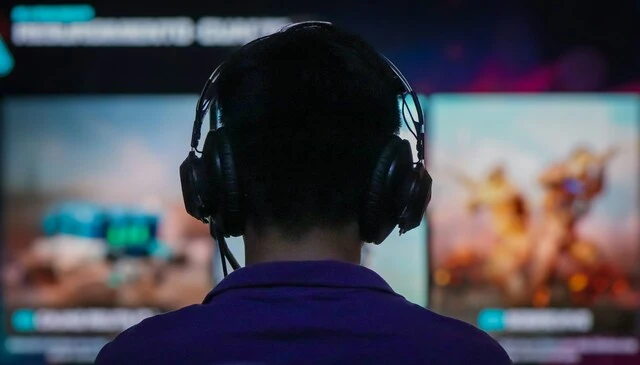
Source: Unsplash.com
Professional voice acting has been crucial in establishing authenticity, immersion, and emotional impact as video games have developed into cinematic and narrative-focused experiences.
Even the most stunning visuals can feel empty without good voice acting. A great illustration of how a powerful voice and acting can give depth to a character is Kratos (from the God of War series), who is portrayed as a fearsome warrior who has faced multiple conflicts and tragedies.
An additional example is Solid Snake from the Metal Gear Solid series, whose distinctively deep and raspy voice serves to further emphasize the character’s history as a tough agent.
Similarly, Southeast Asian games like Coffee Talk showcase how subtle voice tones can reflect regional storytelling styles.
The Unique Challenges in Voice Over for Video Games
Voice-over in games often faces unique challenges due to its interactive and dynamic nature. The complexity of this process demands precision, creativity, and cultural sensitivity to deliver an immersive experience.
In this segment, we will explore the main challenges in video game voice-over.
1. Synchronizing Emotion
Matching the emotional tone with different player-influenced scenarios is one of the most frequent problems in voice acting for video games. Voice actors often record multiple takes for different emotional contexts — anger, fear, excitement, or sorrow — depending on the player’s choices. It is in contrast to movies or TV shows, where the dialogue is not branched.
2. Embracing Cultural Nuances
Cultural awareness in voice acting is crucial for games with a global target audience. In order to feel authentic, localizing voice acting entails modifying expressions, accessibility, and cultural references in addition to verbal translation. If cultural context is not carefully taken into account, voice acting that sounds good in one region could sound odd or even offensive in another region.
3. Contextual Awareness
Branching narratives are a common feature in video games, which the dialogue can change depending on the player’s choices. It might be difficult to maintain context across multiple interactions and possible outcomes because of this interactivity.
As a result, voice actors must deliver dialogue that is consistent across a range of scenarios. This requires both emotional intelligence and narrative awareness.
The Rise of Game Voice Over in Southeast Asia
Video game voice actors are becoming an increasingly important component of the dynamic transition of the Southeast Asian gaming industry.
As the regional gaming market grows, developers now recognize the power of culturally relevant audio to enhance immersion and storytelling. Localized voice-overs are a strategic response to Southeast Asia’s linguistic and cultural diversity, not just a trend.
Furthermore, technological advancements have accelerated this growth. High-quality audio recording has become feasible with the advent of 5G networks and improved internet infrastructure. Furthermore, the value of localized content is highlighted by the main gaming companies’ development of regional centers.
For example, miHoYo’s establishment of Cognosphere in Singapore in 2021 — which manages the global hit Genshin Impact — reflects a strategic focus on Southeast Asian content localization.
The rising voice acting industry in Southeast Asia is also a result of the demand for regional voice actors. Many voice actors from countries like Malaysia, Thailand, and Indonesia are highly skilled at a variety of languages, including regional dialects.
It is essential for developing a realistic and immersive gaming experience. Speequal Games offers professional voice actors covering each Southeast Asian language, producing excellent performances that blend in with the tone and style of your game.
We can ensure that your target audiences will have an immersive and captivating audio experience, from narration to character dialogue. Let’s bring your game to life with our professional voice-over services!
The Business Side of Game Sound

Source: Pexels.com
Immersive experiences are essential to drawing in and keeping gamers in this competitive gaming market. Voice-over and sound design have developed from being merely added features to become crucial elements that increase both engagement and profit.
In this chapter, we will look at how sound design and voice-over have become tangible advantages to the gaming business.
1. Enhancing Brand Identity and Marketability
Characters like Mario, Lara Croft, or Sonic are examples of how iconic voice performances and soundtracks contribute to a game’s identity. A franchise with strong vocal branding can have enduring popularity, boosting sales of items, spin-offs, and even prospects for TV show or film adaptations. Investing in top-notch voice-over shows a dedication to quality, which improves reputation and customer trust for developers.
2. Expanding Market Reach Through Localization
Games can more successfully break through language barriers and access a global audience with localized voice-over. Developers may reach new gaming consumers, boost sales, and enhance their market share by translating audio material into various languages and cultural contexts. This localization process requires investment but often yields high returns by enhancing accessibility.
3. Impact on Monetization Strategies
Voice over and sound design also provide a range of revenue streams. Games that feature in-app purchases or downloadable content (DLC), intriguing audio narrative might persuade players to spend. Furthermore, voice over can also improve premium content, seasonal passes, and special editions, boosting the game’s market value.
With our expertise in voicing, QA, and translation, Speequal Games is the ideal partner for your company to establish identity and expand globally.
Our services ensure that games feel authentic and emotionally compelling by customizing player experiences and cultural nuances to fit local consumers in different SEA markets like Indonesia, Malaysia, Vietnam, Philippines, and Thailand.
From translation to voice over, make your game feel truly local by unlocking the SEA gaming industry with us.
Looking Ahead — The Future Sounds of Southeast Asia’s Gaming Scene
In Southeast Asia, the increasing popularity of voice actors in video games represents a commitment to player satisfaction and cultural authenticity rather than just a passing trend.
By embracing technical innovations and cultural differences, Southeast Asia sets the bar for inclusive and engaging gaming. It is anticipated that the integration of voice over in video games will keep expanding throughout Southeast Asia in future years.
But, there are still issues, including preserving linguistic variety or cultural context. To ensure the authenticity and quality of localized content, developers, voice actors, and localization experts are certain to collaborate. For developers, investing in superb sound design and voice acting implies investing in the game’s overall quality.
Thus, sound becomes a crucial element in a field that is becoming more and more characterized by emotional depth and sensory depth, meriting consideration on par with mechanics, narrative, and visuals.