
When Google surveyed more than 14,000 PC and console players in 2022, 70% of respondents in Asia rated localization for their country or region as “very” or “extremely” important. For a game localization strategy in Southeast Asia, that figure opens a more precise question: which moments of play call for a player’s own language, and which moments flow naturally in English?
English skills vary by market and, within each market, by age, city, and platform. A plan built on one assumption about reading ability tends to miss that range, so the strongest approach starts with the moments in the game that players must understand without effort. This guide maps those moments to clear choices: what to localize fully, what can remain in English, and how player data confirms each decision.
What English Proficiency Data Tells a Game Localization Strategy
The most cited benchmark, the EF English Proficiency Index 2025, draws on test results from 2.2 million adults across 123 countries and regions. This edition scores speaking and writing for the first time, alongside reading and listening, which are the four skills players draw on across different game systems. EF also reports that in over half of the countries measured, speaking is the weakest English skill, an insight that points directly to voice chat and spoken audio in games.
| Global Rank | Country | Score | Proficiency Level |
| 24 | Malaysia | 581 | High Proficiency |
| 28 | Philippines | 569 | High Proficiency |
| 64 | Vietnam | 500 | Moderate Proficiency |
| 80 | Indonesia | 471 | Low Proficiency |
| 88 | Laos | 461 | Low Proficiency |
| 99 | Myanmar | 444 | Very Low Proficiency |
| 116 | Thailand | 402 | Very Low Proficiency |
| 123 | Cambodia | 390 | Very Low Proficiency |
Table of Southeast Asia English Proficiency Index (EF EPI 2025)
Because EF test takers are self-selected, country scores are best read as a well-informed starting hypothesis about an audience. They open the planning conversation, and a studio’s own player data completes it.
Reading, Listening, Speaking, and Writing: Which Skills Matter for Game Text
Each skill maps to a distinct layer of play. Reading covers tutorials, quest text, item descriptions, and store pages. Listening covers voice-over in cutscenes and combat. Writing covers guild chat, trade channels, and support tickets, and speaking covers voice party coordination in team modes.
Players who read English comfortably can digest text at their own pace, while spoken audio asks for real-time decoding alongside intense visual gameplay, so the same player can feel fully at ease in a quest log and still welcome a native-language voice track. Pairing index scores with a studio’s direct signals, specifically device language, store review language, and support ticket language, reveals what the audience actually chooses in practice.
Which Game Content Needs Full Localization, Even for Players Who Read English
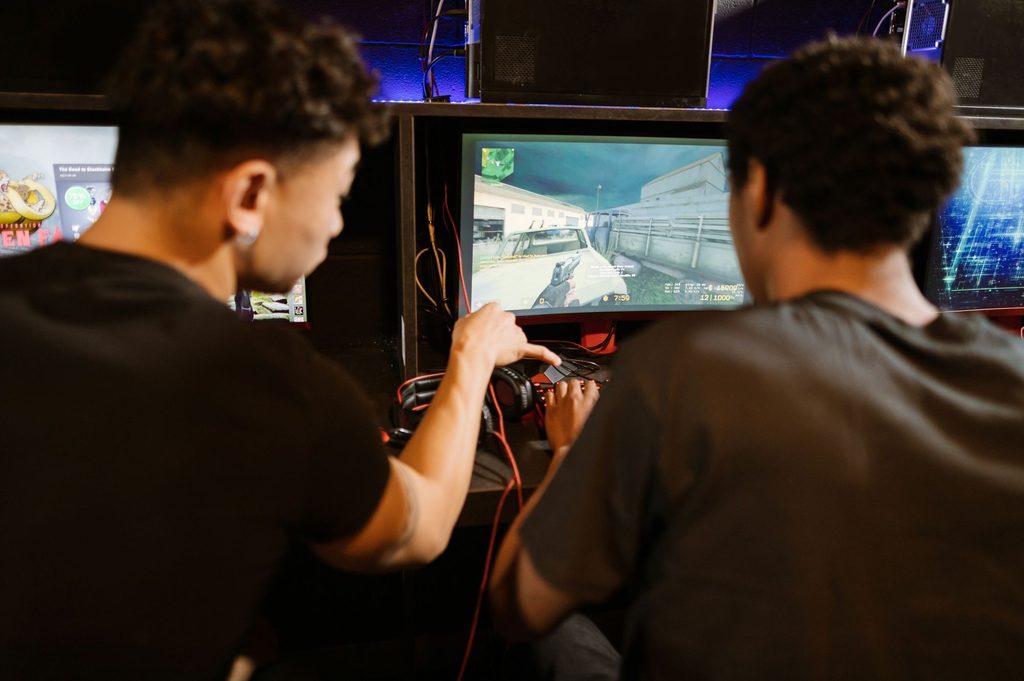
A useful frame comes from how LQA validates UI fit, tutorial flow, event clarity, and monetization messaging in each language. These four areas share one trait: understanding them directly affects a player’s progress, spending, and time, so they reward full localization even in markets with strong English. Treating them as the core of the game localization strategy lets teams invest where clarity matters most.
Tutorials and Onboarding
The first few minutes ask players to learn controls, core loops, and menus while forming a first impression. Reading in a second language adds cognitive effort at the moment when attention is most valuable. Localized tutorial text, labels, and tooltips keep that attention on the mechanics and help new players reach their first rewarding moment sooner.
Store Listings and In-App Purchase Descriptions
Purchase decisions rest on short, precise text: item names, bundle contents, pass duration, and event conditions. Steam lets developers localize store page content, including descriptions, images, and trailers, for each language. Approaching it as marketing copy is productive, since store listing localization shapes whether a player installs at all.
Live Events and Patch Notes
Live games publish new text every week, including event rules, rewards, balance changes, and maintenance notices. Placing event and patch text in the same pipeline as the build lets every language ship on the same day, so each player joins an event with its full duration and hears about changes directly from the game.
Native Language Game Preference Among Southeast Asian Gamers

Research from Niko Partners reveals that 87% of Southeast Asian gamers want localized games, with over 91% in Thailand and Vietnam considering it a key factor when picking new games. In Indonesia, 79% of gamers value localization, with 4 out of 10 prioritizing local language and character design. Because regional demand is so high, basic translation is only the entry requirement in Southeast Asia. Complete localization adapts tone, cultural references, and community slang, which is what helps a team localize game for Southeast Asian players in a way that feels native.
Reading Comfort vs Purchase Confidence
Reading comfort and purchase confidence are different thresholds. A player in Manila may follow English quest text easily yet hesitate over the terms of a limited-time bundle, because a misread costs real money. If soft launch data shows mostly English device settings but weaker first purchase conversion than comparable markets, the gap may sit in monetization text. Where data exists, compare conversion for store views in device language versus English.
Choosing Game Localization Depth: Subtitles, Partial Localization, or Full Dubbing
Language preference plays a big role in how players experience a game, but it varies widely between markets and genres. Some audiences are comfortable with the original audio and simply want readable text, while others expect to hear dialogue in their native language. Understanding where your target players sit on that spectrum is the first step in deciding how much voice localization your title needs.
Subtitles Only
Localized subtitles keep the original voice audio intact while translating on-screen text. This approach suits light-dialogue, casual, and puzzle titles, and games where the original cast is part of the appeal, such as anime-style RPGs with Japanese audio. It delivers full text comprehension at the lowest budget level and keeps reading load low during play.
Partial Localization
Partial localization translates UI and subtitles while retaining original voice tracks. It is the established middle path for narrative, strategy, and mid-budget RPG titles, giving players full text comprehension without recording costs in markets still being tested. It suits audiences with mixed English skills who prefer to read in their own language.
Full Dubbing
Full dubbing re-records every voiced line through casting native actors, adapting the script for spoken delivery, directing performances, and reviewing lip-sync. It suits story-driven and action games, where players follow real-time dialogue during combat, and audiences with a strong native language preference. Teams can review how dubbing affects immersion in game audio localization and scope voice-over production early, since recording schedules can set the release date.
This table may help you reconsider which of the following best fits your game:
| Factor | Subtitles Only | Partial Localization | Full Dubbing |
| Audience English skill | Strong reading and listening | Mixed, reading preferred | Lower, or strong native preference |
| Reading load during play | Low | Medium | High (combat, real-time dialogue) |
| Typical genres | Casual, puzzle, anime-style RPG | Narrative, strategy, mid-budget RPG | Story-driven action, AAA |
| Budget | Lowest | Moderate | Highest |
Caption: Comparative breakdown of localization tiers across player capability and production requirement.
Choosing Languages to Localize Game for Southeast Asian Players: A Phased Roadmap
ASEAN member states each have between one and four official languages, about a dozen in total, and few teams cover them all at launch. A phased game localization strategy for Southeast Asia lets player data set the order.
Phase 1: Languages Backed by Your Player Data
Choose the first wave from the soft launch signals described earlier: device, review, and ticket language. If many reviews arrive in the local language while the game is English-only, players are showing you where comprehension breaks down.
Phase 2: Expanding to Additional Languages
Add a language when player growth justifies the cost, the content roadmap has enough new text to keep that version current, and QA capacity can test every update in it. Judge each language by your game’s needs, such as a narrative campaign or fast event cadence, rather than by ranking markets.
Measuring the Impact of Game Localization on Retention and Reviews
Localization earns insight the same way any feature does, through testing. Utilizing A/B testing on localized dialogue and UI text shows how each version influences retention, engagement, and overall ratings. Teams can track key metrics segmented by language setting: Day 1 and Day 7 retention, store ratings and review content with attention to feedback on translation quality, the volume of language-related support tickets, and first purchase conversion. Together, these metrics give each language its own performance story and show where localized dialogue and UI text deliver the clearest gains.
Building a Feedback Loop With Local Players
Local players are a rich source of language insight. Translation reports gathered from Discord, social groups, and in-game surveys can feed a glossary of terms players actually use, and shipping those refinements in the next update shows the community that its voice shapes the game.
English proficiency tells a team where to start. Players who read English may still prefer their own language to learn quickly, spend with confidence, and keep pace with events. A strong game localization strategy matches depth to each moment and measures results for every language.
SpeeQual Games brings 24+ years of localization experience and 10+ years of gaming specialization to that work, with native-speaking linguists covering Southeast Asian languages. Explore our game localization services to plan the right languages and depth for your next regional release

![MLBB integrated localization early to preserve local identity while reaching global players.]](https://speequalgames.com/wp-content/uploads/2026/09/image-57.jpeg)