The Southeast Asian (SEA) gaming industry is expected to grow strongly in 2026, with total revenue reaching around $14.86 billion, fueled mostly by mobile-first players and a youthful, highly engaged player base. Role-Playing Games (RPG), in particular, benefit from this expansion as players seek immersive, story-driven experiences; mobile RPG participation already accounts for a significant share of global engagement.
Unlike casual or hyper-casual games, RPGs need more extensive localization. Their complex narratives, character development, and cultural references need more than just translation; they must also adjust dialogue tone, mythological elements, and even gaming features to appeal to local audiences.
Entering this market demands more than just a great game; it also requires synchronization—marketing that speaks locally, cultural adaptation that feels authentic, and technical solutions that are ready to accommodate different languages from the start.
Read the full article to learn how to make your RPG truly resonate in the SEA market.
Phase 1: Pre-Production and Cultural Audit
Before any RPG is adapted, written, or even completely built, the most significant task in development occurs in pre-production. This is where developers perform a cultural audit, analyzing every aspect of the game to ensure that nothing clashes with the beliefs, values, or sensitivities of different regions.
Researching information related to politics, religion, and local mythology is a major focus of this stage, particularly in the SEA market.
A common mistake is presuming that fantasy themes are universal. Symbolism, colors, gestures, and mythological references vary greatly between nations in the region. Without earlier research, a game may feel “foreign” or inappropriate in another culture.
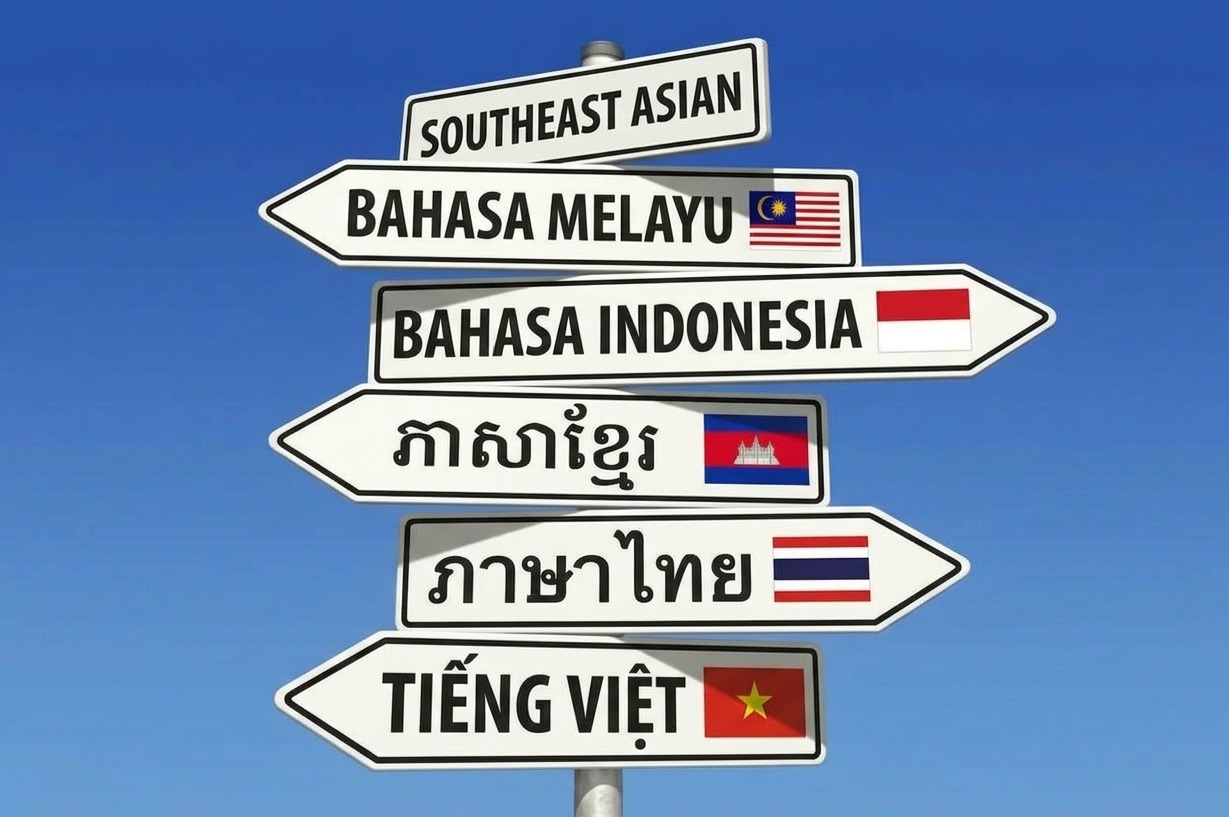
Once risks have been recognized, studios should focus on key languages. For Southeast Asia, these are typically Indonesian, Thai, and Vietnamese. Indonesia has the broadest reach due to its massive gaming population. Meanwhile, Thailand has a passionate RPG audience that demands emotional storytelling. Vietnam, on the other hand, is quickly expanding, with elevated mobile engagement and increased spending power.
However, even the finest RPG localization approach fails in the absence of structure. RPGs have complex fictional universes; therefore, developers build glossaries and style guidelines during pre-production. This ensures that each phrase, character name, faction, and item is consistently translated. They also retain tone, ensuring that the character’s dialogue sounds natural, rather than numerous disconnected translations.
The Narrative Challenge: Handling Complex Storytelling and Branching Dialogues
Every player action in modern RPGs results in a new version of the story. This is why RPG localization is so challenging when dealing with branching dialogue systems. Unlike casual games, RPGs do not have a fixed script. They feature several overlapping story routes, and the same character may behave differently based on the player’s decisions.
The actual challenge is maintaining character consistency over all branches. A companion may be welcoming in one storyline, arrogant in another, or even hostile in a third. Even if the character’s behavior changes, their core identity must stay consistent. If the tone changes too much across branches, players will feel as if they are engaging with different characters rather than one developing personality.
Context also plays a huge role in RPG storytelling. Translators frequently get dialogue lines without knowing where they fit in the plot structure. Without context, emotional tone is easily misconstrued.
A severe warning may be mistranslated as casual talks, or a joke may lose all significance. This is especially crucial in games with choice-based storytelling, where a single mistranslated sentence can disrupt whole narrative paths.
Technical Roadmap: Font Rendering and UI Expansion for SEA Scripts

Players rarely notice typography or UI systems, but they detect when something feels off. These invisible systems are critical in preserving immersion when it comes to font rendering and UI expansion for the Southeast Asian market.
The first challenge stems from script diversity. Thai, Khmer, and Lao need complex rendering since characters are not arranged in a simple linear order. They can stack vertically, use diacritics, and flow without gaps. This implies that UI systems must be designed with correct Unicode support and fonts that contain all necessary glyphs.
At the same time, languages like Indonesian or Malaysian also require emphasis for different reasons. Even though they employ the Latin alphabet, they frequently generate lengthier sentences than English. This causes UI expansion difficulties in which text overflows or gets cut off. To avoid this challenge, modern RPGs use adaptable UI systems. Instead of forcing text into fixed boxes, interfaces are designed to adapt dynamically.
Another major issue is the appearance of “tofu” characters, which are empty square boxes that occur when a font fails to show a character. This usually happens when the font lacks the necessary glyph or when encoding is not handled appropriately. To avoid this issue, developers often rely on UTF-8 encoding, which allows all languages to be handled in a single system, and combine it with font fallback strategies so that unsupported characters are replaced seamlessly by compatible fonts.
Regional Pricing and Monetization Strategies

In Southeast Asia, monetization begins with accessibility, not pricing. If players cannot afford a game or complete a payment, revenue will not be earned. That’s why regional pricing and monetization strategies are critical.
The region is quite diversified. Players from Singapore, Indonesia, Vietnam, and the Philippines all have varying amounts of spending power. If in-app purchases (IAPs) or basic game prices are too expensive, players in more price-sensitive markets will simply not make purchases.
Rather, they may disengage or stick with free material. Regional pricing addresses this issue by modifying prices to reflect local economic conditions, resulting in purchases that are fair and accessible.
This is why it is vital to integrate local payment methods like Dana and ShopeePay in Indonesia, GCash in the Philippines, and PromptPay in Thailand. In many cases, players will leave a purchase completely if their preferred payment option is unavailable. According to data, digital wallets alone account for a sizable proportion of transactions, often exceeding 40% in many SEA markets.
However, monetization does not cease with the purchase. Retention is crucial, and here is where LiveOps comes into play. Developers may maintain player engagement over time by offering culturally relevant content, time-limited rewards, and local events. These strategies promote recurring purchases and foster long-term loyalty.
Localization Quality Assurance (LQA): The Final Checkpoint
In RPG development, everything builds up to one critical moment—the point where the game is no longer just translated but actually played in its localized form. Localization Quality Assurance (LQA) is the last checkpoint.
At this stage, developers rely on native speakers in the SEA to completely playtest the game, rather than just absorbing the text. This is significant since RPGs are heavily contextual. Dialogue changes based on player choices, emotions shift across story branches, and even jokes may feel quite different depending on cultural context.
LQA is also where previously hidden issues become apparent. When text is included in the game, additional issues frequently arise. For example, a larger text may not fit in a dialogue box, a button label may be cut off, or a menu may become illegible. These are not translation issues; they are integration flaws that can only be found during gameplay testing.
Working with a professional partner like SpeeQual Games may help studios deal with these complexities. SpeeQual Games, with its experience in RPG localization and access to native testers throughout Southeast Asia, helps guarantee that both the language and gameplay experience are properly refined before launch.
Conclusion: Winning the Hearts of Southeast Asian Heroes
In summary, successful RPG localization requires more than just translating words; it also entails developing a whole system that integrates storyline, culture, technology, and player behavior. From early cultural audits and branching dialogue design to UI flexibility, localized pricing, and final LQA testing, each stage influences the player experience.
RPGs are particularly demanding since they feature rich stories and complex systems, which can include huge amounts of text and related material. When even a single piece malfunctions—whether it’s incorrect grammar, a malfunctioning UI, or bad monetization—the entire experience suffers.
Ultimately, in a diverse gaming market like Southeast Asia, where players demand localized and culturally relevant experiences, understanding RPG localization is essential for engagement, retention, and long-term success.
\