A joke translated word for word almost never survives the trip.
That is not because the translator missed a synonym; it is because a joke is rarely just its words. It is built on everything sitting around those words: the character saying it, the timing of the scene, and the references the audience already carries into the moment.
Humor keeps showing up on lists of the hardest problems in game localization, yet many teams still hand it off like any other line: translate it, ship it, move to the next row in the spreadsheet. When a joke lands flat for local players, the fix is rarely a better word choice. It requires treating humor localization as a narrative problem, the core of any workable localization strategy, instead of a simple translation task.
Comedy lives in a character’s voice and a story’s rhythm, not in a punchline that stands alone, which raises a harder question: why are literal translations and working jokes structurally opposed to begin with?
Why a Joke Rarely Survives a Literal Translation
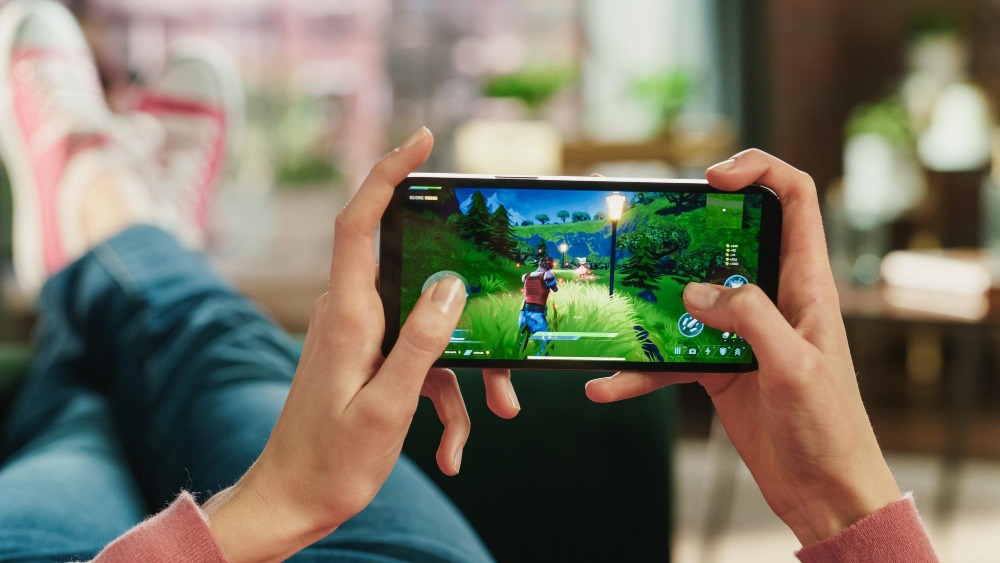
![Game humor localization requires creative wordplay adaptation.]](https://speequalgames.com/wp-content/uploads/2026/09/image-49.jpeg)
Game humor localization encounters challenges when a joke relies on elements that are absent in the target language. Puns and wordplay lean on a phonetic or semantic coincidence specific to one language, so translating humor line by line into another produces a grammatically correct sentence that says nothing funny. A 2026 academic case study of Undertale‘s Polish localization found the same pattern: literal renderings of the game’s acronym jokes and character-specific spelling quirks read as noise until the translation matched the joke’s timing and character voice instead of its words.
Cultural humor encounters a different barrier altogether, not in language structure, but in shared context. As Alconost’s localization team has documented, these jokes lean on national stereotypes, local news, sports, or celebrity gossip. Translated directly into a market without that background, the reference has nothing to land on. Localizing cultural jokes, therefore, requires replacing the target of the joke rather than its words, reflecting the core principle of a broader culturalization pass.
Why jokes don’t translate well comes down to one cause twice: pun-based and culture-based humor both assume the audience shares something with the writer that translation cannot carry across. Players notice: more than 70% of gamers say they prefer playing in their native language, so an unfunny joke is often the first place a language mismatch surfaces.
The Toolkit: Transcreation, Substitution, and Omission
The real question is not just how to translate jokes in video games, but which technique fits the joke’s role in the scene. Academic literature on game localization keeps returning to three tools for humor that will not survive direct translation: transcreation, paraphrasing, and omission. A case study of the English localization of a Chinese wuxia game documented all three in practice: martial arts puns rebuilt from scratch through transcreation, jokes reworded to keep the same tone through paraphrasing, and a handful cut entirely through omission when no equivalent existed.
Of these tools, transcreation highlights the fundamental divide between translating words versus translating intent. In The Legend of Zelda: Breath of the Wild, a Gerudo Town character builds her dialogue around Japanese-specific wordplay. Rather than translating those patterns directly, localizers created entirely new English puns to hit the same comedic rhythm, ensuring the joke’s mechanism survived even though its literal words did not.
Executing this level of adaptation requires structural support, not just creative intent. Riot Games embeds in-country localization teams to adapt character lines, lore, and jokes on an ongoing basis, treating humor adaptation as continuous editorial work rather than a single translation pass. That distinction, ongoing editorial work versus a one-time handoff, determines whether these tools are used effectively or abandoned under deadline pressure.
Why Humor Localization Is a Narrative Problem, Not a Line-by-Line One
![Narrative context helps game humor work across languages.]](https://speequalgames.com/wp-content/uploads/2026/09/image-50-1024x732.jpeg)
The same Undertale research also flagged something broader than pun mechanics: game humor depends heavily on timing, multimodal cues like animation and sound, and the fact that players interact with the joke instead of just reading it. None of those elements live in a spreadsheet row; they live in the scene itself.
This need for context becomes clear when trying to preserve character voice and scene dynamics. BioWare editors have noted how often translators struggle without visual or narrative context, such as a German translator on Dragon Age: Inquisition asking what a character meant by “dancers with tassels”, a line that only makes sense once you know the character and the scene. A translator working from an isolated text string cannot resolve that ambiguity, but one integrated with the narrative team can.
Isolating humor from the broader creative process carries real risk. When studios hand jokes to vendors as generic strings, disconnected from a holistic character localization process that tracks tone, a character’s voice begins to drift across scenes. Players might not explicitly point out the drift, but they will feel a character who used to sound sharp suddenly read as flat. The fix is structural: humor adaptation and core narrative writing require unified oversight, not a sequential handoff.
Built for The Market: Humor and Context in SEA
Mobile Legends: Bang Bang gives one of the clearest regional examples of humor and culture built into narrative, not bolted on top. Its hero Gatotkaca recontextualizes a wayang figure into a playable character, a transformation an academic analysis traced across three levels of narrative adaptation, not a simple reskin. The joke itself lives in the small stuff, like skill quips that riff on wayang stock phrases familiar to Indonesian players “om telolet om”, the kind of line a literal translation would have flattened into nonsense.
Developer-led narrative work in the region backs this up. Political Animals, built by a Philippine studio, runs its satire through Philippine election culture, not a generic political setting. Shepherd’s Plan, from a Thailand-based team, threads dark workplace humor through a story that assumes players recognize the frustrations it is mocking. Neither game imported a joke; both built it from the market it was written for.
Video game subtitle humor carries a version of this same risk. Subtitled jokes lose vocal delivery entirely, so pacing on the page must do the work a voice actor would otherwise do, the same challenge behind how voice-over and subtitle choices get made across Southeast Asia. Ignoring that gap gets costly: Nintendo recalled Mario Party 8 in the UK after a translated line used a word considered offensive there, proof that a localization miss in humor-adjacent text is a reputational risk, not just an awkward line.
Conclusion: Bring Narrative-Driven Localization to Your Game
A joke translated word for word almost never survives the trip, not because the linguist lacked language skills, but because comedy never really stands on its own outside its narrative context. Humor localization strategy only works when it treats a joke as part of a character’s voice and a scene’s rhythm, not a line of text waiting to be swapped word for word.
SpeeQual Games brings 24+ years of localization expertise to exactly that kind of work, pairing native-speaking linguists with narrative context instead of a bare spreadsheet, so jokes that reach local players still feel like they belong to the story, not glued on top of it. If your team is building a story-driven or character-heavy title, our localization team is a natural place to start, and our marketing team can help that voice carry into how the game is positioned once it ships. Talk to us about building humor localization into your narrative pipeline.
![Localization priorities vary depending on the generation of players.]](https://speequalgames.com/wp-content/uploads/2026/09/image-40.jpeg)
![Malay dialects give players a quick sense of whether a game truly speaks to their community.]](https://speequalgames.com/wp-content/uploads/2026/09/image-21.jpeg)