On 21 October 2026, the Bali Beach Convention Center in Sanur opens three days of business matching, a game expo, and a developer conference. IGDX Business & Conference 2026 is run by the Indonesian Game Association with the Ministry of Communication and Digital Affairs. Running since 2019, its 2025 edition drew more than 4,000 participants from 26 countries, per the ministry’s public information service.
For a publisher or investor flying in, that scale poses a challenge: three days and a screened meeting platform mean high-value slots fill up fast, while pitch decks offer limited proof that a studio can execute for global markets.
To navigate the opportunity effectively, it helps to understand what is driving Indonesia game development growth. Four key factors stand out: clear policy support, a massive domestic audience, expanding global publishing pathways, and targeted talent-incubation programs. Each points to a different localization question depending on which side of the table you sit on. Start with the event itself.
What IGDX 2026 Offers in Bali This October
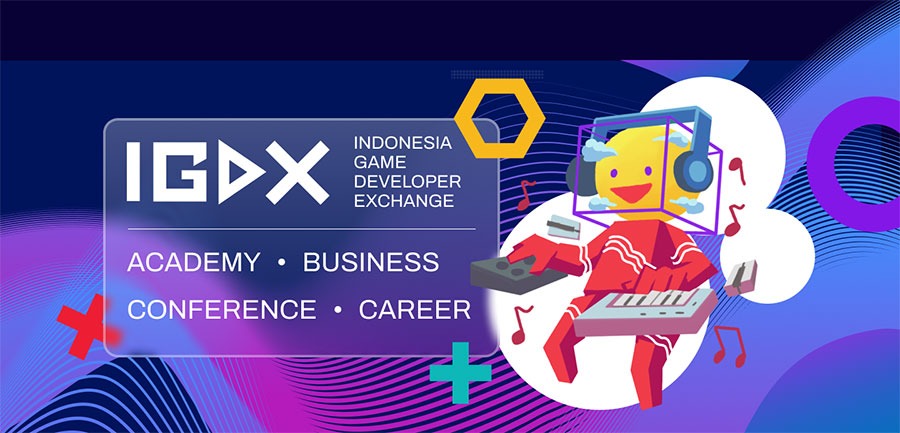
IGDX 2026 runs 21 to 23 October at the Bali Beach Convention Center, Grand Inna Bali Beach, in Denpasar. The official event listing sets out three parts: a one-on-one meeting platform for partner and investor matching, an expo floor of current titles from Indonesian studios, and a conference track of developer talks and panels. A business pass covers all three days and includes the business lounge.
The IGDX 2026 Bali business matching track is worth preparing for because its record is documented. Komdigi puts the global business partnership potential generated through IGDX at US$75 million since the business program began in 2021, across more than 3,500 meetings held between 2021 and 2024.
A Large Domestic Player Base With Room for Local Studios to Grow
Indonesia counts 154 million game players, roughly 40 percent of all gamers in Southeast Asia, and more than 2,100 active developers and publishers generating Rp71 trillion (US$4.2 billion) a year, or 0.34 percent of GDP. The audience is not the constraint.
How that money is distributed matters more. The Indonesian Game Association (AGI) values the domestic market at Rp30 trillion, of which local developers take around Rp750 billion, or 2.5 percent. Players spend heavily, mostly on foreign titles. Read as a weakness, that is, a small local industry. Read as one of the Indonesia game industry growth drivers, it is most of a top-15 global market domestic studio has barely addressed, and closing that gap is what a publishing partnership is for.
AGI’s chairman names the constraint: local studios are held back by access to initial funding. Beyond the roughly 50 developers exhibiting at IGDX Business, the 2025 edition ran IGDX Bootcamp, IGDX Career, and IGDX Academy as capacity tracks with global mentors, which is where next year’s partnership candidates become visible a year early.
Funding and talent explain why studios exist. Distribution explains whether their games leave the country.
Platform Access and Game Publisher Partnerships Are Widening the Route to Global Players
Indonesian game developers have more than one route to international audiences. Digital storefronts, mobile distribution, and publishing partnerships allow studios to reach players across multiple markets, but the commercial and technical requirements can vary considerably.
Platform developments also shape how games reach local players. Nintendo has announced plans for an official Indonesian launch of the Switch and Switch 2 in December 2026, with distribution handled by PT Nusantara Interactive Niaga, a Salim Group company. The reported absence of an eShop at launch means the initial rollout will be centred on hardware and physical distribution rather than a fully localised digital storefront.
The distinction matters because hardware availability does not automatically guarantee that Indonesian-developed games will receive greater visibility or easier access to the platform. The Deputy Minister of Creative Economy has also called for development kits to accompany improved market access, highlighting the importance of enabling local studios to build for the platform.
Meanwhile, PC and mobile publishing already provide established routes to international audiences.
Indonesian studios have demonstrated that games developed locally can find commercial and critical interest overseas. DreadOut, developed by Digital Happiness, helped introduce international players to Indonesian horror. Coffee Talk and A Space for the Unbound have also reached audiences beyond Indonesia through their distinctive storytelling and presentation.
These titles illustrate an important point: a game’s country of origin does not have to limit its audience. Strong concepts, engaging narratives, and effective distribution can help locally developed games connect with players across different markets.
However, international reach depends on more than making a game available overseas. Publishers need to consider how a title is presented, how players understand its narrative and mechanics, and whether the experience works naturally in each target market.
For studios pursuing global publishing opportunities, localization is part of that preparation. Language support, cultural context, user interface quality, and platform requirements can all affect how a game is received after launch.
To understand why these capabilities are becoming more important, it is also necessary to look at the policies and development programmes shaping Indonesia’s game industry.
Policy Direction: From a National Roadmap to Ministry Programs
Indonesia’s game development ambitions are supported by a formal policy framework. Presidential Regulation No. 19 of 2024, signed in February 2024, established a national roadmap for the game industry and outlined seven programmes involving different government bodies.
The initiatives address several structural challenges facing local studios, including access to financing and the availability of specialised talent. Measures such as financing schemes and simplified permits for expatriate specialists are intended to help strengthen the industry’s capacity to develop and commercialise games.
Komdigi has also introduced Innovation Hub programmes in Jakarta, Medan, and Surabaya, focusing on studio development and talent training. These initiatives contribute to a broader effort to build a more sustainable game development ecosystem rather than relying solely on individual successful titles.
For publishers and investors, this policy direction offers useful context when evaluating potential partnerships. A studio’s long-term prospects depend not only on its current game portfolio but also on the talent, infrastructure, and institutional support available to help it grow.
Regulation is another part of the picture.
Komdigi launched the Indonesia Game Rating System (IGRS) at IGDX 2025. The system introduces age classifications for games distributed in Indonesia, with categories ranging from 3+ to 18+. Publishers should verify the applicable rating, submission, and labelling requirements for their releases rather than leaving compliance checks until launch.
For international publishers entering the Indonesian market, this means regulatory readiness belongs in the planning process alongside platform requirements, marketing, and localization. For Indonesian studios preparing to distribute games abroad, the reverse also applies: requirements in each target market need to be assessed before release.
Government programmes can help create the conditions for industry growth, but commercial success still depends on whether studios can build compelling games and connect them with the right audiences.
What This Means for Each Reader
For publishers and investors scouting Indonesian studios, three localization questions are worth asking in the meeting.
- Which languages does the build already support?
- Are strings separated from code, and does a glossary exist?
- Who reviews the translation inside the game, not in a spreadsheet?
Those answers size the post-deal work better than a roadmap slide and show whether a studio already works with a localization service in Indonesia or needs one from scratch. The IGRS rating step is one half of the framing; the other is that Steam carries the Indonesian language as a full platform language, so a store page can be presented natively.
For Indonesian studios preparing a global release, the sequencing is documented. Steam page localization guidance recommends using regional wishlist data to pick target languages and translating the store page before the full game, because it is faster and lifts visibility sooner. Locking a glossary during the first build reduces friction for every language added later, while early planning makes audio localization easier to implement rather than retrofitting.
Furthermore, LQA inside the build is what separates a correct translation from a working one. Text that reads perfectly in a document can still be truncated in a UI, which is why LQA across regional game builds runs against the build, not the file.
Conclusion: Getting Your Build Ready for IGDX 2026
IGDX 2026, 21 to 23 October in Bali, is the meeting point. What drives Indonesia game development growth sits behind it: policy, the domestic player base, platform and publisher access, and the studio and talent programmes feeding all three. The event is where they become visible in one room.
For a publisher looking for a partner and a studio preparing a global release, the conclusion is the same. Language coverage and localization quality are part of partnership readiness, not a stage to handle after the deal closes.
SpeeQual Games brings 24+ years of localization expertise and more than a decade of gaming specialisation to that work, pairing native linguists with testers who play the build instead of reading the file. If you are heading to Bali this October, our localization team can get a title ready for the business matching table, and our marketing team can carry that voice into its positioning. Talk to us about what your build needs.