
When Moonton introduced Kalea to Mobile Legends: Bang Bang in March 2025, her character designer drew on giant serpent legends from across Southeast Asia: Antaboga in Indonesia, Seri Gumum in Malaysia, Bakunawa in the Philippines, and Phaya Naga in Thailand and Laos. By anchoring the hero to a heritage shared across the region, the team gave folklore a defined role in the game marketing campaign.
The most effective campaigns carry one cultural narrative through every touchpoint, so local copy, visuals, and player rewards all echo the same idea and turn a single reference into a recognizable campaign identity.
This guide explores how a game marketing campaign can draw on folklore, festive moments, player rituals, and public figures, and how teams can review and measure those cultural references.
What Counts as a Cultural Reference in a Game Marketing Campaign
A cultural reference is any element whose meaning grows from shared local knowledge. Six categories appear most often: mythology and folklore, festive moments such as Ramadan, Hari Raya, and Songkran, social rituals such as the way friends gather to play, humor including memes and wordplay, everyday language and community slang, and public figures ranging from athletes to local creators. Folklore and public figures are highly visible and easy to verify, which makes them dependable anchors for a campaign’s core story. Humor and slang move quickly and reflect the community that reads them, so they suit fresh, conversational touches once native speakers confirm current usage.
Folklore and Legends as Character Anchors
Mobile Legends offers two Indonesian examples built through different production models. Gatotkaca, released in 2017, was adapted directly from Is Yuniarto’s Garudayana comic, with storyboard input from the creator. Kadita, released in 2018, was developed entirely in-house by Moonton after the team researched the Nyi Roro Kidul legend.
Both heroes show how cultural references thread through every layer of design. Kadita’s name comes from an alternative name for the Southern Sea goddess, and her skill set summons tidal waves. Gatotkaca’s abilities mirror the earth-shaking leaps of his epic counterpart. When hero names, skill descriptions, and mechanics all echo the source material, players who know the legend recognize it at once, and newcomers still meet a coherent character. The same approach applies when adapting Malay folklore into playable MOBA heroes.
Festive Moments as a Campaign Calendar
Religious and cultural holidays give a game marketing campaign a built-in rhythm that players already recognize. During Moonton’s 2025 Golden Month campaign, players in Indonesia and Malaysia could win sponsored Umrah trips during Ramadan and Hari Raya, while in Indonesia the publisher supported 100 underprivileged children with essential supplies and Iftar meals at a local orphanage. Building on that momentum, Moonton scaled the Golden Month initiative from four countries to eleven regions by 2026, describing its approach as hyperlocalization: celebrating cultural moments through localized content, livestreams, and community activities.
Planning Copy Around Ramadan and Hari Raya
Ramadan copy leans toward togetherness and generosity, while Hari Raya copy shifts naturally to celebration and homecoming. Teams can schedule posts, livestreams, and event resets around iftar and sahur, then confirm the plan against session data. An Umrah trip reflected the meaning of the season directly, which gave the reward a place inside the story itself, and a welcoming tone invites players who do not observe Ramadan to take part too.
Community Giving as a Campaign Element
Giving resonates when players see how the game connects to the cause. Formats include in-game milestones that unlock donations and charity livestreams with local creators. In 2025, creators Oura Gaming and Setiawan Ade hosted a charity livestream that raised approximately US$15,000 for 100 orphans in Jakarta. Announcements read best when written natively in the local language, naming the partner organization, and followed by an outcome report that builds trust and invites players to join the next initiative.
Social Rituals as Campaign Insight: The “Mabar” Example
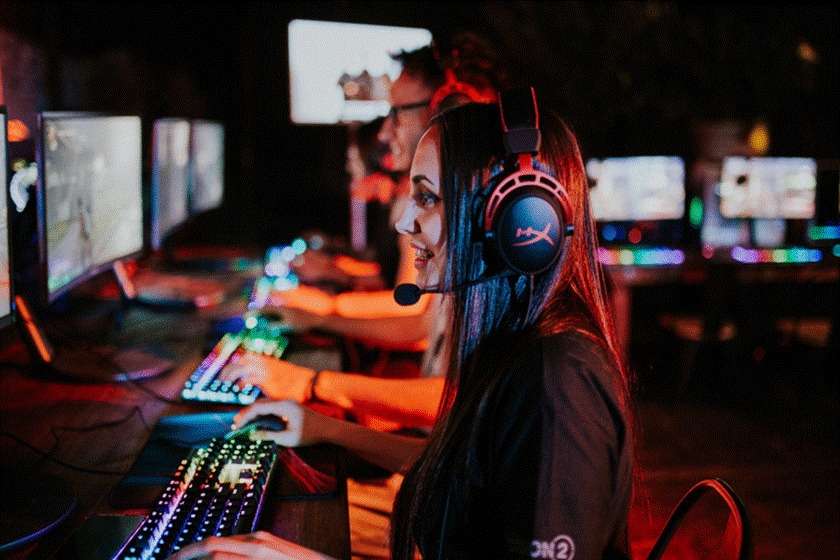
esports.gg describes mabar, short for main bareng or “playing together,” as more than a gaming habit in Indonesia. It is a social ritual: friends gather after school, and coworkers queue up after work. A habit describes what players do; a ritual explains why they return and with whom. A ritual arrives with a built-in group, a shared moment, and a vocabulary of its own, which gives marketers a rich starting point.
Turning a Player Ritual Into a Campaign Concept
A ritual-based concept puts the group first. Copy can use the community’s own word, such as “Ayo mabar” in an Indonesian headline, speaking to players in the phrase they already use with friends. Invite-a-friend mechanics can reward both players, so the invitation feels like a shared gift. Team rewards can unlock when a party completes matches together, mirroring the way the group plays.
Using Community Slang Without Losing Clarity
Slang evolves quickly and carries the flavor of each city and age group. Before publishing, teams can ask native reviewers who actively play the game to verify each term, test key headlines with a sample of local players, and pair every slang phrase with a clear call to action. A shared glossary of approved terms keeps spelling and usage consistent across every marketing channel.
Local Public Figures and Licensed Likeness in Game Marketing
The licensed Paquito skin based on Manny Pacquiao launched on 13 April 2021 in Indonesia, Singapore, Malaysia, and the Philippines. The final design and skill effects took six months, with hundreds of photos used to capture the athlete’s tattoos and expressions. That level of detail shows how a public figure’s likeness becomes a collaborative craft between the studio and the talent’s team.
What a Licensing Process Involves
A licensing process unfolds in four stages. The license agreement defines scope, territories, duration, and approval rights. Visual reference follows, with photo sets and details the talent’s team considers essential. Design approval covers review rounds on the model and effects, and if the likeness includes voice, teams can plan voice-over production within the same approval track. Finally, regional launch planning sets release dates, sale windows, and assets for each territory.
Regional Release Planning for a Game Marketing Campaign in Southeast Asia
A dependable approach keeps the core visual and name fixed while adapting the copy language, the story told about the figure, creator partners, and posting times for each territory. Briefing each local team on what the figure means to its audience lets every market tell the story in its own voice, and treating localizing campaign copy as part of the launch plan keeps language, visuals, and timing aligned.
Game Culturalization Checklist for Campaign Assets

SpeeQual Games has highlighted that a game built on Western references such as Halloween, idioms, slang, and humor connects most fully with players in Thailand or Indonesia when menus, dialogue, and references are all adapted to local culture, beyond translation alone. Campaign assets are often a player’s first contact with the game, which is where game culturalization goes beyond localization: it adapts meaning, not only words.
Elements to Review Before Launch
Six elements merit a review before any asset goes live. Colors come first, since a palette can carry specific signals in religious or mourning contexts. Symbols follow, including gestures, animals, numbers, and religious imagery, along with humor built on English wordplay or Western pop culture. Slang needs a check that each term is current and respectful, festive dates need a check because lunisolar and lunar holidays such as Ramadan shift every year, and character visuals complete the list, covering costumes, poses, and the portrayal of real or legendary figures.
Native Reviewers and Community Feedback
A native linguist reviews copy and visuals against the checklist, a cultural reviewer from the target market identifies context details, and a small group of local players previews assets before public release. Each finding is then assigned to the creative team with a deadline.
Measuring Cultural Resonance and Planning the Next Campaign
Signals to Track
Four signals show how a reference performs. Local-language comment sentiment, read by native speakers as well as tools, captures tone and nuance. Engagement per asset, compared across versions with different references, shows which ideas players embrace. Community hashtags that players start on their own show a concept entering their conversation, and local creator responses, including reuse of campaign terms, show the language joining the community’s vocabulary.
Feeding Insights Back Into Localized Game Marketing
Updating the glossary with terms players adopted, the style guide with tone notes for each market, and the next campaign brief with the references that earned the strongest response creates a knowledge base that grows with every launch.
Cultural references earn their place in a game marketing campaign when they are chosen deliberately, reviewed by native experts who share the culture, and measured against real player response. Players respond to campaigns that honor what those stories mean to them.
SpeeQual Games brings over 24 years of localization expertise and more than a decade of gaming specialization to that work, supported by native-speaking teams across every Southeast Asian language. Contact our team to localize your next regional game marketing campaign.

![Localization priorities vary depending on the generation of players.]](https://speequalgames.com/wp-content/uploads/2026/09/image-40.jpeg)
![Malay dialects give players a quick sense of whether a game truly speaks to their community.]](https://speequalgames.com/wp-content/uploads/2026/09/image-21.jpeg)