What happens when a 500-year-old legend gets a hero kit? MOBAs already answer that question by default, since the genre’s hero pools regularly draw on Greek, Chinese, and Norse pantheons to fill out a roster.
Malaysia is an equally well-positioned market for folklore-inspired heroes. Home to a deeply active MOBA audience and a rich cultural tradition of its own, the region has a player base simply too large for developers to overlook its local myths.
The numbers back that up. MOBA and strategy titles held 29.88 percent of Southeast Asia’s 2025 gaming revenue, and Mobile Legends: Bang Bang (MLBB) alone counts 10 million or more monthly active users inside Malaysia, part of a regional MOBA cluster that runs through the Philippines, Indonesia, and Singapore too. The market keeps expanding, with Malaysia’s gaming sector projected to grow from USD 1,100.7 million in 2025 to USD 2,287.2 million by 2034.
What that growth has not solved is representation. A large, spending player base sits behind a hero roster that rarely draws on Malay folklore, in the genre built natively to use it. Two successful releases show what happens when publishers finally tap into that game culture; one borrows it for a season, the other builds it in for good.
Adapting Legends: Two Case Studies in MOBA Representation
Both paths already exist in the region right now: a skin that reskins an existing hero for a moment in the spotlight, and an original hero built around Malay legend from the ground up. Here is what each looks like in practice.
Honor of Kings x Puteri Gunung Ledang: Malay Folklore Meets Modern Gaming
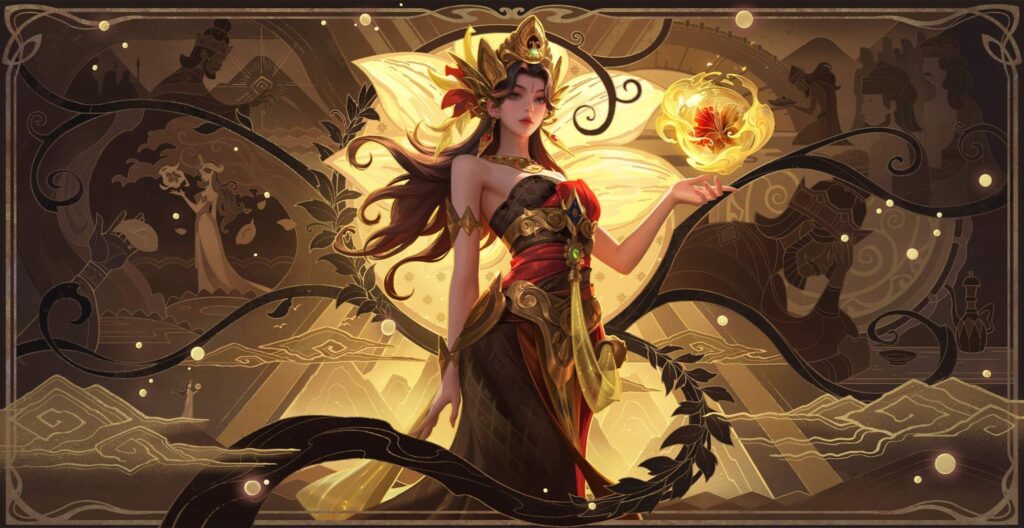
On 28 August 2025, Level Infinite’s Honor of Kings (HOK) released the Puteri Gunung Ledang skin free for its hero Lady Zhen, timed to Malaysia’s Merdeka campaign and claimable through 9 September. The skin reimagines the legendary Malaysian princess with songket fabric renders and hibiscus detailing, Malaysia’s national flower, and the campaign paired it with Malaysian-dialect voice-overs, limited-time titles, and stickers.
Since Lady Zhen was already part of the roster, the release works as a culturally adapted skin, not a new hero. It uses folklore as a localization layer on an existing character rather than a ground-up hero build.
The campaign extended past the game client. Malaysian singer-songwriter Mimifly was commissioned for “Nara,” an original single built around the Puteri Gunung Ledang legend, turning the launch into a cross-media moment instead of a cosmetic drop alone. As Eugene Chin, Country Manager of Level Infinite Malaysia, explained, the Merdeka update was intended to be “more than just a visual refresh”. It was a celebration of culture, identity, and creative expression.
Mobile Legends: Bang Bang x Badang: An Original Hero Built From Legend
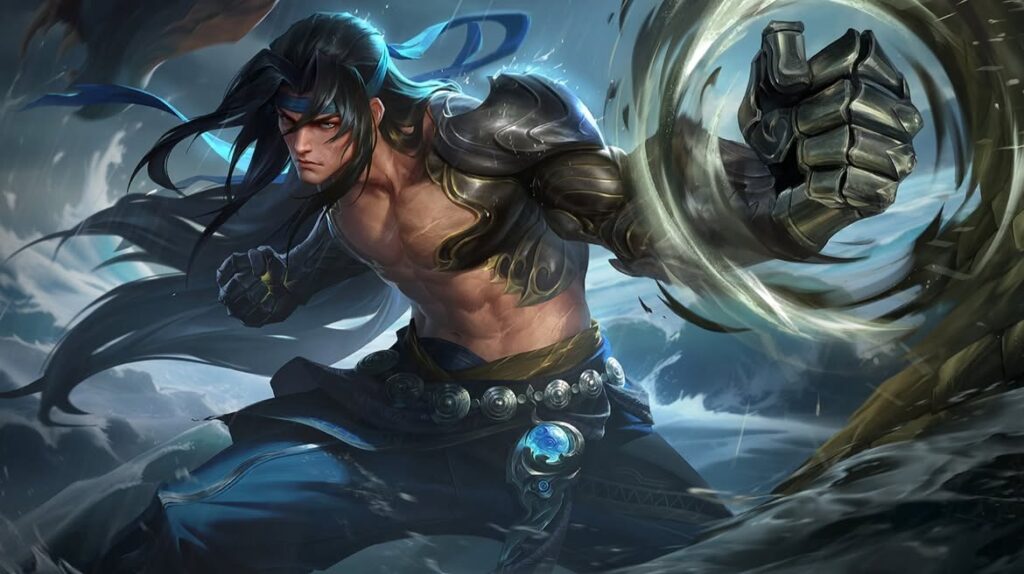
Where Honor of Kings borrowed a season, Mobile Legends: Bang Bang built a permanent fixture. Badang joined the roster in January 2019 as one of Moonton’s early local-hero releases.
His origin draws from Malay legend: an ordinary villager who defeats a water monster and emerges with superhuman strength. Stories of his legendary power include hurling a massive boulder across the sea, a legend that resonates with the story of Singapore’s own Singapore Stone. The in-game kit keeps that legend intact rather than treating it as a skin over someone else’s hero: Badang fights bare-fisted, builds up stacks with basic attacks, and can wall off enemies with the terrain itself, a kit written from scratch around who he already was in the story.
That distinction is what makes him the harder path. Six years on, Badang is still in permanent rotation, patched and balanced like any other hero, while a skin only holds the spotlight for as long as its event runs. It is also, still, a single hero on a much larger roster, which is exactly the gap the next section gets into.
Why Malay Local Stories Fit Game Narrative Design
Puteri Gunung Ledang reads as a protagonist by design. Her legend is built on wit and agency, the seven impossible conditions she sets a sultan, which lands much closer to a MOBA hero archetype than ‘hantu’ or spirit folklore usually does. MLBB’s Badang reads the same way from the other direction: an ordinary villager whose courage earns him supernatural strength, fitting the exact origin-story shape a fighter hero kit is built around.
That framing matters because MOBA rosters are already built from myth. Turning a legendary figure into a playable character, whether as a permanent hero like MLBB’s Badang or a localized skin, is the genre’s core design pattern. Pulling from Malay local stories is a massive opportunity still open for game narrative design. Level Infinite’s Eugene Chin backed this rationale, emphasizing that players want to see their culture, identity, and creative expression genuinely reflected on screen.
However, launching an original hero like Badang or crafting a seasonal skin is only half the battle—the real magic happens through deep content localization. It requires a profound understanding of local culture to preserve the emotional depth, humor, and idioms to make regional legends resonate.
Why Language Localization Completes the Picture
A skin or a hero kit gives a folklore figure a face. It does not, on its own, decide whether a Malaysian player experiences that figure in their own words. That is where the HOK campaign went a step further than most: it paired the Puteri Gunung Ledang skin with Malaysian-dialect voice-over, not just reused text, so the character sounded local as well as looked local.
Mobile Legends: Bang Bang has already set the bar for what that combination looks like elsewhere. Hero voice-overs are already localized into several languages, such as Chinese, Indonesian, and Japanese, and are tied to the game’s regional settings. Localization like this has, in fact, been one of MLBB’s clearest success drivers: players consistently respond to heroes who feel like they speak their language, not just play in it.
So it’s no surprise Malay players are expecting that same experience too. The hero built on Malay legend already has localized text, but not yet a Malay voice-over. Closing that last gap, giving the character a voice in the same language as the folklore he’s drawn from, is likely to deepen exactly the kind of immersion that’s already made localization work so well elsewhere. If MLBB extends that same full text-and-VO treatment to Malay, it’s reasonable to expect the same lift in engagement and affinity the game has already earned in other markets.
Hero design decides who a folklore figure becomes. Voice-over decides whether players hear that figure speak as they do. Translation decides whether nothing gets lost in between. Put those three together and a folklore campaign stops being a seasonal marketing beat and starts being something players simply live in every match.
Conclusion: Building Malaysia’s Next MOBA Icon
Local legends are not a gap in MOBA game culture; they are an underused asset already sitting inside a market that is playing at this scale. Two paths exist to close that gap: skins offer fast, low-risk visibility, as Honor of Kings did with Puteri Gunung Ledang. Original heroes, meanwhile, create a deeper, lasting cultural presence, as Mobile Legends: Bang Bang demonstrated with Badang. Neither has gone far enough on its own, and that shortfall is not a creative limit; it is an unclaimed opportunity given the size and growth of Malaysia’s own player base.
The real choice is not skin versus hero; it’s a trade-off between speed, permanence, and language that decides whether either one actually lands with players. A skin gets a legend seen for a season, and an original hero gets it remembered—but only authentic translation and dialect-true voice-over are what make sure it is remembered correctly.
With 24+ years of localization expertise and 10+ years of gaming specialization, SpeeQual Games helps publishers get that language layer right, from dialect-accurate voice work to translation that keeps a hero’s story intact, timed to the campaign moments players already care about.
The next big MOBA hero will not come from another pantheon. It will come from a publisher willing to build, not just borrow, from Nusantara’s own legends. If you are scaling a MOBA into Malaysia’s gaming industry, talk to SpeeQual Games about a translation and voice-over strategy built around the stories players already know.