
Esports World Cup 2026 (EWC 2026) is one of the largest esports events of the year, featuring 25 tournaments across 24 titles, a $75 million prize pool, and an unprecedented localization demand for participating publishers. Broadcasting to a global audience across dozens of languages and time zones simultaneously creates a heavier operational launch than almost any single game launch.
That infrastructure was put to the test when EWC 2026 unexpectedly relocated from Riyadh to Paris just months before the opening ceremony. Despite the shift, organizers had to deliver seamless broadcasts, localized content, and real-time audience communication worldwide. A last-minute move like this serves as the ultimate stress test, proving whether a localization model is resilient enough to handle dynamic operational shifts rather than just planned deadlines.
Ultimately, an event of this magnitude reveals what a mature localization strategy requires when a publisher aims for a truly global audience, offering lessons that apply even to smaller-scale games.
Start with the scale itself, so the actual stakes are clear.
The Scale of Esports World Cup 2026, and Why Localization Can’t Be an Afterthought
EWC 2026 ran in Paris from July 6 to August 23, bringing together more than 2,000 players from over 200 clubs and 100-plus countries. They competed across 25 tournaments in 24 titles for a record prize pool of roughly $75 million, as confirmed by both CNN and The National News. The tournament had been held in Riyadh since its inception, and this year was meant to be no different, until regional security concerns tied to the escalating Iran conflict forced organizers to relocate on short notice.
Relocating a tournament of that scale within a matter of weeks meant rebuilding venue operations and broadcast logistics under severe time pressure. Keeping the Riyadh venue was no longer workable once regional air travel became unreliable, forcing organizers to act quickly to give clubs, partners, and fans clarity, according to European Gaming’s coverage. None of that coordination was optional. Every publisher in the tournament still had to deliver production-ready localization across every touchpoint, on a compressed timeline nobody had planned for.
Serving mobile gaming audiences requires no less multilingual effort than PC or console esports. Regional fandom drives global viewership, meaning broadcast needs expand well beyond English. Following Myanmar’s Yangon Galacticos victory at the 2025 PUBG Mobile World Cup (PMWC), organizers added dedicated Myanmar broadcast channels for the 2026 edition. Similarly, Streams Chart data showed Hindi leading PMWC 2026 co-streams, establishing India as the tournament’s largest community-casting market. Host city changes do not shift regional audience demographics. Regardless of where the actual tournament takes place, mobile audiences expect localized coverage in their native tongues.
A tournament this large and this global automatically demands a far more mature localization strategy than a regular game launch does.
What Global Tournament Production Actually Demands From Localization
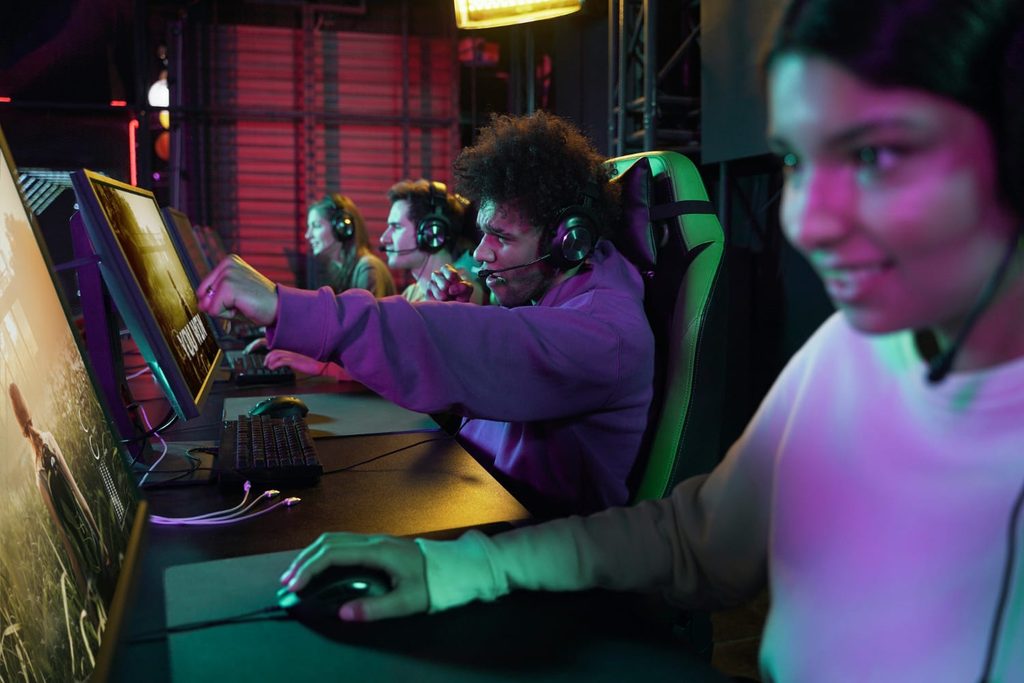
An international broadcast has to reach audiences across languages and time zones at the same time. That means commentary, subtitles, and official communication all need to be ready in multiple languages simultaneously, not one primary language backed by a translation added in after the fact.
This is especially crucial for regions with hyper-engaged fanbases like Southeast Asia, where audiences demand content that feels culturally authentic rather than superficially translated. The M7 MLBB World Championship demonstrated this approach by embedding local culture directly into its core production, incorporating regional dance, mythology, and heritage into the opening ceremony itself, as documented by Indonesia’s Ministry of Creative Economy.
When a publisher steps onto a stage the size of EWC, that same cultural consistency must extend to every touchpoint: in-game UI, official tournament updates, and supporting social content. On a platform this visible, even a single inconsistent translation immediately stands out.
But the lesson from EWC isn’t only about tournaments of that magnitude. It’s just as relevant to publishers whose game isn’t anywhere near that scale yet.
Localization Lessons 2026 for Publishers Who Aren’t Anywhere Near EWC’s Scale
Esports awareness across Southeast Asia has reached 94%, according to Deloitte research, making competitive gaming content mainstream rather than a niche interest. Consequently, even publishers operating far below EWC’s scale are catering to an audience that already expects high production standards.
Whether a studio is launching ranked modes, leaderboards, or community-run tournaments, consistent localization across every competitive feature is essential. Terms for rank tiers, leaderboard systems, and tournament rules form the bedrock of player engagement; any inconsistency in this layer is immediately noticed by a game’s most dedicated community members.
The lesson from EWC applies at every level: esports localization extends beyond translating functional UI text. It is about maintaining a seamless, culturally resonant experience, ensuring a game preserves its authentic identity even as it expands onto a larger global stage.
That pattern is what a publisher needs to hold onto, regardless of how large the tournament or the competitive feature set eventually becomes.
Building a Marketing Localization Strategy That’s Tournament-Ready

Publishers serious about esports must prepare for the localization layers most often overlooked: broadcast commentary terms, standardized competitive terminology that stays consistent across updates, and multi-language crisis communication. As demonstrated when EWC relocated on short notice, rapid-response communication must be deployed simultaneously in every language, not drafted after the fact.
Maintaining consistent terminology across all channels, in-game UI, social media, and live broadcast, is essential. Local communities should never have to reconcile conflicting terms for the same rank, mechanic, or event simply because they encountered them on a different platform.
This level of readiness works best when it’s built in from the start of competitive-feature development, not patched on once a game happens to land a shot at a major tournament. Global tournaments move quickly, and localization infrastructure cannot afford to play catch-up.
That readiness is exactly what separates publishers who can capitalize on a global esports moment from those who scramble the instant the opportunity actually arrives.
Conclusion: Turning EWC 2026’s Lessons Into Your Own Localization Roadmap
EWC 2026 shows how localization strategy needs to support a global audience from the distribution stage itself. The event was delivered in more than 40 languages through over 100 broadcast partners, while its Creator Program supported up to 5,000 co-streamers. Together, these distribution channels reached fans across 160 countries, with nearly 70% of co-stream watch time coming from languages other than English. The mobile side of the event followed the same pattern, with Hindi emerging as the leading language among PMWC 2026 co-streams. These figures show the scale and language diversity that publishers need to account for when preparing content for a global esports audience..
The lesson holds at any scale. Effective esports localization requires standardized competitive terminology, rapid multi-language crisis communication, and cultural identity that resonates even on the world’s largest stages.
SpeeQual Games helps publishers build that exact tournament-ready infrastructure. By establishing consistent terminology and multi-channel workflows well before key events, we ensure your team is never scrambling when your game takes the global stage.

![Localization priorities vary depending on the generation of players.]](https://speequalgames.com/wp-content/uploads/2026/09/image-40.jpeg)
![Malay dialects give players a quick sense of whether a game truly speaks to their community.]](https://speequalgames.com/wp-content/uploads/2026/09/image-21.jpeg)