“Largest gaming market in Southeast Asia” shows up early in most publisher briefs on Indonesia, and the claim isn’t wrong. Indonesia accounts for45.8% of all Southeast Asian gamers, the largest population share in the region. The country also generated 870 million mobile game downloads in Q1 2025, up 9% quarter over quarter (QoQ), a volume that no regional competitor can match.
The common thread across Indonesia’s install and revenue charts isn’t one dominant genre; it’s a split. The five titles ranked below aren’t a consumer recommendation list. They are field evidence of what that population figure actually delivers for a publisher, and what it takes to convert that reach into revenue.
Roughly 175 million Indonesians play games, a scale that alone makes Indonesia the single largest mobile gaming audience Southeast Asia has to offer. Indonesia holds roughly half of Southeast Asia’s total gamer population and, per Niko Partners’ market model, about a quarter of the region’s gaming revenue. This is not a shortfall in the market’s potential; it is a signal of where the current upside is concentrated and which genres and monetization models are already capturing it.
Population size alone does not determine whether a launch succeeds in Indonesia. What matters is the lane a title competes in, whether it is driven by reach or monetization. This article examines what the current top five reveal about that divide and what it takes to turn massive reach into sustainable revenue without losing players in translation.
Indonesia’s Trending Mobile Games: The Current Google Play Top 5
Measuring mobile game performance in Indonesia requires looking past a single metric. Download numbers paint one picture, while revenue rankings reveal another. To capture the full picture, we cross-checked SimilarWeb’s top free apps charts against AppBrain’s top-grossing rankings. Here are the top five games on Indonesia’s Google Play this week:
- Mobile Legends: Bang Bang (MOONTON), MOBA, free-to-play: #1 installs, #2 grossing.
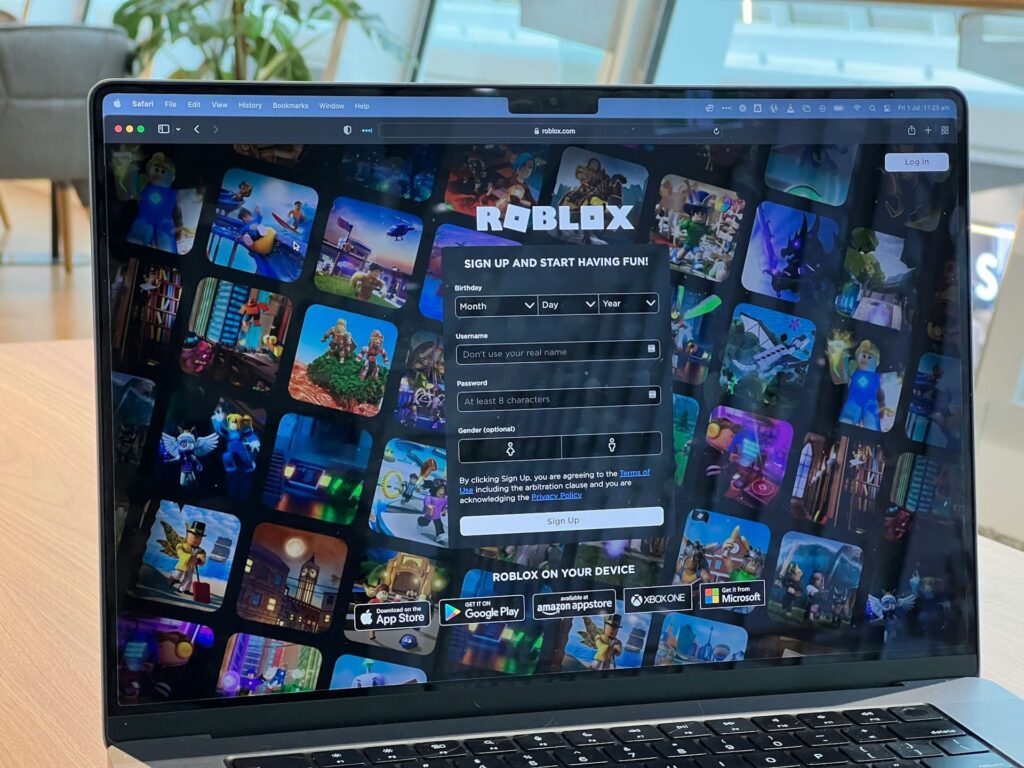
- Roblox (Roblox Corporation), user-generated content platform, free-to-play: #2 installs, #3 grossing.
- Higgs Games Island (Higgs Games), domino and casual mini-games, free-to-play: #3 installs, #1 grossing.
- Free Fire and Free Fire MAX (Garena), battle royale, free-to-play: two listings in the top five by installs, both in the top six by grossing.
- eFootball (Konami), sports simulation, free-to-play: #7 installs, #4 grossing.
What These Five Games Teach Publishers
Line the five up and a pattern emerges beyond genre: massive reach that clusters around a few shared traits, solo-versus-team formats, and also its localization strategy.
Across these titles, genre allegiance is anything but uniform. Mobile Legends occupies the MOBA space, Free Fire and Free Fire MAX anchor battle royale, Roblox operates as a user-generated content (UGC) platform, Higgs Games Island sits in casual card and domino gaming, and eFootball represents sports simulation. No single genre monopolizes the top of the chart. That fragmentation suggests that publishers may have more to learn from the characteristics shared across these titles than from pursuing a single “winning genre”.
The format, however, shows more overlap. Even where solo play exists, several of the leading titles incorporate strong social or multiplayer elements, from Mobile Legends‘ 5v5 matches and Free Fire‘s squad-based gameplay to Higgs Games Island’s multiplayer tables and Roblox’s social spaces. eFootball differs somewhat, retaining substantial single-player modes alongside its multiplayer offering.
The deeper pattern, however, is localization. Mobile Legends features Indonesian voice-over and a hero built on local folklore (Gatotkaca). Free Fire has developed a substantial Indonesian esports and creator ecosystem, including major events hosted in Jakarta. Higgs Games Island takes an even more explicitly local approach, with domino gameplay closely aligned with a format popular among Indonesian players. The other two illustrate different models: Roblox relies heavily on user-generated content, allowing local relevance to emerge through its creator ecosystem, while eFootball draws on the global appeal of licensed football content.
The takeaway for publishers is not that one genre or format guarantees success in Indonesia. Rather, these five titles suggest that local relevance can take multiple forms, whether through gameplay, characters, language, community, or content.
Scale vs. Spend: What Indonesia’s Numbers Actually Mean
That list is a snapshot, not an explanation. The gaming industry in Indonesia doesn’t reward every genre the way it rewards downloads, and a single game market size figure flattens genre economics moving in opposite directions. This split, more than the population figures above, is the game development trend a launch plan needs to account for.
Where Downloads Lead: Platformers, Simulators, and Arcade
By install growth in Q1 2025, three genres led Indonesia: platformers and runners (+38.2% QoQ), arcade (+18% QoQ), and simulators (+4.9% QoQ). These genres reward low commitment and little upfront spend, the behavior pattern behind reach-driven, ad-monetized titles. Players open these titles for short sessions, tolerate rewarded video ads in exchange for in-game boosts, and rarely hit a paywall before deciding whether to keep playing, which is why growth here shows up in downloads rather than revenue.
Where Revenue Leads: MOBA, 4X Strategy, and Sports
Revenue tells a different story. MOBA led at +32.7% QoQ, largely on cosmetic skins and battle pass spend tied to esports and live-service content. 4X strategy followed at +21.1% QoQ, driven by long sessions and guild-based social pressure that pushes players to pay rather than wait. Sports was the exception, down 22.6% QoQ, consistent with seasonal licensing content losing momentum between league updates.
The Genre Sitting Between Both: Battle Royale’s Growth Without Rank
At the title level, Free Fire and Free Fire MAX illustrate the tension between reach and revenue: both secure top-five install ranks, yet neither breaks into the top-five for grossing. The same disconnect appears across genre levels as well. That gap proves a critical point: rapid growth and market dominance aren’t the same signal, and treating them as interchangeable is how a publisher misreads which lane it’s actually competing in.
What determines localization depth in Indonesia is less about genre and more about the player relationship a game is trying to build. A reach-driven title built on ad revenue can often launch with lighter, functional localization, since players aren’t being asked to trust it with payment information or long-term commitment. Meanwhile, a monetization-driven title asking for purchases on skins, battle passes, or guild progression demands deep, culturally tuned localization that builds trust, because a stiff or literal translation reads as a red flag exactly where money changes hands.
The Indonesia Gaps Publishers Keep Repeating
![Publishers expanding into SEA often repeat the mistake of treating localization as a one-size-fits-all solution.]](https://speequalgames.com/wp-content/uploads/2026/08/image-18-1024x576.jpeg)
- Treating Indonesia as a Stand-In for All of Southeast Asia
Publishers planning a SEA mobile game market expansion often localize Indonesia first, then reuse the same build for Thailand, Vietnam, or the Philippines with minimal changes. Payment infrastructure alone illustrates why that shortcut is costly: e-wallets and local payment rails dominate Indonesian transactions (such as QRIS, DANA, GoPay, and OVO), while neighboring markets lean on different combinations of carrier billing, bank transfer, and region-specific wallets.
Platform mix shifts too, and slang and idioms that land in Indonesian don’t carry the same weight, or the same meaning, once translated into Thai or Vietnamese. Indonesia can be a legitimate first market. It is a poor template for the rest of the region, and treating it as one is a failure pattern in regional mobile publishing, not a hypothetical risk.
- Going Quiet After Launch
Indonesian players depend on live operation and continuous local community management, not just launch-week hype. A publisher that front-loads spending into launch week and goes quiet afterward reads as a game that wasn’t built for the market. Since drop-offs hit retention metrics long before negative reviews appear, sustained local campaigns and community management after launch remain the most cost-effective anti-churn strategy available.
- Treating Localization as a Post-Launch Afterthought
This is the costliest gap, worth breaking down further. When localization is scheduled after a build is functionally complete, it inherits every constraint the build never accounted for: text boxes sized for English, humor and idiom that don’t survive translation, and a launch date leaving little room to catch what a rushed pass misses. None of that is visible on a pre-launch checklist. It shows up after launch, in the reviews and refunds from players who can tell a build wasn’t built for them.
Nothing ruins a player’s first impression like a robotic tutorial. Stiff, literal translations kill early engagement, but a proper mobile game localization roadmap catches those flat lines long before release. Publishers who scope localization into the initial build plan give translators and testers the lead time a bolted-on pass never gets before the launch date locks the timeline.
How to Build a Localization Strategy Publishers Can Trust
Getting this right comes down to reading the split correctly, not applying one blanket rule to every title. Mobile game localization in Indonesia rarely fails from bad translation; it fails from literal translation. Word-for-word conversions strip out the humor, idioms, and cultural beats a game relies on, and when onboarding text reads flat in the opening minutes, players drop off immediately.
Literal meaning is only half the failure mode, though. Indonesian strings routinely run longer than their English source, so translators need character or pixel limits built into the brief from the start, not left to guesswork and caught late. Even with those constraints in place, edge cases still slip through: a string that fits the limit on paper can still break differently once it’s rendered in-context, against the actual font, button size, or screen density. That’s where LQA (linguistic quality assurance) is built to catch what the translation brief alone can’t, in-context visual fit, on top of mistranslated jokes and idioms, before release, not after.
Games that succeed in Indonesia treat localization as a market-entry decision, not a task scheduled once development wraps. That timing makes room for local creators and community-driven content, fan translations, local streamers, and community events to become part of a title’s identity instead of an afterthought bolted onto a global campaign. Those signals build trust a generic global build can’t replicate.
That trust is fragile if a publisher reuses an Indonesia-tuned build across the rest of Southeast Asia without adjustment: the same stand-in mistake covered above, one step further downstream.
Conclusion: Build Your Indonesia Launch
The gap this piece opened with, half of Southeast Asia’s gamers and a quarter of its gaming revenue, isn’t a fixed feature of the Indonesian market. It’s the result of publishers treating population scale as the answer, when scale was only ever the question of which lane they’re playing in: reach-driven or monetization-driven, install-heavy or trust-dependent. Indonesia’s own top five make that split visible, and the solution sits in localization, not another marketing campaign.
With 10+ years of gaming specialization built on SpeeQual’s 24+ years of localization expertise, SpeeQual Games helps publishers map that lane first, then build the localization depth it actually requires, planned as part of market entry, not reacted to after the download numbers are in.
Ready to find out which lane your title is really in? Talk to our team.