
Indonesia’s gaming environment will be more organized, safer, and player-centered in 2026. With growing concerns about content transparency, the Indonesia Game Rating System is at the forefront of this shift.
The Indonesia Game Rating System (IGRS) aims to assist players, parents, and developers by classifying games based on age and content characteristics such as violence and language. It establishes a shared standard that helps the whole gaming community.
For publishers, this shift is about trust and accessibility, not just compliance. Meeting IGRS standards ensures that your game reaches and resonates with Indonesia’s massive player base.
Ready to capture Southeast Asia’s largest gaming audience? Dive into our comprehensive guide to mastering IGRS compliance and securing your market share.
Decoding the Classification: Understanding Age Ratings and Labels
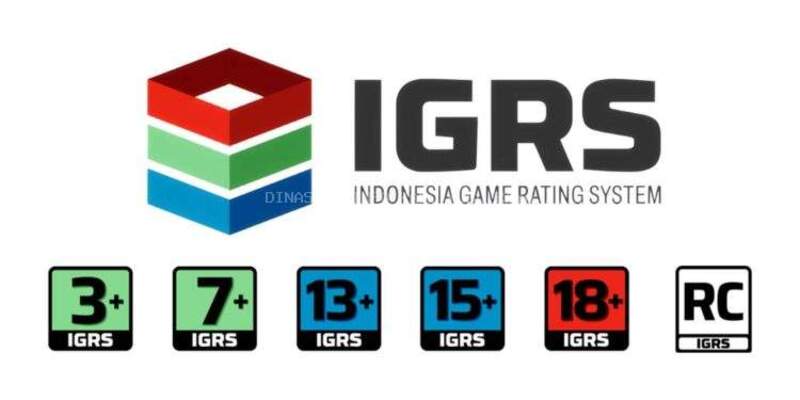
Understanding age ratings is a key aspect of navigating Indonesia’s gaming ecosystem. The IGRS categorizes games into 3+, 7+, 13+, 15+, and 18+, allowing gamers and parents to easily identify appropriate content. These categories represent escalating levels of intensity, ranging from child-friendly activities to mature content designed only for adults.
Several factors contribute to a game’s rating, such as violence, language or slang, sexual content, drug references, and gambling mechanics. For example, games with mild or cartoon-style violence may be rated 13+, but actual violence, explicit language, or adult themes are usually rated 18+.
Aside from classification, a clear presentation of the IGRS label is equally critical. The Indonesian Ministry of Communication and Digital (Komdigi) requires all games to prominently show their rating on interfaces, storefronts, and promotional materials. This ensures transparency and enables players to make wise decisions before engaging in a game.
Failure to display these labels correctly might affect a game’s availability in Indonesia. As a result, developers and publishers must approach rating visualization as a critical compliance component, not an afterthought. In a competitive market, good comprehension and application of IGRS is critical for legal access and long-term success.
The Self-Assessment Process: Step-by-Step Compliance

The Self-Assessment Compliance Process in the IGRS is a systematic method that ensures that every game distributed in Indonesia is appropriately classified based on its content. The procedure begins with a game publisher registering on the official IGRS platform after being recognized as a Private Electronic System Provider.
Once registered, publishers create an account, enter comprehensive details about their game, and fill out a necessary self-assessment questionnaire. This form assesses major content features, including violence, profanity, sexual themes, drug references, gambling simulations, and other sensitive material. Based on this evaluation, publishers assign a preliminary age rating, which serves as the initial categorization before the official verification.
The system is primarily reliant on transparency, which means developers must carefully examine not only visible gameplay but also hidden features, downloadable material, and narrative elements that might impact the rating. Transparent classification guarantees that players—particularly parents and younger audiences—are given accurate information about the relevancy of a game. Publishers that purposefully or unintentionally misclassify their game may face regulatory complications later in the compliance process.
If there are differences between the claimed rating and the actual game content, Komdigi may conduct an audit and verification review. This includes random inspections, complaint-based evaluations, and targeted reviews of trending titles. When inconsistencies are discovered, publishers may be compelled to change their classifications, update content labeling, or go through additional verification before resuming distribution.
IGRS and Global Standards: How It Differs from ESRB and PEGI
For years, global rating systems like the Entertainment Software Rating Board (ESRB) and Pan European Game Information (PEGI) have shaped how games are classified and distributed throughout the world. However, with the emergence of the IGRS, publishers must now consider a more localized and regulated framework when expanding into Indonesia.
The ESRB is mostly utilized in North America and applies descriptive labels like “Teen” or “Mature,” which are sometimes accompanied by comprehensive text explanations. PEGI, which is extensively used throughout Europe, uses a numeric system (3, 7, 12, 16, 18) combined with graphic iconography to make ratings more understandable across many nations. IGRS, on the other hand, has a similar age structure but is directly supervised by the Indonesian government.
One of the most significant differences is in cultural sensitivity. IGRS tends to apply stricter criteria to material such as gambling elements, alcohol references, and social norms that represent Indonesian values. A game with a moderate rating in PEGI or ESRB may be classified more strictly in Indonesia due to cultural concerns.
To combat this issue, publishers should implement content synchronization strategies that include modifying specific features, adjusting visual elements, or preparing region-specific builds before launch. Without this strategy, simultaneous worldwide releases may encounter delays or compliance issues in Indonesia.
The Risks of Non-Compliance: Fines, Bans, and Reputation
Many developers assume that failure to comply with IGRS is only a legal concern. In reality, it’s a multilayered risk that affects distribution, reputation, and player trust all at once. On the regulatory front, Indonesia has tightened enforcement. Games that do not have proper ratings may face penalties ranging from warnings to complete blockage, making them inaccessible on the market.
Noncompliance, however, is actually serious because of how rapidly it impacts public image. When players learn that a game’s rating does not correspond to its substance, they lose trust in it. This is especially important in Indonesia, where cultural sensitivity has a significant impact on content acceptability.
Indonesian players become aware if ratings are inconsistent with the content. For example, inaccurate IGRS labels on Steam have recently been openly criticized by players, which has caused confusion and significant backlash. This kind of reaction has the potential to swiftly worsen the publisher’s image, not just for a single product.
This is why smart publishers must invest in good localization and compliance strategies. A partner like SpeeQual Games can help verify that game content, ratings, and cultural expectations are all in sync before its release. SpeeQual Games minimizes the risk of regulatory penalties as well as public sentiment by managing classification accuracy and local adaptation.
Culturalization as a Tool for Compliance
In today’s global gaming industry, culturalization is more than just a creative choice; it is also a potent compliance tool. When entering vibrant markets like Indonesia, publishers might use localization to get lower age ratings, making their games more accessible to a larger audience.
Culturalization takes a step further, determining whether a game’s content is suitable and acceptable in a certain cultural setting. This deeper approach ensures that games are not only comprehensible but also non-offensive and in compliance with local standards.
One of the most effective culturalization strategies is visual adaptation and self-censorship. Instead of deleting essential mechanics, developers might change the way material is displayed. Reducing blood effects, changing character outfits, or adjusting symbolic imagery can all help a game gain acceptance in countries with stricter cultural norms.
Localization specialists play an important role in identifying potentially unpleasant or unsuitable words, phrases, or references. Localization specialists work to ensure that speech, UI text, and narrative elements are adapted in a way that feels genuine and relevant to the local audience.
Conclusion: Future-Proofing Your Game in the Indonesian Market
In summary, navigating the IGRS requires a holistic approach that includes genuine self-assessment, cultural awareness, and professional localization. Understanding age ratings and compliance processes, as well as complying with global standards and avoiding penalties, are all critical steps in effective game distribution.
IGRS is more than just a guideline; it is a government-regulated system designed to safeguard Indonesian players and assure content acceptability, addressing issues like violence, sexual content, and cultural sensitivity. Publishers that neglect these issues will risk fines, bans, and a loss of player trust, whereas those who embrace culturalization and adhere to compliance may grow their audience and strengthen their reputation.
Ultimately, success in regulated markets depends on combining creativity with responsibility. By including compliance early on and respecting local standards, developers may create games that are both globally relevant and locally acceptable.
![Humor in games is conveyed through words, timing, and cultural context.]](https://speequalgames.com/wp-content/uploads/2026/09/image-48.jpeg)
![Presidential Regulation 19/2024 focuses on national gaming regulations rather than content ratings.]](https://speequalgames.com/wp-content/uploads/2026/09/image-45.jpeg)

![Localization priorities vary depending on the generation of players.]](https://speequalgames.com/wp-content/uploads/2026/09/image-40.jpeg)