Zombie-themed survival horror games have become a global phenomenon, with titles like Resident Evil, Left 4 Dead, DayZ, and Project Zomboid enthralling millions of players worldwide—the latter even claiming a spot among Steam’s top 10 most-played games. However, achieving the same success in Asia involves more than just translating text.
Strict content standards across Asia make strategic game localization a key part of global success. Beyond meeting legal requirements, developers should adapt artwork, cultural references, and gameplay experiences to resonate with local audiences. Staying connected with regional gaming communities and responding to player feedback also encourages lasting player loyalty.
A robust localization strategy may turn an internationally popular zombie apocalypse game into a regional hit. Read the full article to learn how global game developers and publishers may tap into Asia’s vast gaming industry through localization.
Why Mastering Local Regulations and Culture is Key to Scaling Zombie Games in Asia

Resident Evil franchise alone accounts for more than 160 million lifetime unit sales, with the Resident Evil 2 remake moving over 15.8 million copies on its own, numbers that put zombie survival horror among the most reliably top-selling genres on any storefront. Left 4 Dead, DayZ, and Project Zomboid carry the same pattern on PC, each holding large, active player bases years after launch.
None of that global performance guarantees an easy path into Asia. Violence and gore sit at the center of most zombie apocalypse game design, and that is precisely the content Asian rating bodies scrutinize hardest.
While the Entertainment Software Rating Board (ESRB) classifies violence into numerous severity categories ranging from mild fantasy violence to intense violence and blood and gore, many Asian markets apply similar or stricter thresholds when reviewing games for local distribution and marketing. Malaysia’s rating and compliance process, covered in our guide to video game ratings and banned titles, has flagged games for the same kind of graphic dismemberment that a zombie survival horror game often treats as a core mechanic.
Publishers who submit a Western build unchanged risk a rating that restricts marketing or triggers a resubmission cycle that pushes a launch back by months. The fix starts earlier than most teams expect: reviewing gore intensity and cultural symbolism against each target market’s standards before a build reaches a regional review board.
Localized Zombie Games That Build Loyal Communities, Not Just Downloads
Zombie apocalypse titles that land culturally do more than sell copies. They build the kind of community that keeps showing up. Capcom runs Resident Evil.Net’s online events year-round and backs them with offline reach: panels at New York Comic Con, a dedicated Capcom Cosplay Gathering at FanimeCon, and a 30th anniversary Symphony of Legacy concert touring multiple countries. Events like these convert players into repeat participants, not one-time buyers.
That distinction matters more to publishers than raw download counts suggest. Loyal players, often called whales, typically make up only about 2 percent of a game’s audience yet generate roughly 40 times the lifetime value of the average player, earning that value through repeat engagement rather than a single purchase. A casual player who buys once and leaves is worth far less to a zombie survival horror title than a regional community that keeps returning for events, updates, and multiplayer seasons.
Getting a community to that point requires adapting the horror itself, not just the subtitles. Eastern and Western horror traditions differ in how they build dread, with many Asian audiences responding more strongly to ambiguity and psychological tension than to the jump scares that carry most Western zombie apocalypse games.
Accurate translation alone is insufficient for successful global launches. Backed by over a decade of gaming expertise and more than 24 years of localization experience, SpeeQual Games incorporates cultural adaptation from the start of the localization process. Our guide to culturalization vs. localization further explains how each discipline helps games meet regional standards while retaining the original player experience.
Localized Game That Successfully Drives Revenue Curve
When entering competitive markets, standard growth strategy dictates proving a product in a domestic market before localizing for international audiences. Genshin Impact flipped this playbook on its head by implementing a Day-1 Global Localization Strategy, providing a masterclass in how global accessibility drives explosive growth and revenue. According to Sensor Tower, by prioritizing immediate global localization, Genshin Impact dramatically outpaced major industry competitors in reaching the $1 billion mobile revenue milestone
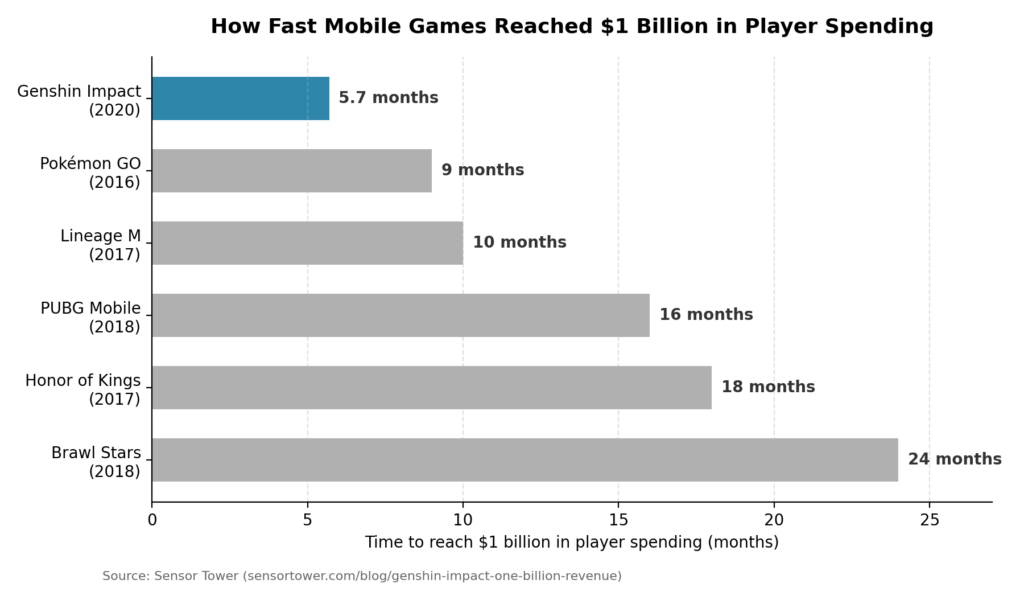
The mobile version surpassed $1 billion in player spending in less than six months after its September 28, 2020 launch. That beat PUBG Mobile, 2020’s top revenue-generating title, which took just over 16 months to hit $1 billion after it began monetizing, and Honor of Kings, which needed about 18 months. Supercell’s Brawl Stars took two years to hit the same mark. It also beat Pokémon GO’s nine months and Lineage M’s ten months to the same milestone.
Is It Worth Localizing A Zombie Apocalypse Game in Asia?
Yes! The demand for zombie apocalypse games in Asia is already proven by the massive, long-standing success of titles like Resident Evil, Left 4 Dead, and Project Zomboid. Asian gamers already love the genre, but relying solely on global popularity limits your full potential.
A strategic localization process bridges this gap by lowering language barriers for non-English players, ensuring smooth clearance through strict regional content regulations, and adapting cultural nuance to local tastes. Much like how Genshin Impact achieved historic global success by executing a Day-1 simultaneous localization strategy, aligning your game with local preferences from launch allows zombie survival titles to broaden their market reach, maximize player lifetime value, and build a dedicated, long-term community.
So, ready to bring your zombie survival horror game to Asian audiences with the rating clearance and cultural fit that keeps players coming back? Talk to the SpeeQual Games team about building that strategy before your next submission.