
Southeast Asia is expected to pass 300 million players this year, according to Niko Partners, with Indonesia alone home to more than 126 million of them. Yet, many regional launch plans budget for text first and treat voice as a nice-to-have, making audio the first line item cut when the schedule slips.
The reason is cost: audio can consume 50 to 70% of a total localization budget. For character-driven titles, adapting voice requires preserving tone, character intent, and timing across new languages. Southeast Asia is not a single-language market, so a single yes or no on voice cannot cover the entire region.
Audio localization is therefore not an all-or-nothing choice. It is a prioritization decision by market, genre, and content type, and it starts with one question: when does voice actually change the player experience?
Game Dubbing vs Subtitles: When Voice Actually Changes the Player Experience
Text answers “do players understand the game”. Voice answers “do players feel it”. They solve different problems at very different prices, so strong performers treat them as separate investments.
Genshin Impact is the clearest example. It ships 13 text languages but only four voice-over options: Chinese, English, Japanese, and Korean. A Thai, Vietnamese, or Indonesian player reads the story in their own language and picks a voice cast from a separate menu. For the publisher, voice is a selective bet placed where it moves attachment, not a default applied to every locale.
Genre decides how much that bet is worth. Narrative RPGs, gacha titles built on character attachment, and hero-based games where voice lines define a character gain the most, because players hear those lines hundreds of times and tie them to the characters they spend on. Puzzle, hyper-casual, and tool-like apps gain the least.
The real question is not “dub or not” but “which content deserves voice in which market”. Once a voice is justified for a title, the next decision is which Southeast Asian languages come first.
Which Languages to Dub First in Southeast Asia
Each major market has its own language structure, player expectations, and risk profile.
Indonesia has the largest audience and an established habit of hearing local voices in hero games. Mobile Legends added a voice-over language setting in April 2021 that includes Indonesian. Kadita used Indonesian from launch, while Gatot Kaca, a hero drawn from Indonesian legend, originally spoke English and later received Indonesian lines. The later fix shows that a local hero with a foreign voice was treated as unfinished work, not as a final choice.
Thailand carries a different risk. Thai pronoun choice depends on status, age, and intimacy, and speakers often use kinship or status terms instead of a neutral “you”. Pronouns therefore have to follow character relationships, and that map must be fixed before story translation and recording start, or each actor will settle on different forms, and the cast will drift. The format question is covered in our look at subtitles and voice-over for Thai mobile players.
Vietnam works on a similar principle with a sharper edge. Vietnamese terms of reference signal the social relationship between speakers, their age difference, and the speaker’s attitude. A dub that keeps the source structure and only translates the words gets those relationships wrong, so it sounds foreign from the first exchange.
Malaysia is multilingual by default. When Moonton launched its academy league, it announced that MAL MY would carry commentary in Bahasa Malaysia and Mandarin, which shows that one “Malaysian” voice rarely reaches the whole audience. Accent and dialect add a further layer, explored in our piece on Malay dialects in game audio.
Rank markets by revenue potential, fan intensity, and how costly a poor dub would be, then dub in that order. The harder part comes next: what voice-over production actually involves.
What Game Voice-Over Localization Involves Beyond Translating the Script
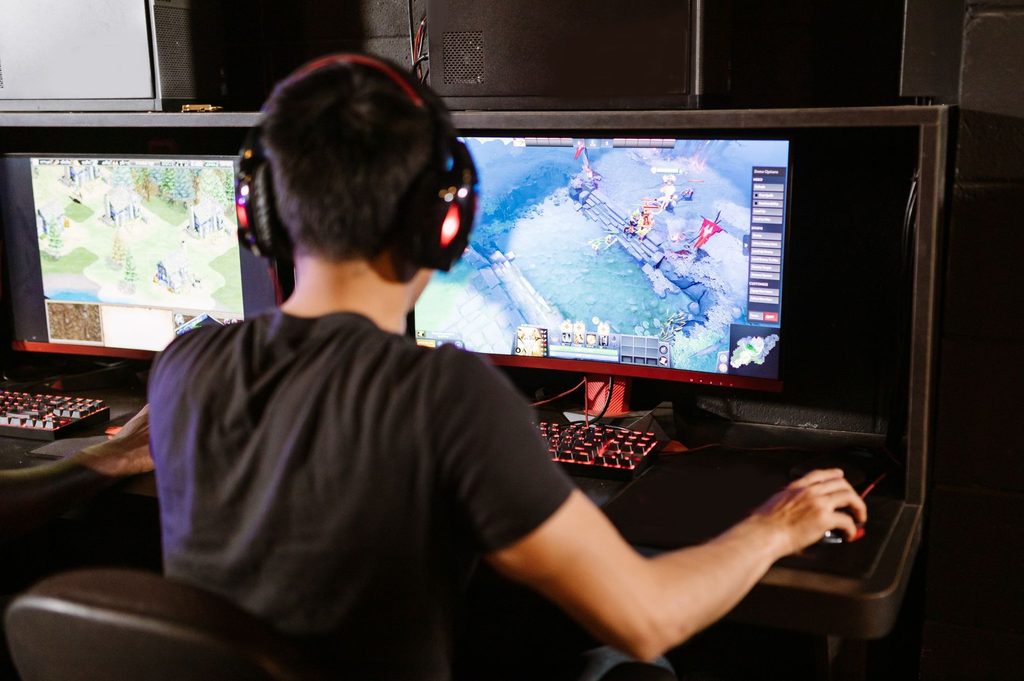
Game voice-over localization is a production pipeline, not a translation add-on. It covers script adaptation for timing and character voice, regional casting, direction, recording, integration, and in-engine QA.
Regional voice decisions come first. For strongly regional characters and slogans, choose a target region and voice style explicitly, then hold it across every patch, or one character ends up with two accents.
Technical synchronization matters just as much. Localized lines can usually run about 10% longer or shorter than the source, while lip-synced or animation-locked scenes allow far less. File naming must be identical across languages with a unique filename per line, as renaming thousands of files late is slow and error-prone. Timing, naming, and engine integration belong in the build plan, not after it.
A dub that was recorded well but integrated badly still fails the player. Knowing the full pipeline makes it easier to phase the budget instead of committing to everything at once.
How to Phase Your Voice-Over Localization Budget
Phasing lets a publisher test whether voice moves retention in one market before scaling it. A three-tier model suits most character-driven titles.
- Tier 1: full dub for the main story and hero characters in the top one or two markets.
- Tier 2: key lines, trailers, event announcements, and marketing assets. These cost little next to a full dub and are seen by every player.
- Tier 3: subtitles only for long-tail content and lower-priority languages.
Live-service titles add new characters every patch, so the voice pipeline must be reusable: a stable casting pool, a voice style guide, and a glossary.
AI dubbing is an emerging option for Tier 2 and Tier 3 content. It should be reviewed by native speakers and kept off flagship characters until it passes a quality check. Concurrently, regulatory frameworks governing voice synthesis are becoming increasingly stringent: under the 2025 SAG-AFTRA Interactive Media Agreement, explicit, itemized consent is mandatory for every intended application of AI voice replication, dictating that all voice-cloning parameters be contractually codified prior to production.
Mistakes That Make Localized Voice Feel Foreign
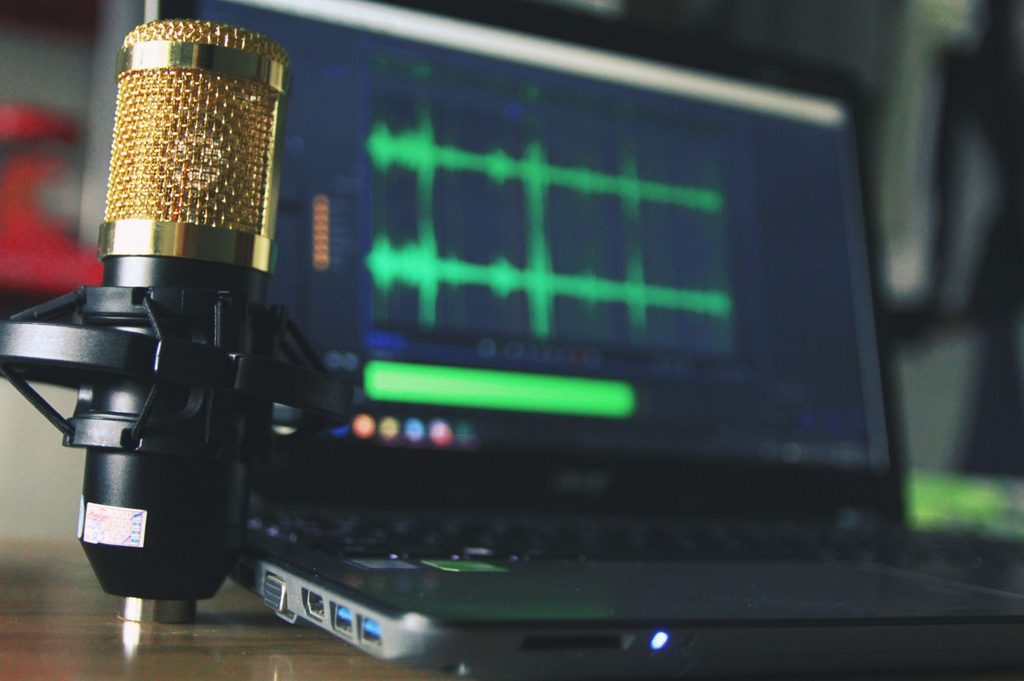
Most voice failures are process failures, not talent failures.
- Recording before the text is final. Every late script change becomes a retake, and retake costs for studio, engineer, actors, and director multiply by the number of languages.
- Skipping a pronoun and address strategy, which is critical for Thai and Vietnamese, as covered above.
- Casting on price alone instead of regional authenticity and character fit.
- No in-game LQA pass on timing, volume, and line triggers. Players hear a clipped line before they judge the acting, and audio bugs surface quickly in store reviews.
Voice-over quality is decided before the studio session, in the style guide and the casting brief, and confirmed afterwards through localization QA in the build. Together, these points turn audio from a cost line into a strategic decision.
Conclusion: Turning Audio Localization Into Your Strategic Advantage
Launch plans that cut voice the moment schedules slip reveal a mindset that treats audio as decoration. But when rolled out intentionally, in market-by-market tiers backed by a clear style guide, voice becomes a core driver of player retention and emotional attachment.
Prioritizing audio localization in Southeast Asia means choosing the right languages, the right content, and the right production process, not dubbing everything. For the wider order of text languages, see which SEA languages to localize first.
SpeeQual Games brings 24+ years of localization expertise and more than 10 years of gaming specialization to that work, with voice-over production, regional casting, and in-game QA alongside our game localization services. Talk to our team about phasing audio for your Southeast Asia launch, one market at a time.

![MLBB integrated localization early to preserve local identity while reaching global players.]](https://speequalgames.com/wp-content/uploads/2026/09/image-57.jpeg)
![Popular Roblox games highlighting the platform’s growing influence.]](https://speequalgames.com/wp-content/uploads/2026/09/image-56.jpeg)