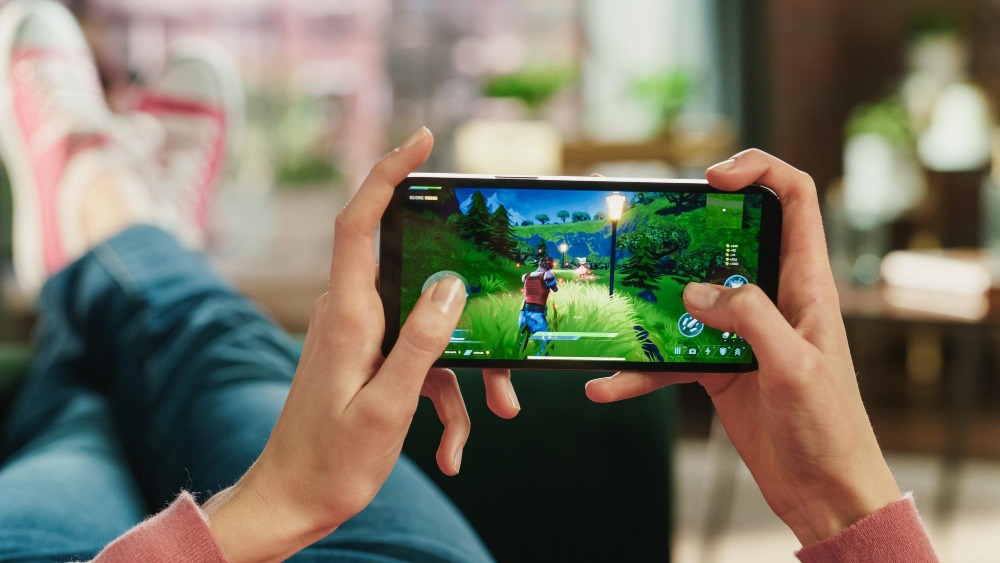
Roblox’s monthly engagement hours are now closing in on Netflix’s, a milestone that redefines its place in digital media. While many across the industry still file Roblox under “a game for kids” or treat it as just another App Store title, that view no longer reflects what the platform has become.
Roblox is changing how the modern games industry thinks about distribution, monetization, and even who can become a game developer. Its impact comes not only from the number of players it attracts but also from the creator economy built around the platform. To understand why Roblox matters, it is useful to first look at the scale it has reached.
The Scale Shows That Nobody in the Industry Can Ignore Anymore
![Roblox reaches industry-scale engagement alongside major global gaming platforms.]](https://speequalgames.com/wp-content/uploads/2026/09/image-54.jpeg)
Roblox captured 4.5% of total consumer spending across the non-China games industry and accounted for 60% of the industry’s net growth since 2021. Taylor Wessing reports that, by the end of 2025, the platform averaged more than 150 million daily active users, a 69% increase over the course of the year and roughly triple its 2020 figure. Its engagement hours were also comparable to the combined total of Steam, PlayStation, and Fortnite.
Monthly engagement reached 13 billion hours in 2025, bringing Roblox closer to Netflix’s comparatively stable figure of around 16 billion hours. Beyond raw time spent, Roblox also accounted for 3.4% of total global gaming revenue. According to Naavik, Roblox, Fortnite, and Overwolf, the three largest user-generated content (UGC) ecosystems, together paid an estimated $2.2 billion to developers in 2025, up 47% from the previous year.
This scale is not the result of a single hit or a single revenue stream. It comes from a creator economy that operates differently from the traditional games industry model, where development has usually been concentrated within professional studios.
The Creator Economy That’s Rewriting Who Gets to Be a Developer
Roblox reports millions of monetized creators across more than 170 countries who are building on the platform. With an estimated 1.6 million monetized creators and over 100 million published UGC experiences, this creator base far exceeds the total number of traditional game studios operating worldwide (Roblox, FY2025 Annual Report).
Creators on Roblox brought home more than $1.5 billion in revenue share in 2025, a 70% increase from the previous year. In 2025, total cash payouts through its Developer Exchange (DevEx) program exceeded $1 billion, up from an estimated $923 million in 2024, with over 35,000 creators cashing out their earnings.
This model removes the traditional line between “developer” and “player.” Anyone with access to Roblox Studio can build, publish, and monetize an experience without going through a conventional studio pipeline.
A creator base of this size does not only change Roblox itself. It has already started pushing other major studios to respond in kind.
How Studios Are Already Responding
Epic Games launched Unreal Editor for Fortnite (UEFN) to support more advanced player-made creation, and several traditional studios have begun adding modding tools and level editors to their own games to capture part of the same trend.
New entrants are also positioning themselves to scale their own platforms around major franchises, a shift analysts have flagged around Take-Two Interactive and Grand Theft Auto VI, a signal that even the largest AAA franchises are weighing a Roblox-style UGC model.
In Asia, this trend has given rise to a new services layer. A growing number of studios are building specialized Roblox and Fortnite Creative development capacity to serve incoming publishers, showing how the Roblox model is creating an economic layer that extends well beyond Roblox itself.
Growth at this scale, especially with a player base skewing this young, brings with it one issue that no publisher operating in a similar space can avoid.
Young Players Bring Greater Regulatory Attention
![Roblox faces increased regulatory scrutiny as concerns grow around young players.]](https://speequalgames.com/wp-content/uploads/2026/09/image-55-1024x683.jpeg)
Roblox’s large young user base has naturally attracted regulatory scrutiny, with authorities in several markets, including Australia, raising formal concerns about child safety on the platform.
Beyond Western markets, the platform’s experience in China illustrates how complex regional requirements can become. Roblox’s local app, LuoBuLeSi, was removed from app stores on December 8, 2021, as the company worked to rebuild a localized version in partnership with Tencent, underscoring how even global platforms face friction in strictly regulated environments.
This friction is a key lesson for publishers considering Roblox-style UGC models in emerging markets like Indonesia. Operating a massive UGC ecosystem for young players requires navigating local content-compliance frameworks, creating substantial compliance demands alongside commercial opportunities.
Ultimately, this is where localization, culturalization, and compliance begin to overlap. Translating content accurately is no longer enough; publishers must actively evaluate whether user-generated experience aligns with age ratings and cultural norms. For publishers entering Southeast Asia, localization cannot be an afterthought; it must be baked into the broader launch strategy from day one.
Conclusion: Navigating Roblox Trends with Strategic Precision
Roblox is no longer just one popular game. Its scale, from engagement hours approaching Netflix’s to billions of dollars in creator revenue share, has turned it into a structural force reshaping how the games industry works.
Roblox’s influence on the modern games industry shows up in three places at once: a creator economy large enough to remove the line between developer and player, a response from traditional studios that are starting to replicate its UGC model, and regulatory attention that comes with running a platform built around a very young player base.
SpeeQual Games helps studios and publishers work through what these UGC and young-player-base trends mean in practice, from a localization strategy for community-created content to compliance readiness in markets like Indonesia, so studios can respond to this shift with a considered plan rather than simply following the trend.
![Localization priorities vary depending on the generation of players.]](https://speequalgames.com/wp-content/uploads/2026/09/image-40.jpeg)
![Malay dialects give players a quick sense of whether a game truly speaks to their community.]](https://speequalgames.com/wp-content/uploads/2026/09/image-21.jpeg)