Artificial Intelligence (AI) is altering how mobile games are created and experienced, pointing to the industry’s future. With sharper game logic and adaptable user experiences, AI enables game developers to develop games for Android that are more responsive and personalized than before.
AI can assess player behavior to adapt difficulty, provide sensible controls, and help developers prototype more quickly by generating graphics, level layouts, and gameplay ideas. Developers may remain ahead of the curve in the next generation of Android game design by identifying the latest developments early on—from intuitive gameplay to AI-driven narratives.
Read the full article to discover more about what developers and game linguists may learn from AI-driven Android titles.
AI Is Quietly Rewriting Mobile Game Architecture

Source: Freepik.com
Mobile gaming has evolved considerably as phones and tablets have gotten strong enough to handle technologies previously only available on PCs. Modern mobile devices, along with innovative software and fast networks, allow games to be more than simply colorful graphics and enormous content packs.
AI is at the center of this shift. Instead of relying on teams to manually create every level, character model, and dialogue line, developers are increasingly using AI to generate content automatically, carry out testing, and tailor gameplay to specific players.
AI programs may produce graphics, environments, and even aid design levels using basic prompts. This shortens production times and enables smaller teams to compete with bigger companies.
The emphasis in mobile game design has shifted from loading large amounts of pre-made material to developing intelligent algorithms that respond to players in real time. Traditional games had fixed scripts and established routines, whereas AI makes gaming feel more alive.
AI not only improves the intelligence of games but also makes them feel more personal. Dynamic adaptation keeps players engaged for longer, increasing enjoyment and making games more engaging.
What Separates the Best AI Games for Android From the Rest
What truly distinguishes an AI game for Android is not just impressive graphics but also how alive the game environment feels. The best AI games react to players’ actions in ways that make the game environment appear alive and reactive, rather than static.
The interaction between characters and their surroundings in top-tier AI games is genuine and relatable. Non-player characters (NPCs) do more than merely follow pre-set scripts; they respond to player choices and environmental changes, resulting in moments that feel unscripted and authentic.
One of the primary advantages of intelligent gameplay is replayability. In contrast to static experiences that rely on adding new levels or content, AI-powered systems change with each playtime, keeping difficulties exciting. Every decision has an impact, which keeps players engaged for longer.
Another unique aspect of the best AI Android games is minimal friction in progress and development. Instead of overloading the player with inflexible difficulty spikes or confusing mechanics, these games employ AI to learn from their actions.
They tailor tasks and suggestions to players’ pace, resulting in smoother advancement and a more satisfying experience overall. This intelligent tuning reduces discomfort and makes games simpler to adhere to, even for casual players.
The Best AI Games for Android And the Lessons Behind Them
Source: Unsplash.com
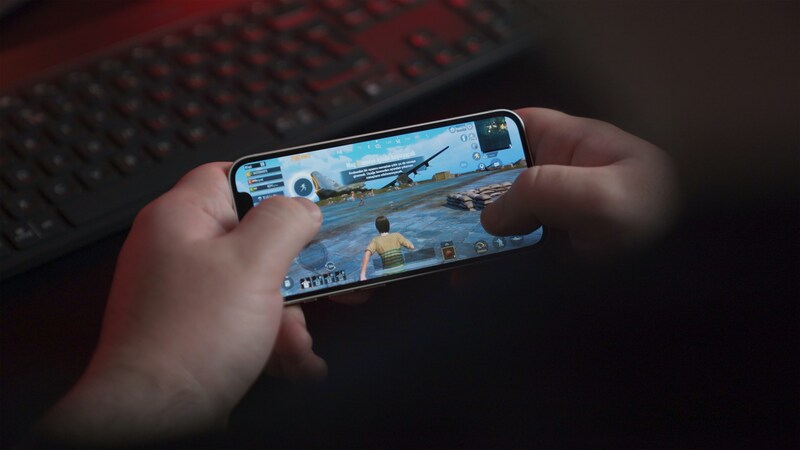
AI games for Android are no longer just smaller copies of PC or console games; they provide new forms of engagement that seem alive, responsive, and uniquely personal.
A text-based adventure in which players act while the game develops dynamic plots and responses, resulting in nearly endless narrative options rather than preset paths. The AI responds to prompts and creates worlds and characters in real time.
- Infinite Craft
A sandbox experience where players combine basic elements (like fire, water, earth, and wind) to discover new ones, allowing for limitless creative exploration.
- Character.AI
Character.AI-based adventures enable players to engage with AI characters in dynamic ways. For example, role-playing or dungeon settings evolve based on conversational suggestions rather than rigid scripting, providing an experience closer to AI-driven gaming than regular NPC interactions.
- AI Town Simulator
A creative tool-based AI game in which players construct a tiny town or environment and create AI characters who move, speak, and interact. It combines character creation with basic environment simulations powered by AI instead of fixed assets.
AI in games enables developers to build rules and algorithms that produce content such as levels, dialogue, and setting elements rather than manually designing each one.
This implies that the distinction between system design (how the game operates) and content design (what the game contains) is blurred since intelligent algorithms generate content as part of the gameplay itself. Scalability in games is derived from procedural generation and AI algorithms, which produce complex, diverse experiences.
Localization Is Becoming a Design Decision — Not a Post-Launch Task
In today’s gaming world, localization involves more than simply a post-launch process. With AI producing vast volumes of dynamic text, dialogue, and interactive content, literal translation is no longer sufficient.
Games increasingly generate linguistic complexity that moves and evolves based on player choices, making traditional post-launch localization inefficient and restrictive. That is why effective localization analyzes how players from different cultures would understand and experience the game’s story and mechanics.
This shift has established a new role: game linguists. These professionals collaborate with developers early on to define the player experience across languages and cultures, combining translation and design ideas to ensure localized content seems natural and relevant.
Developing localization as a core design approach, rather than a post-launch task, unlocks worldwide success and generates experiences that resonate strongly with varied audiences. For developers looking to make this shift effectively and properly, consider partnering with professionals like SpeeQual Games, who specialize in integrated game localization, ensuring that your game resonates naturally in every market.
Conclusion: The Next Breakthrough in Mobile May Come From Those Who Learn Fastest
In today’s gaming world, mobile gaming is becoming increasingly intelligent and adaptive as algorithms learn from player behavior and adjust in real time, making gameplay more responsive and intuitive.
This shift has elevated game linguists from afterthoughts to key contributors who impact the player experience from the very beginning of the design process.
AI is redefining the boundary between system design and content production, developers may create scalable games using algorithms rather than handcrafted elements.
Teams that learn fast, adapt quickly, and embrace intelligent systems are positioned to drive the next breakthrough in mobile gaming.