Every successful game is the result of hundreds of hours of quality assurance (QA) testing that are rarely acknowledged. Many people still think of the process of quality assurance as just “finding problems and repairing bugs”—the notion that testing is only about removing mistakes, crashes, and glitches.
Although that is still significant, modern game development requires far more than that: QA now focuses on player experience engineering.
This process includes anticipating how a player might react to difficulty spikes, how they might feel when they reach a story beat, how system performance impacts immersion, and how expectations are fulfilled or not.
In this landscape, game quality assurance (QA) has evolved from a merely technical step to a critical component of design, viability, and long-term player involvement.
For small or large studios, investing in comprehensive QA means investing in player trust, sustained revenue, brand reputation, and community longevity—all of which are no longer optional but essential in today’s competitive market.
This article will examine the important role of quality assurance in today’s gaming industry in preserving a game’s integrity and consistency, which has a big influence on player engagement and trust.
The True Meaning of Game QA Has Evolved
As games have evolved into complex live services and multi-platform ecosystems, the quality function has expanded to encompass usability testing, localization QA, compliance checks (platform/certification/regulatory), narrative flow, and accessibility assessments.
QA no longer waits for a nearly finished build; it starts early, extends through production, and continues after release.
The Early Phase: Technical Bug Hunting
Initially, game quality assurance was similar to standard software quality assurance: create a build, execute test cases, record errors, and guarantee stability.
Finding gameplay crashes, rendering errors, erroneous logic, and platform verification failures was the main objective for early console and PC games.
At this stage, accuracy and stability were the primary goals.
The Holistic Phase: Multiple Platforms & Bigger Worlds
As games evolve—multi-platform (PC, console, mobile, cloud), live service models (continuous updates, DLC, patches), open worlds, online multiplayer—the challenges for quality assurance increase.
Therefore, it is not enough to merely evaluate a single build once and release it right away.
QA must ensure several factors, including compatibility across different hardware and devices, performance under various conditions (frame rate, network latency, concurrency), stability of updates and live-ops support post-release, and also player experience across different story branches.
The evolution of QA has significantly changed the gaming world. Today’s player expectations are higher than ever. Players require games to be free of glitches and poor pacing, so games that still have bugs or defects are at significant risk of losing players.
Furthermore, QA must cover more multi-platform and multi-player options than ever before, as well as more complex environmental setups.
The Complexity Explosion: Why QA Is More Vital Than Ever

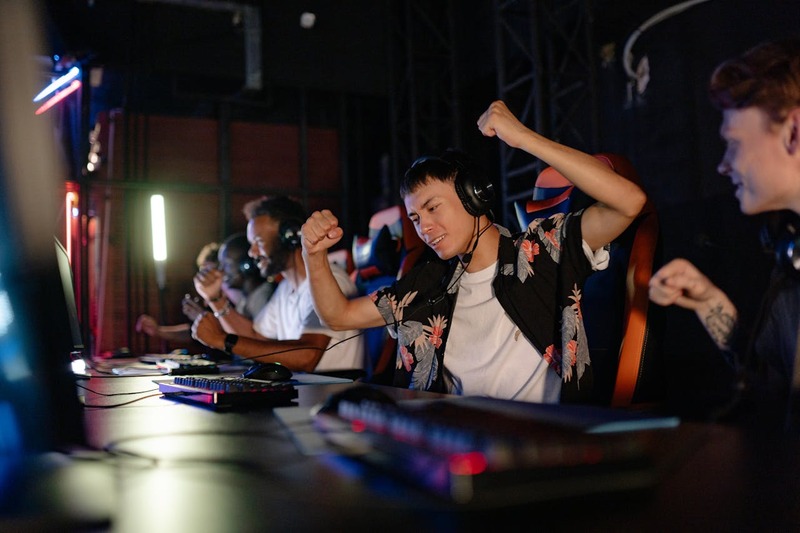
Source: Unsplash.com
The gaming industry’s landscape has changed considerably over the last decade, and the function of quality assurance (QA) has transitioned from a basic technical checkbox to a strategic discipline that has a direct impact on user experience, longevity, and financial success.
Today’s games frequently function as live-service platforms, operating across multiple ecosystems (PC, console, mobile, cloud) and providing regular updates, day-one patches, and content releases.
As games become more complex—with richer online systems, branching narratives, big player communities, and dynamic markets—quality assurance becomes increasingly important: ensuring that all systems remain consistent, the setting remains stable, the controls remain responsive, and the cross-platform experience remains balanced. Moreover, modern QA has expanded its scope.
Beyond checking for functional bugs, QA now includes usability/UX testing, localization and compatibility across regions and languages, certification and compliance (platform rules, hardware spec differences), narrative flow, and accessibility.
The evolution is clear: QA is becoming increasingly important as a game becomes more complex—multiple platforms, live services, regular updates, a large user base, and dynamic content. QA failures today go beyond catastrophic launch crashes; it also involves balancing economies in live games, device-specific defects that divide the audience, patch regressions that alienate players, and performance problems that reduce retention.
Automation, AI, and the Human Factor
Studios are increasingly using artificial intelligence (AI) to assist their quality assurance processes due to the complexity of production, frequent updates (particularly in live-service games), and multiple platforms to support.
1. Automated testing
One of the most visible impacts of AI in QA is automation: AI-driven test scripts, bots, and game simulation systems that can run hundreds or thousands of scenarios in a fraction of the time that human testers would take.
AI systems can re-run core gameplay loops after patches or updates to detect regressions in behavior, performance, and functionality.
2. Analytics, predictive testing & risk-based focus
AI offers sophisticated analytical and predictive capabilities in addition to basic automation. For example, it can evaluate historical bug data, code modification archives, or telemetry to forecast issue areas.
AI-enhanced dashboards can track player data in real time (in update scenarios) and identify anomalies or errors. This enables the QA team to allocate the highest-risk areas priority.
3. Continuous integration & faster feedback loops
AI-powered QA enables faster and more continuous feedback loops for modern games with regular patches and content updates. AI tools work with CI/CD pipelines to automatically test new builds.
This shortens the time between “build ready” and “feedback delivered,” allowing developers to identify errors earlier rather than waiting until the final phase.
However, despite these developments, AI is still unable to completely capture the human elements of player empathy, contextual awareness, and gameplay experience. Emotional moments, character development, and gameplay rhythm are essential components of story-based games.
Human QA can determine if cutscenes run properly, story tension is maintained, and whether objectives interrupt immersion. Human QA can provide subjective feedback and identify cultural context and player preferences across different regions.
Furthermore, human-AI hybrid collaboration—rather than total replacement—is the key to the future of game quality assurance.
Quality as Player Trust: The Emotional Side of QA
Quality in the modern game industry encompasses more than just technical stability. Building trust with players entails giving them a sense of security, worth, and self-assurance while they devote their time and feelings.
Players perceive a game’s smooth launch, dependable performance, and fulfillment of promises as evidence of the developer’s concern. On the other hand, a game’s bugs, glitches, or crashes entail the risk of damaging players’ trust.
Thus, quality in games is a form of trust between the developer and the player. Every flaw—a glitch that disrupts immersion, a crash that erases progress, an interface that irritates—entails a trust crisis.
It weakens a player’s resolve to keep playing. Meanwhile, the player’s choice is validated and the relationship is strengthened when the game is steady, responsive, and provides without unexpected failures.
When quality fails, the consequences are serious. Players might abandon the game, switch to competitors, or cut their spending. Regaining confidence after a failed launch or recurring challenges is much more difficult than building it in the first place.
This shifts the role of QA from mere error control to managing player relationships. The emphasis turns to maintaining the value of the player’s investment: their time, emotion, and loyalty.
This means that QA techniques should emphasize the issues that have the most impact on the player’s view of reliability, fairness, and value. It entails assessing quality not only by bug metrics, but also by how the experience fosters or damages trust.
Regional Relevance: Why QA Matters Even More in Emerging Markets

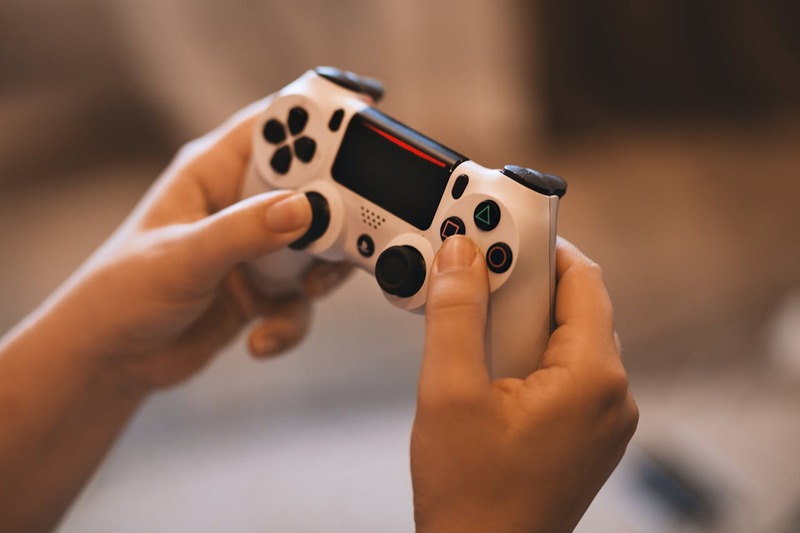
Source: Unsplash.com
Southeast Asia’s gaming landscape is expanding rapidly due to mobile devices, improved internet connectivity, and a vibrant active player base. Quality assurance is more than just “making sure the code works” in this multicultural region.
The experience is improved when a game respects culture, makes excellent use of the local language, and adjusts to hardware and network settings. Localization QA and cultural testing become the differentiating factors between a game’s acceptable and beloved in this region.
Here are key reasons why QA must be tailored for the Southeast Asian market:
- Device and Network Variation: A lot of gamers in this region use mid-range phones, older models, or a wide range of network settings. To avoid frustration, QA must test under realistic scenarios.
- Diversity in language and culture: Games must function flawlessly in local languages (Thai, Vietnamese, Indonesian, etc.). However, cultural adaptation is more important than translation: images, holiday themes, and regional references are important. For example, player engagement in SEA is higher in games that incorporate culturally sensitive holiday events like Ramadan or local festival skins.
- Local content expectations: Local players expect localized marketing, in-game events, community management in their native language, and respect to local customs. QA must include assessments for localization quality, cultural sensitivity, and UI/UX flows according to local preferences.
- Monetization and store ecosystem: Payment methods, in-game purchasing patterns, and different local app store policies. QA must validate not only basic gameplay, but the entire ecosystem in that region (store listing, UI terminology, and transaction flows).
Supporting Developers Through Expert Localization & QA Services
In the rapidly growing video game industry, simply releasing a bug-free build no longer ensures success. How successfully a game connects with players across languages, cultures, devices, and expectations is what sets decent games apart from excellent ones.
That’s where professional game testers step in—especially those who understand local context and player expectations.
Why Professional QA Matters
The role of a professional game QA goes beyond testing mechanics, crashes, and performance. It incorporates:
- Cultural accuracy: Ensuring content aligns with player expectations and respects local customs.
- Language and localization: Native-level testers must verify that voiceovers, subtitles, UI text, and translations feel natural.
- User experience (UX) and trust-building: Professional QA is in charge of making players feel respected, safe, and understood. A poor-quality, incompletely translated or culturally inappropriate game can harm a developer’s reputation and damage player trust.
Cultural and linguistic authenticity becomes crucial to build player trust once your game enters various countries like Indonesia, Thailand, Vietnam, or the Philippines.
Speequal Games’ professional QA service provides native testers who authenticate cultural assets, evaluate for local jokes, assure UI usability, and adapt content to regional preferences.
We help turn engagement into growth and quality into long-term retention. Invest in our professional QA services, and watch your game become a popular choice among audiences.
The Next Decade: QA as Creative Partnership, Not Quality Policing
Looking ahead, quality assurance (QA) in game production needs to be viewed as an essential and persistent process of the creative ecosystem of game development rather than merely a final checkpoint.
With branching stories, live services, multiplayer worlds, AI-driven characters, and customized user journeys, games are becoming more complicated and dynamic, making quality assurance (QA) more than just a back-office task that repairs glitches and errors.
Instead, QA professionals need to collaborate with story designers, AI ethics experts, system engineers, and user experience specialists to guarantee that the content published is not just technically accurate, but also meaningful and responsible.
Testing narrative design—including how story branches, how player decisions affect the game world, and how emotional arcs feel—will be heavily reliant on QA. In order to ensure that algorithmically generated content, character behaviors, adaptive difficulty, and customization elements perform accurately, transparently, and without unintentional bias. QA will also expand into testing AI ethics and behavior.
Additionally, QA will assist with establishing customized player experiences by establishing that adaptive systems adjust to unique play patterns without undermining developer intent, and that players are treated as valued individuals rather than a generic “user.”
In the future, game quality will be more than just “bug-free”; it will be a very human-centered experience that takes into account how players feel, connect, return, and recommend the game to others.