In 2026, successful games aren’t just those with intriguing features or creative concepts. The true driving factors behind today’s biggest successes are hidden systems that operate deep within both the development process and the game itself.
Unfortunately, many studios with amazing ideas struggle or fail due to underdeveloped internal development systems. As a result, games become technically unstable, updates are delayed, and players disappear.
There are several hidden trends that will shape how games are created and experienced in 2026. They are rarely visible, but they play a major role in whether games achieve long-term success, build solid communities, and leave a lasting impact on the industry.
Ready to truly learn what will make games successful in 2026? As you read on, you’ll discover hidden trends that shape today’s biggest titles.
Production Pipelines Are Becoming Competitive Advantages
Game production pipelines are structured processes that studios use to develop a game from concept to functional product. Pipelines used to be just technical procedures, but in today’s business, they are much more than that. A strong pipeline may become a competitive advantage, determining whether a game survives in a dynamic market.
Games are rarely released flawlessly, requiring developers to continuously evaluate concepts, patch issues, and refine systems. Faster iteration allows developers to discover the best practices and alter gameplay or features before it’s too late, resulting in significant improvements in both quality and cost.
Even small bottlenecks in the pipeline can have a significant impact. For example, if asset development tools or procedures are inefficient, developers may spend additional time recreating or reformatting material. These delays accumulate, pushing schedules back and increasing costs. That is why modern pipelines go beyond technology and incorporate systems to mitigate these issues before they happen.
Tooling and workflow decisions determine a studio’s ability to scale. With organized pipelines, teams can expand to serve larger games, onboard overseas contributors, and embrace new technologies without triggering problems. These improvements make it simpler to manage assets, collaborate with programming, and decrease repetitive work that detracts from productivity.
Data-Informed Design Is Replacing Intuition-Led Decisions
Source: Freepik.com
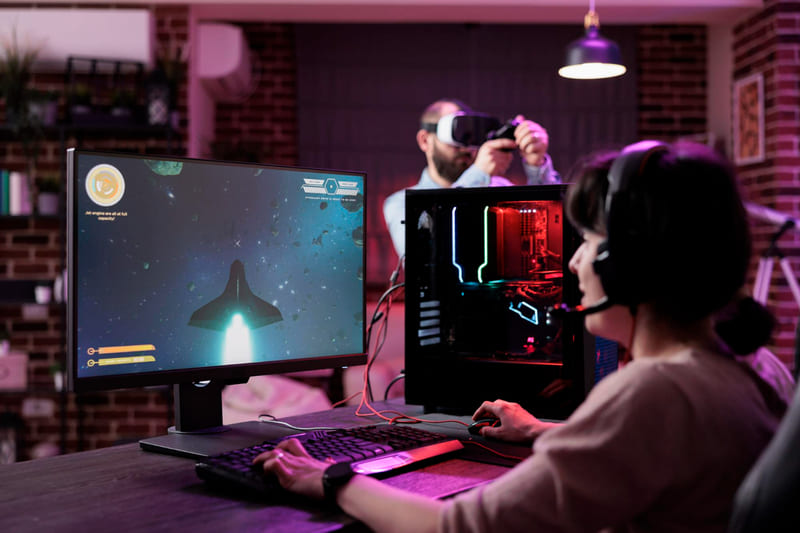
In today’s game development, design decisions are increasingly driven by real player data rather than gut instinct or tradition. Instead of assuming what players would like, studios are increasingly analyzing real player behavior to impact design decisions that increase retention, balance, and overall experience.
Game analytics involves collecting specific metrics about player behavior and applying that data to validate or test design assumptions. The utilization of data allows developers to make specific adjustments rather than depending only on intuition or limited playtesting.
However, data without context can lead to misleading conclusions in which measures are perceived as general values without regard for precisely why players behave in a specific way. To effectively understand player behaviors, teams have to combine quantitative analytics with qualitative insights, such as direct player feedback and creative interpretation, to avoid relying only on statistics.
This challenge highlights the significance of balancing creativity with analytics. Data should guide decision-making and indicate topics for further research, but it should not replace the creative vision that defines a game’s identity and creative direction.
Cross-Functional Teams Outperform Specialized Silos

Source: Freepik.com
A cross-functional team combines professionals from several disciplines, such as developers, designers, artists, and marketers, to work closely and cooperatively toward a shared goal. This structure not only fosters teamwork but also accelerates the entire game development process.
Communication plays an essential role in determining the quality of a game’s output. When artists, programmers, and marketers discuss feedback and objectives in real time, the team can identify problems sooner, modify features more seamlessly, and guarantee that everyone is heading in the same direction.
The team structure also has a direct impact on time-to-market, which is crucial in a competitive business. Games that take too long to complete risk becoming outdated or missing key release windows.
Cross-functional teams may accelerate the transition from idea to launch by decreasing handoffs and decision delays. Faster time-to-market not only increases competitive advantage but also enables studios to respond to player feedback and trends before competitors do.
Beyond speed and communication, cross-functional teams help studios become adaptive and resilient to change. Game development rarely follows a fully predictable path, as player expectations shift, technology advances, and market conditions change.
Localization Is Now Part of the Development Process
Today’s players expect games that feel native and culturally authentic in their local language and cultural context. As a result, localization has evolved into a critical component of the game development process rather than an afterthought.
Localization goes beyond replacing words from one language to another. A well-localized game incorporates humor, idioms, cultural references, UI features, and in-game voice and text to make players feel completely immersed in the game’s environment.
Translation errors are more than simply cosmetic issues; they may have a substantial influence on how players interact with the game. Literal or machine-generated translations frequently overlook emotional nuance, cultural context, or gameplay cues, resulting in misunderstandings, confusion, and disengagement.
As global gaming grows, effective cross-market communication has become a strategic priority. Games that are culturally and linguistically relevant are more likely to attract and keep players from different regions. To achieve this level, many studios partner with professional translation and localization experts who understand both game mechanics and cultural nuances.
If you want to increase your game’s worldwide reach and player engagement, consider collaborating with SpeeQual Games—a partner with expertise in adapting games for global markets. SpeeQual Games can assist you with making your game seem natural and engaging for players around the world.
Conclusion: In 2026, Development Maturity Determines Success
Looking at hidden game development trends in 2026, it’s clear that the studios that succeed are not simply those with the flashiest features; they’re also the ones that have established, robust development processes.
Today’s ideal games integrate localization early on, utilize actual data to drive design rather than intuition alone, and break down traditional barriers to ensure developers, designers, and marketers work together. This level of development complexity accelerates iteration, improves quality, and minimizes misalignment that can lead to delays or cost overruns.
Localization that’s part of development—not an afterthought—makes games seem more natural in every language and culture. In the process, the team is more adaptive, and the product has a wider market appeal.
In 2026, this holistic approach demonstrates that development quality drives success, showing why back-end processes and strategic workflows are just as important as creative vision.