![Close view of hands on a green controller and smartphone screen showing game that creates immersive gameplay.]](https://speequalgames.com/wp-content/uploads/2025/10/ai-in-gaming-southeast-asia-new-imagination-playground.jpg)
The concern, “Are we still playing games—or have games now started studying us?” has arisen as the digital world in Southeast Asia expands dramatically. The question feels more relevant than ever.
Southeast Asia is a major location for video game development and consumption. As artificial intelligence (AI) gains the ability to deliver personalized storylines based on algorithms and the identification of each player’s behaviors, the lines between the player and the game setting blur.
Nowadays, games do more than just entertain; they also influence and adapt to their players’ preferences. Despite the region’s rapid adoption of mobile-first, cloud gaming, and eSports, SEA countries have maintained a distinct cultural identity. Local game developers are increasingly integrating local folklore, language, and cultural values into their games, transforming global platforms into a tool for cultural storytelling.
As the digital realm gets more intelligent and interactive, SEA not only consumes content but also shapes the narrative This transforms Southeast Asia into a new imagination playground, where games are more than simply entertainment; they are also about identity and the future of the gaming industry.
Why Southeast Asia Feels the Change First
Southeast Asia is one of the world’s fastest-growing gaming markets, and one of its most distinctive characteristics is how rapidly gamers adapt to new titles, platforms, and gameplay styles.
Whether it’s a popular mobile MOBA, a tactical FPS, or the most recent battle royale release, SEA players frequently dominate leaderboards, generate viral content, and foster strong communities. What variables influence this rapid and constant occurrence? Here are several crucial points that explain what happened.
1. Community Is Core
SEA gamers play not only to win, but also to interact. In this region, gaming is frequently played in groups, with friends, family, or colleagues. Features like team chat, guilds, and cooperative modes are essential parts of the experience.
Furthermore, the availability of social media platforms that connect gamers, such as Discord, WhatsApp Groups, and Telegram, enables players to plan battles and discuss strategies. The continual interchange of ideas between individuals allows SEA players to learn and adapt swiftly.
2. Collaboration Over Competition
Despite the intense competition in the eSports industry, cooperation has allowed for a wider player base. Many gamers place a high value on cooperative play, role synergy, and collective development.
This collaborative mentality speeds up learning and adaptation in gaming culture, whether it is used to train new teammates in Valorant, plan strategies in Genshin Impact’s co-op realm, or plan massive raids in Ragnarok Online.
3. Mobile-First Culture
Nearly everyone in Southeast Asia, from urban areas to rural communities, can enjoy online games because of affordable mobile devices, widespread 4G/5G access, and easy-to-use data internet.
This has produced a generation of gamers who are quite accustomed to different game mechanics, fast to check out new gaming titles, and proficient with touchscreen controls. Mobile games like Mobile Legends: Bang Bang, Free Fire, and PUBG Mobile are popular since it reflect the region’s digital and dynamic nature.
4. Fast-Paced Trends and Influencer Ecosystem
The influencer and game streaming ecosystem in SEA is expanding quickly. Trends propagate swiftly due to beneficial feedback loops generated by platforms like YouTube and TikTok.
Knowledge spreads quickly as popular streamers showcase new updates, innovative strategies, and best builds by popular streamers and professional gamers. The learning curve is shortened as a result of players swiftly adapting by observing and copying tactics from these gaming influencers.
AI Behind the Screen
Artificial intelligence (AI) is no longer merely a supporting technology in the rapidly changing video game industry; but now a fundamental component of how games act, react, and develop.
This section will examine the specific applications of AI in the growth of Southeast Asian gaming culture.
1. Game Difficulty Can Adjust Itself
An AI system integrated into the game is capable of monitoring player performance and making real-time adjustments, allowing the game to recognize the appropriate difficulty level for each player.
For example, it may increase enemy tactics when players easily pass a level, and conversely, it may reduce pressure when players are stuck in gameplay.
This capacity is especially useful in markets that favor mobile gaming, such as SEA, where casual and professional players coexist, allowing the game level’s difficulty to be tailored to the broader target audience.
2. NPCs Can Learn & Respond
AI-powered NPC (Non-player character) systems can evolve in an adaptive and responsive manner, allowing them to change their behavior based on how players treat them, prior session decisions, or even the way players communicate to them.
3. Game Worlds Reacting to Rhythm, Emotion, or Player Behavior
AI makes games more immersive and emotional by adapting to players’ rhythm, emotions, and behavior. AI programs are able to monitor and evaluate players’ actions, movements, and choices in real time. The game environment dynamically changes—providing rewards, modifying the surroundings, or even changing the plot—in response to these patterns.
4. Localized AI Content & AI Support
Relevance is just as important as complexity when integrating AI technologies into the gaming industry. Player trust and immersion grow when NPCs speak local languages and reflect players’ cultures.
AI Singapore and Lightspeed Studios, co-creators of PUBG Mobile, are developing gaming solutions with Malay and other Southeast Asian language support. Local-language TTS makes gaming in SEA more immersive and culturally authentic.
AI Trend Game in 2026

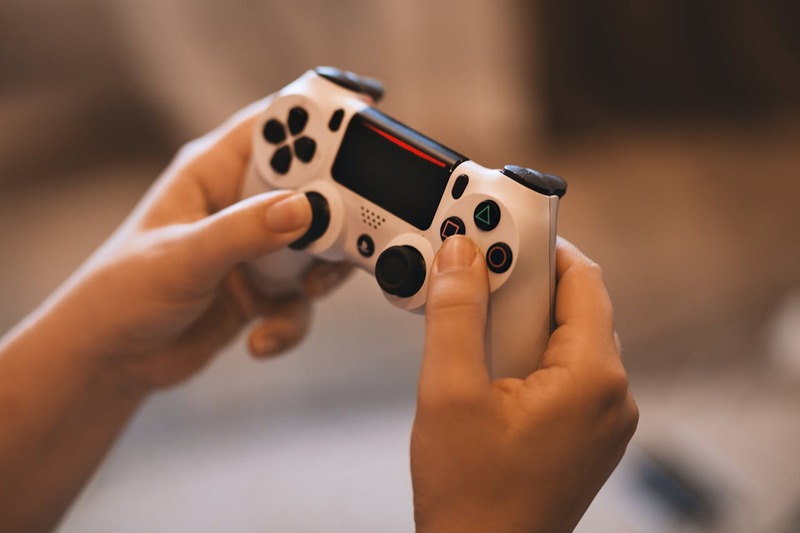
Source: Pexels.com
The widespread use of AI systems, rising digital literacy, and a community-driven creative spirit have all contributed to the rapid development of gaming culture in Southeast Asia.
By 2026, games might be able to adapt storylines to players’ emotions and even comprehend the social context of their behavior. In 2026, the gaming industry in Southeast Asia could see the following possibilities:
1. Games That Adapt Your Moods: The Rise of Emotion-Aware Narratives
It is anticipated that narrative-focused games in Southeast Asia would be able to detect and react to players’ emotions in real time by 2026. AI sentiment analysis, biometrics, and player analytics will turn games into stories that adapt to players’ emotions.
Southeast Asia has a long history of powerful storytelling, ranging from Thai supernatural mythology to Filipino dramas. Therefore, games will convey the emotional depth of regional stories.
2. Living Game Worlds: More Than Just Maps
Southeast Asia’s gaming landscape is changing rapidly as the age of static level games and loops are coming to an end. This is not just a game, it represents a new digital ecosystem.
The collaborative gaming culture in SEA, particularly in social simulation games, MOBAs, and MMORPGs, makes this paradigm ideal. Gamers in Vietnam, Thailand, and the Philippines thrive on community play—a trend shaping the SEA gaming scene.
Future games may include community missions, local lore, and seasonal events inspired by festivals like Sinulog, Hari Raya, and Tet.
3. Games That Understand Social Context, Not Just Mechanics
By 2026, AI in games will understand players’ intentions, tone, and social behavior—not just deliver scripted dialogue. AI will detect player cooperation, manipulation, behavior toward NPCs, and how social roles shape in-game interactions.
Simple PvP/PvE multiplayer game formats will give rise to opportunity for socially layered multiplayer games in the SEA, where relationship-building, diplomacy, and negotiations are just as crucial as combat skills.
Do We Still Control the Story?
AI now tailors stories and worlds to how we play. The question is, are we guiding the story—or is it guiding us?
Is AI Really Creative –Or Just Reflective?
AI is able to create game dialogue, characters, plots, and music. The “creativity” of AI, however, is essentially derivative; it uses a large dataset of human-generated content to find patterns and generate output that appears unique but is based on established patterns.
However, AI is incapable of generating ideas, intuitive thinking, or dreaming. AI mimics human behavior by picking up on habits, preferences, and emotional cues to create experiences that are in line with human preferences.
As a result, when a game employs AI to personalize its narrative, it may only be shaped by individual choices, take feedback into account, and modify the plot as necessary.
Player Identity vs Machine Interpretation
With AI capabilities that can analyze player activity in real time, track behavioral patterns and response speed.
Game developers may now measure player preferences and decision-making speed, identify emotional responses when selecting dialogue, and even collect biometric data in experimental VR/AR settings.
Games will be more responsive to raising human expectations as AI gains a better understanding of humans. As a result, storytelling grows deeper and creates a narrative echo chamber.
Keeping the Human Touch

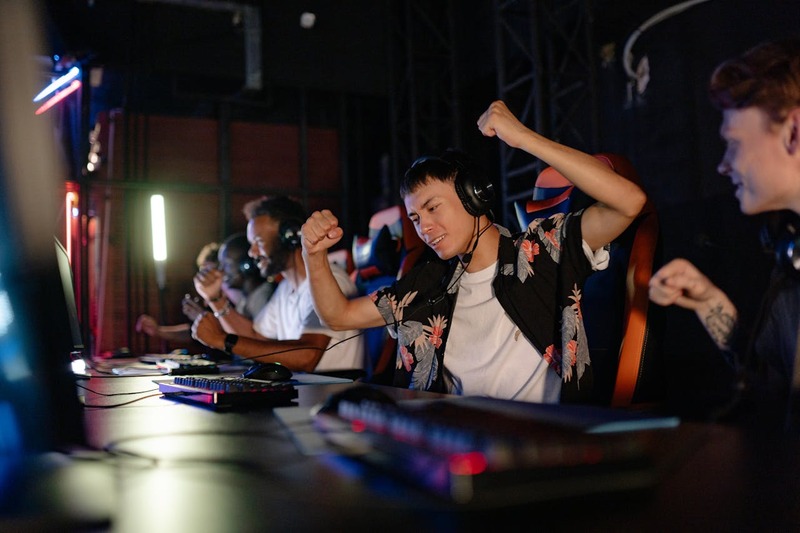
Source: Unsplash.com
Although artificial intelligence is making advances into the field of storytelling, it faces unique challenges in Southeast Asia, where oral traditions, mythology, and varied social context are deeply ingrained. This region’s cultural complexity is not limited to social norms or data; it also includes context, rhythm, ritual, and the meanings embedded within.
1. Oral Tradition: Stories Passed Through Voice
Stories are performed, sung, recited, or transmitted orally throughout Southeast Asia rather than being recorded in writing. This oral tradition transmits not only stories but also tone, intonation, and interpersonal memory, as seen in the epic songs of the Darangen from
Mindanao and the pantun in Malay poetry. AI will therefore find it difficult to comprehend the emotional meaning, vocal rhythm, and culturally embedded cues because it is mostly instructed on written texts and data patterns.
2. Social Communities: Context is Everything
Many people participate in storytelling, which frequently takes place in groups. In this situation, social hierarchy and collective memory are equally as significant as the narrative framework.
AI has trouble replicating a number of factors, such as the storyteller’s age, gender, and status, as well as subtexts that are culturally specific and hard to quantify. For instance, in Thai or Filipino cultures, storytelling might be influenced by tact and respect.
An elder’s amusing narrative may contain moral lessons or subtle remarks, but the subject matter is highly dependent on timing, listeners, and intonation—all of which are difficult for robots to translate.
3. Myths Rooted in Lands, Language & Spirit
Southeast Asian mythology reflects spiritual beliefs and is not merely folklore. From the Pontianak in Malay ghost stories to dragons in the Mekong, mythology evolves based on local interpretations, regional dialects, and customs.
The backdrop of myths, which are frequently symbolic, and their meanings. That can differ among nations, ethnic groups, and generations, would be challenging for AI to comprehend.
In the Java region, for instance, a narrative about a spirit can indicate protection, but in another place, the same figure might represent retaliation or an impression of loss.
Conclusion: Play, Pause, Reflect
Southeast Asia is where high tech meets folklore, youth power billion-dollar industries, and control isn’t guaranteed. By 2026, gaming in Southeast Asia will be humanized in addition to becoming quicker and more competitive. As SEA gamers fuse culture, community, and creativity, the region won’t just follow the global scene—it will lead it.
Today’s choices will shape not just Southeast Asia’s future, but the entire gaming industry as games and reality blur.