Fast-paced action and explosive set pieces are often less appealing to players who enjoy simulator games.
Rather, players expect immersion and credibility—they want their experience to feel authentic.
For many players, game realism extends beyond high-quality graphics or accurate physics.
Clear equipment labels, well-structured instructions, natural non-player character (NPC) dialogue, and recognizable units of measurement all contribute to the player’s immersion in the game world.
If a simulator game employs inconsistent terminology, unfamiliar metrics, or poorly translated text, immersion becomes impaired, and the game may feel unreal or distant from the player’s expectations.
Game localization is critical in this context.
Beyond simple translation, localization modifies the material to match context and cultural references.
Players do more than just read the words; they feel the world through it.
In the following section, we take a closer look at how effective game localization plays a significant role in bringing realism to simulator games.
When Accurate Mechanics Still Feel Wrong to Players
Simulation games are frequently praised for their technical accuracy, which includes comprehensive systems, precise mechanics, and realistic physics.
However, a common issue persists: if the overall gameplay experience feels disconnected, even technically accurate simulation games may seem unnatural to players in the global market.
One of the primary issues is how terminology and technical terms are translated.
Players may get detached from the gameplay experience if instructions and labels are translated directly without cultural adaptation.
When developers treat “translation” as the same as complete localization, this type of literal translation is a well-known issue in simulator games.
Failure to modify content to meet player expectations in different regions can result in confusion and disappointment.
Even basic menu text, button labels, and user interface (UI) elements may worsen the problem.
Simulator games frequently replicate real-world equipment interfaces, which might appear stiff or unclear on a screen if they have not been tailored for local players.
Tutorials are another common issue. Simulator games may offer extensive instruction tailored for real-world professionals, assuming prior terminology expertise.
While this keeps things technically correct, it can make them appear artificial, inflexible, or instructional, which is not consistent with how the locals learn and experience games.
Most importantly, these issues are not bugs. The games still work perfectly and adhere to real-world systems, but they fail to account for the cultural context and player behaviors.
Global players interpret controls, terminology, and instructions differently according to their location, language, and experience.
Without this insight, a simulator game might be technically great yet seem inaccurate or inaccessible.
Localization in Simulator Games Is About Context, Not Translation
Unlike action games or MOBAs (Multiplayer Online Battle Arena), which rely on fast-paced gameplay and simple vocabulary, simulator games require accuracy, context, and consistency across multiple professional domains.
Various industries, including engineering, farming, aviation, and medical practice, are frequently covered in simulator games.
As a result, localization must manage sector-specific terminology, maintain consistency over time, and modify data to accommodate professional context.
For example, a flight simulator requires players to understand cockpit terminology in their own language while maintaining precision.
A farming simulator may have machinery, crop types, or irrigation terms that must be precisely localized for each region.
In fast-paced genres such as action or MOBA, incorrect language may be undetected, but in simulators, precision is essential.
Additionally, since simulator games are frequently played for extended periods of time or throughout several updates, players anticipate that language will remain consistent throughout.
Waiting until the final step to localize means that the developer team has little input in the design process, which can result in interfaces, tutorials, and instructions that feel unnatural to the target audience.
Players may view it as stiffness, rough wording, or even a lack of professionalism, which reduces immersion.
How Players Communities Define What “Feels Real”
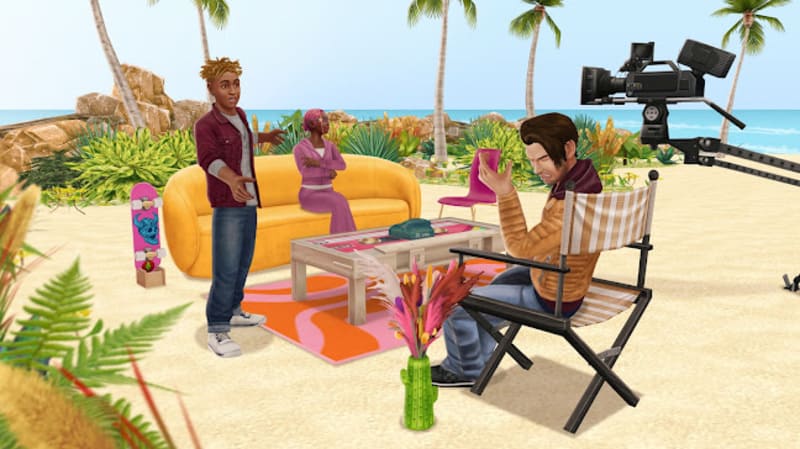
Source: Google Play
Realistic physics and graphics are only one aspect of realism in simulator games; another aspect is providing players with an immersive gaming experience.
Interestingly, the player community, rather than developers, frequently shapes the meaning of ‘natural’.
Simulator game communities often have enthusiasts with real-world experience in the industry portrayed by the game.
Their input goes beyond casual feedback—they observe discrepancies in language, system behavior, or user interfaces much earlier than most developers notice.
In many cases, community members identify concerns that the development team may overlook since they engage with the systems more regularly or have specialized knowledge.
This phenomenon illustrates a vital point about localization. Simulator games are more than just text translations; they are also about adjusting content to match community expectations.
A literal translation that matches the internal information may be technically right, but if it contradicts how the community expects the game to perform, it will disrupt immersion and feel off.
Furthermore, early and continuous community engagement is necessary for a successful localization of simulator games.
To make sure that translations, tutorials, and interfaces accurately represent how players think and engage with the game, developers have to collaborate with community leaders, beta testers, and local experts.
This method turns localization from a final step into an essential component of making a genuine and enjoyable experience.
Where Professional Localization Turns Simulation Into Experience

Source: Freepik.com
Although the aim of simulator games is to replicate real-world processes, precision is insufficient to create an immersive experience.
Professional localization teams are truly beneficial in this case.
These experts ensure that every component—from terminologies to tutorials—feels natural and easy to comprehend for players around the world.
Validation of terminology is one of the most important contributions.
Terms related to the aviation, medical, farming, engineering, or transportation systems domains are frequently used in simulator games.
A professional localization team ensures that all terms are accurate, consistent, and match players expectations.
Localization experts may also assist with UI/UX text flow.
Interfaces that resemble real-world equipment or systems may quickly turn stiff or overbearing if the language is not tailored to local reading patterns.
Localization professionals improve interactions by altering text placement, button labels, and menu instructions.
Players of simulator games also depend on tutorials to understand complicated systems, yet a lesson that seems overly complex or artificial may turn them off.
Expert localizers modify the tone to conform to local norms, transforming instructions into helpful yet precise manuals.
The localization team also makes sure that cultural logic is implemented correctly.
This entails modifying procedures, instructions, and procedural sequences according to regional customs and norms.
For a game that feels natural and culturally appropriate globally, SpeeQual Games’ professional localization services can help.
From terminology checks to UI/UX adaptation and tutorials, our team ensures every simulator game element meets global audience standards.
The Future of Simulator Games: Localization as a Core Design Layer
Simulator games are shifting away from general models toward more customized experiences due to technological advancements and growing player expectations.
In the coming years, developers will specialize these games, focusing on specific real-world systems, professions, and industries. Simulator players stay highly informed and engage deeply.
They actively offer feedback, address accuracy, and draw attention to inconsistencies that can interfere with immersion.
Localization is now more than just the final step added at the end of game development as a result of this shift.
Instead, it is becoming a core part of the game design process.
Early localization allows developers to work with local experts, ensuring vocabulary, measurements, and cultural details are authentic from the beginning.
Don’t let translation break immersion. Partner with our professional localizers today to transform technical accuracy into authentic player experiences.