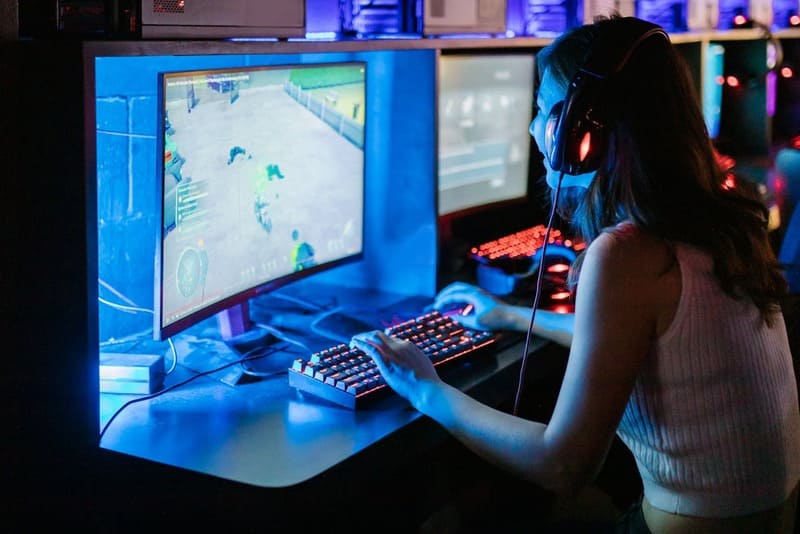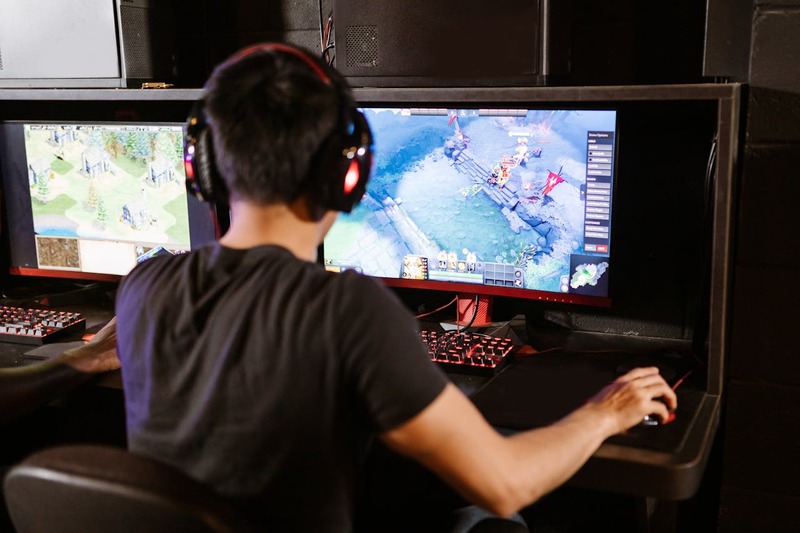
Simulator games have surged in popularity, from flight and driving to farming, tycoon, and life-sim titles. Many gamers enjoy simulators for their calming, routine-based, immersive experiences—unlike the chaos of action games.
Simulator games deliver consistent patterns such as planting crops, managing resources, starting a business, or running a virtual life.
This predictability provides stability and routine, drawing players who want relaxation or a calm escape after a long day. Today’s connected, mobile-focused gaming era lets simulator games attract audiences worldwide.
As the worldwide simulator game business grows, more developers are targeting international audiences.
It renders localization more vital than ever. In order to compete globally, simulator games must be available in numerous languages and culturally appropriate.
A great localization strategy can help a simulator game connect with players from multiple countries, increasing its global appeal.
Let’s take a deeper look at the sections below to see how successful localization may shape the future of simulator games worldwide.
Realism Requires More Than Good Physics: Language Shapes the Experience
Realistic physics and high-fidelity graphics frequently attract players to enter a simulator game, whether they are managing a virtual business, running a farm, or driving a vehicle.
Although those components are crucial, they are insufficient to produce complete realism.
The abundance of in-game elements, such as precise technical jargon, cockpit or dashboard labeling, menu and UI design, in-game tutorials, signage, background narrative, brand or contextual references, and user-friendly controls, all contribute to the compelling experience.
If language or localization is not handled properly, realism is destroyed. The illusion is shattered when UI language appears incorrectly, translations are stiff, and instructions appear unnatural to the target audience.
Localization in games is more than just translating. It necessitates modifying the language, user interface, layout, and cultural allusions so that each element flows naturally and fits in for the player’s local context.
Microsoft Flight Simulator (MSFS) is one of the most striking examples of bad localization.
Many players who don’t speak English complained about the localized version’s severe flaws on its community forum, including poor language, inaccurate sentence structures, and even scrambled or broken text in menus, ATC (air traffic control) communications, and the HUD display.
Common Localization Gaps That Break Immersion in Simulator Games
Many developers assume that once the graphics, physics, and core mechanics are in place, their job is complete. In reality, this is simply one aspect of what makes a simulator feel genuine.
There are several common mistakes encountered during localization that can rapidly destroy immersion—and even a single little error can make a rich simulated world feel unsettling or strange.
Loss of character identity
Many games, including simulators, rely on little details like NPC remarks, flavor text, contextual information, or light humor to bring personality to the game environment.
If these are translated directly without consideration for cultural context, dialogue becomes flat, unnatural, or emotionally disconnected.
Overly mechanical gameplay instructions
Localization may result in dry, extremely formal directions, such as “Depress Forward Key for Speed Increase,” rather than simple, natural suggestions like “Press W to increase speed” or “Hold Ctrl for parking brake.”
The game feels more like you’re reading an instruction book than operating a car or simulator since it has that mechanical tone, which destroys the dynamic flow.
Disorganized or broken UI
Text translation is only one aspect of localization; other factors include screen space, font compatibility, text expansion and contraction, and layout.
Translated text often causes buttons to overflow, menus to become cluttered, text to overlap, or prompts to be shortened.
The player is distracted by these visual problems, which make the interface appear poorly adapted and remind them that they are playing a translated game rather than a seamless, native setting.
Inconsistent technical terminology
Simulator games often include instrument labels, dashboard warnings, menu controls, gauge names, and procedure instructions—all using technical terms. If these are translated carelessly, terminology becomes confusing or misleading.
Inconsistent translation (e.g., switching between “Fuel Level,” “Fuel Amount,” and “Fuel Qty” across different parts) or outright mistranslation can make the environment feel amateurish, undermining realism and even confusing players.
Why Localization Matters More in Simulator Games Than in Any Other Genre

Source: Unsplash.com
Good localization adapts the whole game to feel natural for its audience, not just adding a translation to enhance experience.
Poor localization breaks immersion in simulator games by disrupting expected dashboards, controls, menus, metrics, and contextual cues players rely on. It can also make a realistic virtual world appear noticeably inaccurate or out of place.
Simulator games include panels, labels, instructions, speedometers, UI elements, measurement tools, signage, directions, and menus. These varied components require a precise, detail-focused localization approach.
If these elements are not carefully localized, everything becomes jarring, and immersion can be broken. Simulator players highly value realism, closely noticing linguistic accuracy, contextual fit, and small details that make the experience feel authentic.
A poorly translated warning notice or an incorrectly matched component can make even the most polished simulation world feel sloppy.
Strong localization—through accurate translation, cultural relevance, item adaptation, clear UI, and accessible menus—makes the game feel authentic. It also boosts player enjoyment, immersion, and trust.
How Professional Localization Elevates Simulator Games in Global Markets

Source: Freepik.com
Once a developer prioritizes localization, that often marks the difference between a simulator game that fades quickly and one that becomes a long‑lived favorite.
Localization delivers strong economic gains for simulator games, whose loyal players value realism, detail, and immersion.
Benefits include higher ratings, better retention, stronger realism, and a greater chance the series will endure.
Professional localization lets simulator games speak players’ native language while aligning with local units, signage, UI design, and cultural references. This enhances the game’s perceived realism by making it feel authentic and realistic.
From a business perspective, studios that invest in localization efforts frequently experience tangible benefits.
Localized games reach new players and open new revenue streams by reaching people outside of their original markets.
A simulator game receives more downloads, higher ratings, and more favorable feedback if it is easily accessible and appears genuine in several languages.
Good localization can increase store discoverability, boost conversion rates (especially in non‑English-speaking markets), and maintain long-term engagement.
Expert Support for Simulator Developers: High-Accuracy Game Localization You Can Rely On
In today’s global gaming market, developers can expand their simulator game’s audience by offering multiple languages—but only if they localize it correctly.
When the language flows well and the UI supports the translation, the game feels reliable, polished, and authentic. This creates a strong first impression, which results in higher reviews, greater publicity, and more downloads.
Poor localization, on the other hand, has the potential to harm a game’s reputation before it really begins to take off.
Mechanical wording, inconsistent terms, or tone-less machine translations can make in-game text feel like a technical manual or a faulty interface. This interrupts immersion, irritates players, and lowers their trust in the game.
Investing in professional localization service at an early stage can help developers lay a solid basis for long-term worldwide reach and profitability.
That’s why Speequal Games stands out—we don’t just translate; we customize every detail so your game feels authentic in every market.
We tailor units, UI, signage, cultural nuances, and dialogue tone for local audiences, helping turn first-time players into loyal fans worldwide.