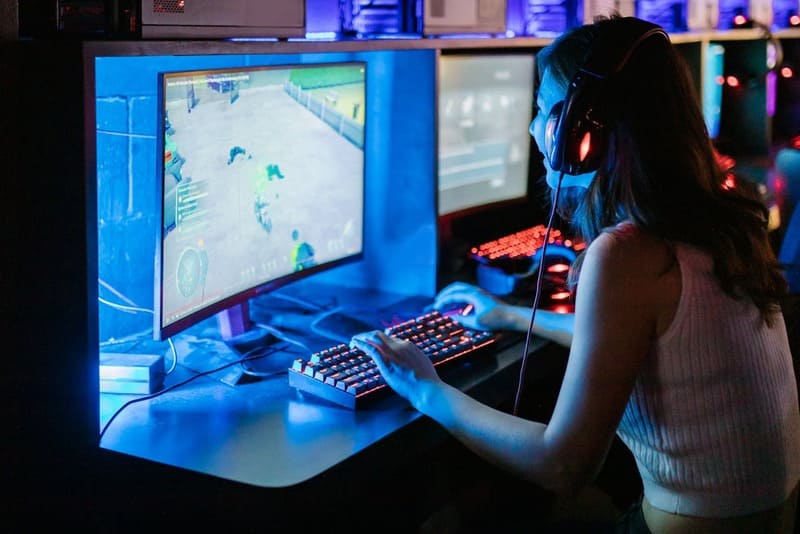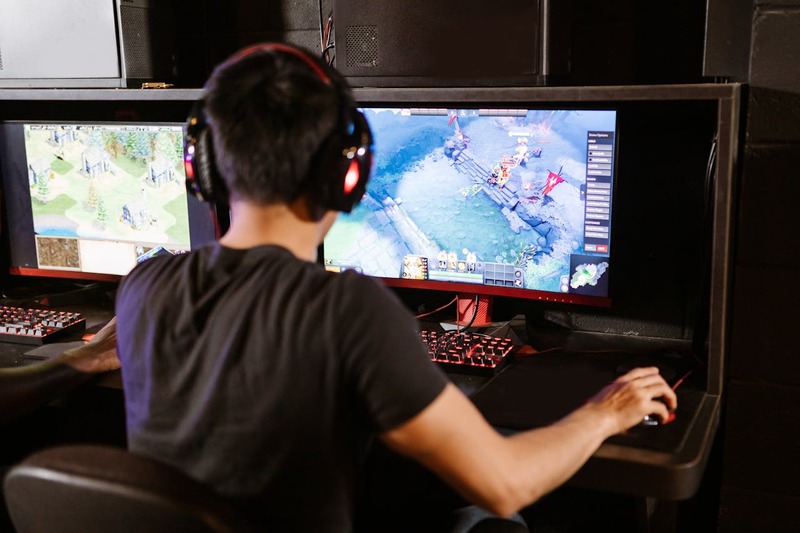
Gaming trends in 2026 are no longer defined by modern advances. What genuinely shapes the gaming landscape today is how gamers express themselves, interact with others, and develop their digital identities.
Players are more concerned with their appearance, perception, and sense of belonging. Social presence, usernames, avatars, and skins all function as expressions of identity.
A game’s success is increasingly determined by how well it ensures that players sense inclusion within its environment and community. While these trends appear to be effective on the surface, many studios repeatedly fail to deliver long-term engagement.
The issue is not an excess of features but a lack of cultural infrastructure. Global game expansion necessitates an innovative approach. Translation alone can no longer secure growth in emerging markets.
Cultural adaptation, including knowing local play habits, norms, ecosystems, and monetization expectations, is essential for sustainable growth.
To completely decode gaming trends in 2026, let’s examine the key insights below!
Gaming Culture as a Market Compass: Trends Tell “What”, Culture Tells “Why It Buys”
Gaming culture has developed into a powerful market compass that determines which games succeed, how trends emerge, and in which regions genuine growth occurs.
Understanding this pattern is critical for studios, marketers, and all individuals looking to thrive in the competitive gaming industry.
Consider the global response to gacha mechanics—a popular monetization and gameplay element that allows players to spend in-game currency to receive random rewards.
In the East Asian market, players enthusiastically accepted gacha methods. The gacha model fits mobile-first gaming habits and frequent, short play sessions.
However, in Western markets, the response was quite different. Many Western players labeled gacha as gambling-like or pay-to-win, driving resistance and public criticism.
Players resisted mechanics that they regarded to be exploitative or overly dependent on luck. They frequently give harsh feedback on forums and social media.
In order to handle this complexity, mapping cultural layers—a framework that breaks down the aspects that impact player behavior across regions—is critical.
Humor and references make games feel familiar and approachable, while play values define what players find rewarding or entertaining.
Furthermore, local digital habits shape how games are accessed, shared, and experienced.
By mapping these layers, studios may adapt trends into culturally relevant experiences rather than simply transferring features from one market to another.
2026 Player Tribes Are No Longer Audiences, They’re Distribution Networks

Source: Freepik.com
The structure of gaming communities has fundamentally shifted. Players are more than just content consumers; they are also co-promoters.
Every clip shared, meme uploaded, or inside joke repeated across platforms is an example of organic dissemination. Gaming culture now functions as a living medium, with visibility, legitimacy, and significance acquired by interaction and engagement.
In this gaming landscape, traditional marketing struggles to compete with user-generated content (UGC), meme culture, fandom clips, and micro-influencers.
A short clip uploaded by a community member frequently carries a greater impact than a polished trailer. These types of material appear natural rather than commercial, which makes them significantly more effective.
This shift has a direct impact on business outcomes. User-generated content not only raises awareness, but it also impacts how a game reaches its intended audience.
If a game targets the wrong player tribe, acquisition costs rise and retention drops significantly.
On the other hand, if an intellectual property (IP) is integrated into a tribe’s identity ecosystem—used for self-expression, entertainment, authority, or community customs—its longevity grows considerably.
The game no longer functions as a product shared reference system.
Localization in 2026 Is No Longer a Department — It’s a Product Requirement
Today’s players do more than merely read localized text; they comprehend meaning, tone, and cultural meaning.
In 2026, localization is on the same strategic level as UX, monetization, and live operations. It influences how players perceive value, how they react to in-game offers, and how quickly they establish a connection to a game.
In this new environment, publishers are facing numerous difficulties. Static translations become out of date fairly quickly since local slang evolves regularly due to social media and streaming culture.
Cultural jokes and humor lose relevance quickly, particularly when references, memes, and tone don’t fit in with the local dialogue.
Text in the user interface (UI) is also important. The same button label, pricing style, or reward description may trigger entirely different psychological responses across regions.
Even in-game social rituals — from victory celebrations to status expressions — vary by region and must be localized at a product level. These challenges can’t be solved by static translation workflows.
Ready to transform localization into a growth driver? SpeeQual Games offers game localization services designed for culture-first growth in 2026.
From language to player behavior, we help your game connect authentically with audiences around the world.
Gaming Trends 2026 Adoption Fails When Cultural Fit Is Ignored
Source: Freepik.com
Gaming trends are growing faster in 2026. Within weeks, new systems, technology, and revenue streams can be implemented worldwide. However, if cultural standards are disregarded, even the most advanced features struggle to gain momentum.
One common example is the utilization of AI-powered non-player characters (NPC). In markets with highly expressive and connection-driven cultures, players frequently perceive emotionally neutral AI characters as unnatural.
Instead of feeling realistic, AI-driven NPCs can feel emotionally flat — creating distance, not immersion.
Battle pass features also demonstrate how cultural mismatch affects engagement. When the naming, reward descriptions, or seasonal themes fail to resonate with locals, engagement decreases significantly.
A season based on humor, symbolism, or growth metaphors that works in a particular area may appear confusing or meaningless in another area.
Instead of disliking these features, players disengage because the experience doesn’t fit their values of achievement, time, or status. The implementation of trends as generic systems rather than culturally adapted products is an ongoing pattern in this failure.
Publishers prioritize what’s currently popular globally while ignoring how relevance is formed locally.
SpeeQual Games assists developers in aligning gaming trends with local player preferences by optimizing adaptation, retention, and sentiment across regions.
If you want your game to flourish globally, cultural fit isn’t optional; it’s essential.
Conclusion — The 2026 Winners Won’t Predict Gaming Trends. They’ll Build Gaming Culture
In today’s evolving gaming industry, forecasting alone is no longer enough. Technology spreads swiftly, features are easily replicated, and trend projections lose their relevance quickly.
What actually distinguishes successful games is not what they launch, but the culture they foster around their audience.
These days, gaming culture influences longevity and awareness. Players are becoming distribution networks rather than passive audiences.
Through UGC, which includes memes, clips, and social sharing, communities promote content that aligns with their identity while rejecting any material that feels forced or incoherent.
At the same time, global growth has revealed that similar features function quite differently across regions.
AI systems, UGC tools, battle passes, and live-service features can only succeed if they reflect local values, humor, and social norms.
Localization has become a product requirement rather than an operational task.
The 2026 winners won’t ship trends — they’ll ship belonging, and build ecosystems players defend, distribute, and never question. That is the future of scalable game localization.