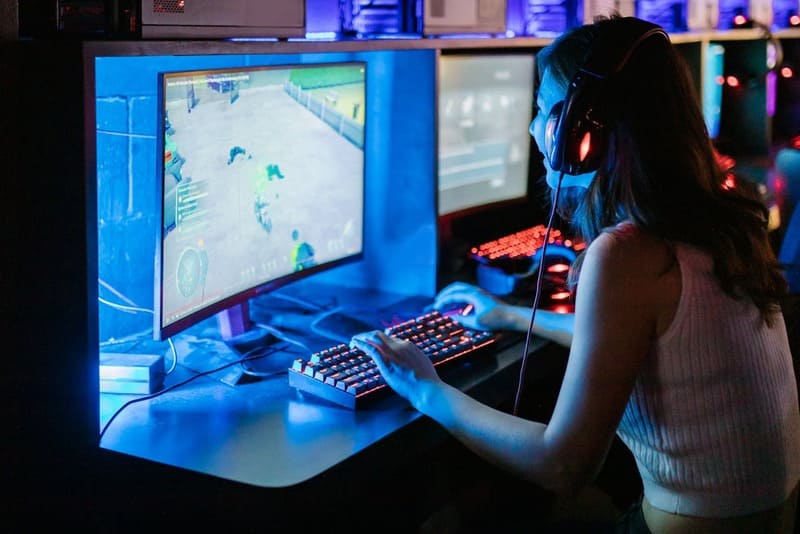
As more studios expand into audiences outside Europe and North America, the global market for game localization is expanding rapidly.
Regions like Southeast Asia (SEA), Latin America (LATAM), and the Middle East and North Africa (MENA) are emerging as significant growth markets due to rising player numbers, greater internet access, and mobile gaming popularity.
SEA and LATAM are experiencing an enormous increase in localized game content, while demand for Arabic localization in MENA is growing as more developers target these markets.
Localization now entails more than just translating text; it also includes modifying cultural references, dialogue, payment systems, and user interfaces to fit the expectations of gamers in each region.
Despite this clear opportunity, many game studios still view localization as an optional extra rather than a primary strategy, resulting in rash or shallow adaptations that fail to connect with local players.
In the following section, we will look at how localization may be used as a growth engine to reach new game markets, rather than simply translating text.
Global Game Localization Markets Are Expanding Faster Than Content Pipelines
The game localization services market is expected to expand significantly over the next decade, reflecting increased demand for translation, cultural adaptation, voiceovers, testing, and quality assurance in a variety of markets.
However, production teams often struggle to keep pace with the volume, diversity, and complexity of localized content needed for successful global releases.
As a result, game development pipelines frequently lag behind rapid market growth.
There are particular difficulties in markets like SEA, LATAM, and MENA where gaming audiences are growing rapidly
Local UX standards, language usage, and cultural sensitivities differ significantly from Western norms in each of these regions.
Due to those factors, localization is still viewed by many studios as a trivial, late step rather than an integrated element of the development process.
Whenever localization is left to the last minute, teams rush through translation and testing, increasing the chance of errors in dialogue, cultural tone, and UX alignment.
The impact of poor localization is most visible in monetization and retention.
Players are more likely to spend money and stay interested if the game feels authentic and respects their language, culture, and gaming expectations.
Why Game Localization Now Functions as a Growth Engine, Not a Support Task

Source: Freepik.com
Nowadays, player retention, session length, and community growth are all significantly impacted by high-quality localization.
When players fully understand a game’s story, mechanics, and objectives in their native tongue, high-quality localization improves player experience and retention.
Tutorials, in-game UI, and plot elements that are properly localized help new players catch up faster and stay interested longer, leading to longer session lengths and higher retention rates.
High-quality localization also serves as a tool for accelerated market entry. Properly localized games rank higher in regional app stores, boosting visibility, discoverability, and conversion rates across different markets.
Poor translations or shallow localization, on the other hand, often causes player confusion and dissatisfaction, leading them to abandon the experience early on.
Localization also promotes community growth. If players feel culturally engaged in a game, they are more inclined to share fan art, mods, tips, and discussions on social media.
Furthermore, poor localization can lead to mistranslated jokes and inaccurate character tones that result in inconsistent personalities.
It can also produce unclear user interface text that interferes with gameplay.
Cultural Accuracy Beats Linguistic Accuracy in Competitive Markets
Literal translation simply converts words from one language to another.
In contrast, high-quality localization adapts content to the cultural norms, player expectations, and emotional context of each target market.
Cultural alignment improves immersion, reduces ambiguity, and strengthens emotional bonds, driving player retention, engagement, and community growth.
Community lingo as well as specific genre tones are frequently used in games to represent the identities and perspectives of group members.
If these elements are not adapted, characters can feel artificial, generic, or misaligned with player expectations.
This disconnect reduces narrative impact and weakens players’ sense of immersion in the game world.
Local sensitivities pose another difficulty. There are significant regional differences in cultural standards regarding symbols, gestures, and social allusions.
Without proper adaptation, developers risk losing players or receiving unfavorable publicity as a result of misconceptions.
High-quality localization goes beyond text by adapting music, events, UI layouts, character design, and in-game references to fit local expectations.
At the same time, it preserves the original content’s intent and overall enjoyment.
A game that feels culturally native to players fosters emotional loyalty and encourages longer play sessions with higher retention.
It also supports vibrant community engagement, all of which are critical for long-term success in global markets.
Localization Workflows Must Adapt to Live Games and Community-Driven Content
Traditional localization is no longer sufficient in this age of community-driven content and live-service games.
Live games offer frequent updates, seasonal events, new stories, bug fixes, and balance patches on a regular basis.
To keep pace with modern games, localization must integrate closely with Live Ops teams and community feedback loops.
Modern localization integrates tools like translation management systems and development pipeline integration to deliver localized content alongside game updates.
Developers and localization teams rely on continuous builds, string version control, and automation to handle frequent changes efficiently.
If localization can’t match patch speed and feedback, mismatched content and errors disrupt immersion and reduce player retention.
This requires continuous quality assurance and rapid iteration to ensure Live Ops success.
SpeeQual Games specializes in iterative, culturally relevant workflows that support Live Ops and community-driven content.
Ready to expand your game’s global reach? Partner with our localization team experienced in live games, community-driven content, and continuous updates.
Choosing the Right Localization Partner in Global Game Localization Markets

Source: Freepik.com
For developers who want their games to be successful worldwide, selecting the best localization partner is crucial.
Many studios assume that the cheapest or fastest service is adequate and solely consider price, word count, or speed.
Relying on low prices or speed often leads to machine translation or amateurs, causing awkward writing, poor experiences, and lower player retention.
Instead of preparing localization earlier and including it in the development process, many developers make the error of considering it as a last-minute task.
Local gamers may find games awkward or frustrating if cultural sensitivities are ignored, QA is neglected, or localization is poorly reviewed.
Overlooked aspects such as market adaptability and cultural sensitivity are equally important as appropriate terminology.
Choosing experts who understand games as products transforms localization from a support task into a powerful growth strategy.
A good localization partner incorporates native-speaking linguists with gaming experience who are familiar with genre-specific vocabulary, user expectations, and cultural nuances.
They help adapt menus, tutorials, character voices, and humor naturally, reducing post-launch patches and improving the overall player experience.
Game Localization as a Long-Term Market Investment
High-quality localization makes games feel authentic, respects local culture, and builds long-term loyalty and trust among regional players.
Localization boosts community engagement and player retention, growing a loyal fan base that actively supports the game and its brand.
Localized content expands reach, increases revenue, builds loyalty, and supports long-term franchise growth through sequels, spin-offs, and cross-media IP.
Furthermore, localization should be viewed as a strategic game asset rather than a mere expense.
Viewing localization as an investment boosts player engagement, strengthens global connections, grows brands, and supports long-term success for developers.
Looking for a localization partner who understands global gamers? Contact Speequal Games today to begin your international game journey with our professional team!