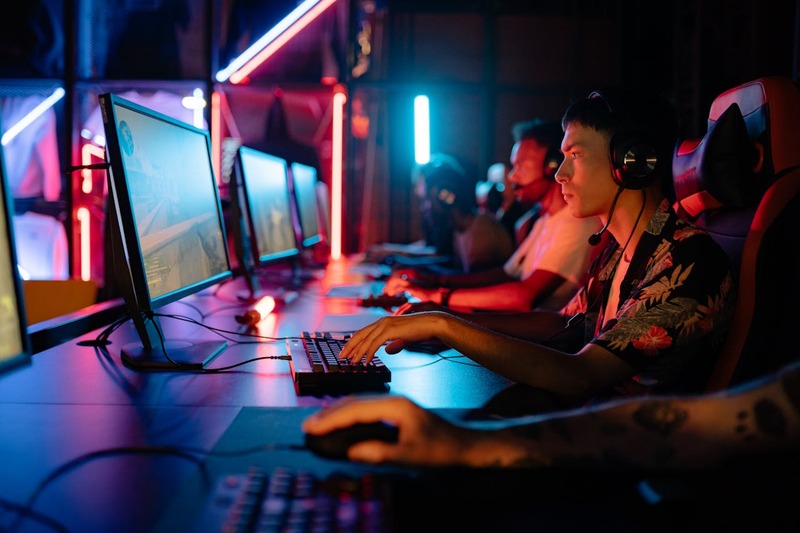
Mobile Legends: Bang Bang has grown remarkably, from a regional hit to a worldwide esports powerhouse. The competitive scene began in Southeast Asia (SEA) and spread globally through the M World Championship, the game’s premier annual tournament.
Through the M-Series, developer Moonton gradually established a global platform for the top MLBB squads to compete. The M7 World Championship is a notable turning point in that journey.
Moonton’s long-term plan to strengthen MLBB’s position in the global esports ecosystem is reflected in M7, which has more teams, larger international participation, and higher viewership.
Want to understand the strategy behind M7 MLBB’s global success? Read the full article to discover more insights.
Building a Strong Regional Foundation
The strategy behind M7 MLBB is largely built on a regional-first approach. Moonton, the game’s developer, decided to focus on creating a large player base and esports environment in SEA rather than expanding internationally right away. This approach helped MLBB become one of the world’s high-selling mobile esports titles.
Indonesia and the Philippines stand out as the two most significant markets. Both nations consistently produce top-tier professional teams with large fan bases. Regional competitions like MPL Indonesia and MPL Philippines draw millions of viewers, with some seasons exceeding two million viewers and tens of millions of hours watched.
The Mobile Legends Professional League (MPL) has played a significant role in its success. Professional teams compete on a regular basis throughout the year in structured regional leagues provided by the MPL system.
Teams, sponsors, and fans may all develop together in this stable competitive ecosystem. Consistent leagues also serve to foster long-term rivalries and prominent teams, both of which are critical for retaining audience engagement and establishing esports narratives.
With strong regional leagues and a dedicated player base, MLBB has been able to develop professional talent and compelling narratives that extend to international tournaments. Southeast Asian teams usually dominate worldwide tournaments, with their rivalries serving as the main attraction of world championship events.
Expanding the Global Competitive Ecosystem
Mobile esports is constantly growing, and MLBB has entered a new era of global expansion. After years of developing a robust competitive environment in Southeast Asia, the game is beginning to expand its tournament reach to other parts of the world.
MLBB Esports is launching a new regional structure that will encompass five major regions: SEA, Eastern Europe and Central Asia (EECA), Europe-Middle East-Africa (EMEA), East Asia (EA), and the Americas (AMER). This framework is intended to provide more areas with direct paths to international competition while preserving a cohesive global ecosystem.
Regional diversification is critical to enhancing MLBB’s visibility in the global esports market. MLBB can reach new audiences, develop rising talent, and create localized fan communities by cultivating competitive scenes in different regions. This strategy gradually transforms MLBB from a locally dominant esports championship to a truly internationally competitive one.
However, establishing esports ecosystems in numerous regions takes more than just competitions. Localization becomes crucial in ensuring that the game, broadcasts, marketing activities, and community communication appeal to players from different cultures and languages.
Here’s where professional localization partners provide assistance. Partners like SpeeQual Games help game publishers in their global growth by offering localization solutions targeted to gaming and esports contexts, ensuring that tournaments, in-game content, and player communications stay clear, entertaining, and culturally relevant across regions.
Elevating Production and Spectacle
The strategy behind M7 MLBB demonstrates how Mobile Legends: Bang Bang is elevating its world championship into a global esports event. One of the primary methods is to increase the production size of each M-Series tournament, resulting in a larger and more immersive live event.
For M7, the opening ceremony in Jakarta showcased how far the tournament had advanced. The event included cinematic stage production, cultural storytelling, and performances by dozens of dancers from various areas of Indonesia. The ceremony combined mythology, traditional culture, and modern dancing to produce a visually stunning performance honoring the global MLBB community.
This type of large-scale production is part of MLBB’s broader esports strategy, not only for entertainment purposes. The M-Series competes with other big international esports championships by holding events in huge venues and investing in exciting opening ceremonies. The idea is to make the championship seem more like a global esports festival than a mobile gaming event.
Multilingual broadcasting is also an essential component of the strategy. Since MLBB has a global audience, the event is broadcast in numerous languages to ensure that fans from various countries can easily watch the matches. Localized commentary allows viewers to better comprehend the action while also making the broadcast more accessible.
Strengthening Brand Partnerships and Commercial Value
As esports audiences grow, many major brands see competitions as a way to reach millions of prospective customers. Sponsorship partnerships fund tournament production while also improving the event’s commercial value. In return, sponsors receive visibility via livestream broadcasts, social media campaigns, and in-game promotional content.
The MLBB M-Series is a clear example of how this ecosystem works. Shikenso Analytics reported that the M6 World Championship created over $129 million in brand value for its partners. Much of this value came from streaming platforms and social media exposure, demonstrating how esports tournaments can have a significant marketing impact.
Major companies have already recognized the potential of MLBB esports. For example, the energy drink company Red Bull sponsored the M7 World Championship, bringing fan activities and entertainment areas that improved the live event experience.
Partnerships with global companies also help MLBB expand its reach beyond its traditional gaming audience. Companies who promote tournaments through their own marketing channels bring the game to new audiences, including sports enthusiasts, lifestyle consumers, and digital entertainment audiences.
However, communicating with audiences in different countries needs clear communication. Global esports tournaments attract viewers from many languages and cultures, making localization an important aspect of global success.
Professional localization partners can help bridge this gap. SpeeQual Games provides specialist localization services to game developers and esports organizers, ensuring that international audiences are fully engaged with events and gaming content.
Conclusion: M7 as Part of a Long-Term Global Vision
In summary, the success of M7 MLBB demonstrates how the M-Series is turning into a world-class esports event. By expanding production scale through larger venues, spectacular ceremonies, and immersive fan experiences, MLBB elevates its world championship.
At the same time, multilingual broadcasting enables the tournament to reach millions of fans from various countries and cultures. These efforts have already shown outstanding results, with the M7 World Championship being the most-watched mobile esports event in history.
More significantly, M7 is more than just one tournament milestone. It mirrors a bigger, long-term ambition for MLBB esports: to create a genuinely global ecosystem in which global players and fans can connect through the shared excitement of competitive gaming.