The gaming industry in Southeast Asia (SEA) is flourishing. According to Niko Partners research, the region is projected to generate over US$7 billion in gaming revenue by 2027.
The region is a goldmine for game developers because of its youthful tech-savvy population, expanding smartphone penetration, and developing internet infrastructure.
Despite its enormous potential, Southeast Asia’s cultural, linguistic, and socioeconomic diversity indicates that games cannot succeed through simple translation alone.
While localization provides significant benefits, failure to adapt to regional norms can backfire, harming even the most enjoyable gameplay.
This is why high-quality localization depends on gamer-linguists—testers who are familiar with both the language and the gaming culture in their region.
Their understanding guarantees that a game is genuine, respectful, and immersive for local audiences.
Investing in high-quality localization is essential to retaining and attracting players in the region. At SpeeQual Games, we understand the intricacies of localizing games for the SEA market. Our services offer professional localization services based on language accuracy and gaming culture.
What Makes Southeast Asia Unique for Localization?

Source: Unsplash.com
In Southeast Asia, gamers set great value on games that are not only written in their language but also reflect their culture, including humor, slang, events, and social references. A genuinely localized game feels like it was created for them, not merely translated.
However, a slight mistake in localization can result in mocking—or worse, criticism. Poor translations, awkward slang, or misused idioms can feel jarring and unnatural.
These errors can spread rapidly. A phrase that appears harmless in one language may sound weird, confusing, or even offensive in another.
Key Factors for Authentic Southeast Asian Localization
1. Language Diversity
Southeast Asia is quite linguistically diverse. While many nations have a national language, there are numerous regional dialects and minority languages.
For example, Indonesia alone has hundreds of local languages apart from Bahasa. This means that developers must carefully choose which languages to support and how to adapt phrases so they sound natural and familiar.
2. Variations of Humor & Slang
Since humor is so culturally specific, what is considered funny in one SEA nation may not be so in another.
Slang and informal vocabulary are particularly significant, as these elements bring dialogue authenticity and make characters feel genuine.
However, using the wrong tone or slang can backfire, as minor tone errors may sound awkward or forced.
3. Favorite Genres & Player Preferences
MOBAs, mobile role-playing games (RPGs), and competitive multiplayer are some of the game genres which players in Southeast Asia enjoy, and these preferences differ by nation.
To feel relevant to local communities, localization should take into consideration play behaviors and genre-specific expectations in addition to language.
4. Cultural References
Local tales, festivals, and traditions are highly valued by Southeast Asian communities. As a result, integrating local holidays—like Songkran in Thailand or Ramadan in Indonesia—into game events fosters a strong cultural bond.
In addition, incorporating folklore-inspired elements can make the game culturally familiar and emotionally engaging.
Why Regular QA Isn’t Enough & You Need a Gamer-Linguists
Regular QA testers and pure linguists are the two categories of testers that many companies hire while localizing a game.
Regular testers are excellent at verifying the functionality of games; they identify bugs, crashes, UI difficulties, and gameplay issues.
Meanwhile, regular linguists concentrate on the text itself, including punctuation, grammar, spelling, and overall translation accuracy.
However, neither of these roles adequately conveys the essence of the thing that makes a localized game feel authentic.
This is why a gamer-linguist—a professional who combines extensive linguistic abilities with actual gaming experience—is needed.
Gamer-linguists comprehend the game’s tone, mechanics, lore, and logic, compared to testers who only check functionality or translators who focus only on words.
They read dialogues for emotional impact as well as accuracy. They comprehend voice pacing, UI constraints, mission logic, decision trees, in-game economy, and tutorial pacing.
When it comes to in-game terms, this context is crucial. Terms like “buff,” “nerf,” “gacha,” “proc,” “AoE (Area of Effect),” and “cooldown” are more than simply “words.” Translating things directly frequently disrupts players’ immersion or causes confusion.
A gamer-linguist understands what these phrases mean in games and may select or develop local counterparts that are culturally and technically appropriate, not just grammatically correct.
Therefore, localization QA without gamer-linguists is like testing a racing game without knowing how to drive.
How SpeeQual Games Uses Gamer-Linguists to Elevate Localization Quality
Source: Freepik.com
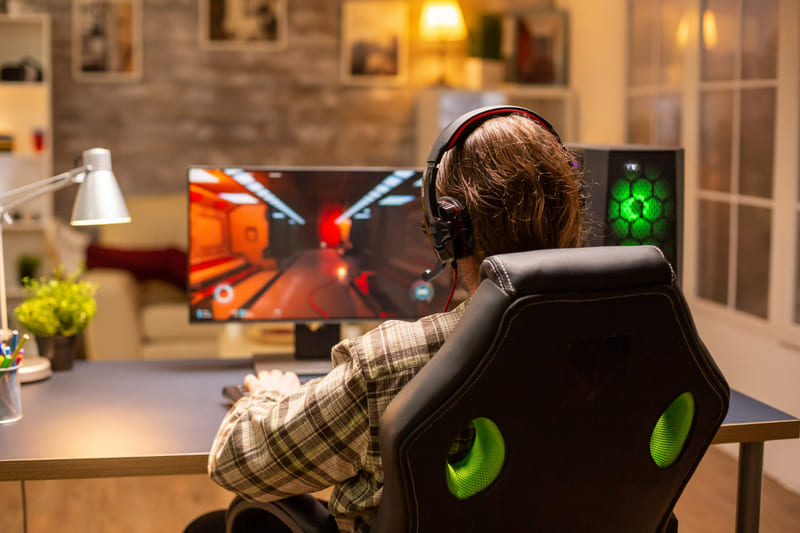
In order to attain a level of quality that genuinely resonates with gamers, SpeeQual Games employs professional gamer-linguists not by relying solely on generic translators or QA testers for game localization.
Our gamer-linguists comprehend the core of your game, including its mechanics, lore, tempo, and player decision-making, in contrast to standard linguists who only concentrate on grammar and word choice and regular testers who simply find bugs or functional issues.
Why SpeeQual Games Is Your Best Localization Partner
1. AI-Assisted Quality Assurance
At SpeeQual Games, we integrated AI systems to accelerate the translation process by detecting matches in translation memories (TMs) and term bases (TBs), while our human gamer-linguists refine every line to ensure it fits your game’s context and style perfectly.
2. Scalability & Real-Time Updates
SpeeQual Games can localize updates more quickly since our systems can manage massive amounts of text, such as patch notes or live-service material.
Even in hectic live-ops settings, our gamer-linguists ensure quality by reviewing and refining the data output.
3. Emotional Tone & Genre Sensitivity
Our professional gamer-linguists can capture the appropriate emotional rhythm and modify the tone in a way that appeals to local players.
Additionally, they are familiar with genre-specific tropes (such as RPG vs. FPS) and have the ability to translate them effectively in a cultural context.
4. Immersive Experience
By combining mechanical accuracy and cultural relevance, we ensure that the local version of the game remains immersive.
Players will not feel like they are playing a ‘foreign’ game; rather, they will feel as if the game was built with their local context.
Are you ready to make your game sparkle for a global audience? Partner with SpeeQual Games now and leverage our team of gamer-linguists and AI-driven workflow to deliver localization that feels crafted, not just translated. Get in touch today.
What Developers Gain When Using Gamer-Linguists
One of the best investments you can make in game production is localization, and hiring gamer-linguists takes that investment to a whole new level.
Here are the tangible advantages for publishers and studios that choose gamer-linguists over traditional testers or translators.
1. Deeper Understanding of Gameplay Context
Unlike regular testers who only look for bugs or regular linguists who simply check grammar, gamer-linguists understand how the game operates.
Decision trees, quest logic, and mechanics are all recognized by them. As a result, their localization accurately captures both language and real-world play dynamics.
2. Better Voice-Over Flow & UI Fit
Gamer-linguists are familiar with voice-over pacing, tutorial flow, UI constraints, and how text fits within dynamically changing game features since they have played the game.
They may shorten phrases to fit on-screen space or recommend simpler text without sacrificing meaning.
3. Authentic In-Game Terminology
Many gaming terms cannot be directly translated without losing their meaning. A gamer-linguist can modify them so that local players can understand while maintaining the strategic and emotional nuance.
4. Higher Engagement & Revenue Potential
Making your game feel native can attract a wider audience and encourage in-game purchases or extended play sessions.
Conclusion — Great Localization Happens When Linguists Are Gamers
In the global gaming industry, Southeast Asia is one of the most promising and rapidly expanding regions.
In order to maximize its potential, game developers must go beyond literal translation and comprehend as well as reflect local cultures.
The collaboration between linguists and gamers demonstrates the value of cultural awareness in game localization.
Gamer-linguists comprehend not only syntax and vocabulary, but also gameplay mechanics, genre conventions, player motivations, and in-game culture.
Their dual expertise enables them to formulate adaptation solutions that feel natural, authentic, and emotionally relevant to local players.
By leveraging such talent, developers can prevent cultural misunderstandings, foster deeper trust, and provide a more seamless, immersive experience.
In conclusion, if you want your game to be successful in multiple markets, invest in localizers who don’t just translate the game—but also play it.